
Best Live Dealer Casino Online Australia: 2026 Guide
 Available in AU
- Legal Landscape for Real‑Money Live Dealer Play in Australia
- What Is a Live Dealer Casino and How It Works for Australian Players
- Key Criteria for Choosing a Live Dealer Casino in Australia
- Bonuses and Bitcoin Options for Australian Live Dealer Players
- Live Dealer Roulette and Crypto Compatibility
- Live Dealer Game Selection and Quality Standards
- Payment Methods Accepted by Australian Live Dealer Casinos (Including Bitcoin)
- Reviewing Live Dealer Casino Providers and Licensing
- Top Bitcoin‑Friendly Live Dealer Casinos for Australian Players
- Best Online Casinos with Live Dealer Options in 2026
Legal Landscape for Real‑Money Live Dealer Play in Australia
Australian gambling law draws one line that matters for anyone considering a real‑money live dealer casino: the Interactive Gambling Act 2001 (IGA) makes it illegal for companies to offer online casino services — live dealer tables included — to people located in Australia, and there is no domestic licence an operator could hold instead. Online sports betting, by contrast, is licensed at the state and territory level. The distinction is deliberate: the prohibition targets the supply side, not the player.
That second half of the arrangement is the part most often misunderstood. An individual Australian who plays at an offshore‑licensed online casino breaks no law. Australian residents can legally gamble at licensed offshore online casinos, and no domestic prosecution follows from doing so. The legal exposure sits entirely with operators who attempt to serve the Australian market without authorisation — which is precisely why every site offering live dealer play to Australians operates from an overseas jurisdiction rather than a local one.
One threshold is fixed and non‑negotiable: the minimum age for online gambling in Australia is 18. This applies regardless of where the operator is based; an offshore licence does not lower it, and neither does a platform’s own registration policy.
The practical consequence for real‑money play is structural rather than dramatic. There is no Australian regulator to complain to, no local registry of approved operators, and no government‑backed dispute channel for casino games — protections a licensed industry would provide do not exist here. Identity checks, withdrawal practices, and dispute handling all depend on the operator’s offshore licence and its enforcement. That is the framework everything else in this article sits inside: legal to play, unregulated domestically, and 18 as the entry condition.


What Is a Live Dealer Casino and How It Works for Australian Players
A live dealer casino is an online gambling platform where table games are run by a human croupier in real time, streamed from a studio or a land-based casino floor to the player’s device. The dealer spins the roulette wheel, deals the blackjack cards or launches the sic bo dice; the player watches the action unfold on video and places bets through a digital interface overlaid on the stream. The outcome comes from physical equipment — a real wheel, real cards, real dice — not from a random number generator, and that distinction is the entire product.
For Australian players, the format sits in an unusual legal position. The Interactive Gambling Act 2001 prohibits Australian companies from providing online casino services to Australian residents, and the same Act prevents offshore casinos from holding an Australian-specific licence. There is no domestic licence for this product category at all. The result is that every live dealer casino serving the Australian market operates from offshore jurisdictions — Malta, Gibraltar, Curaçao, the Isle of Man or Kahnawake — and an Australian resident playing at such a site is dealing with a foreign-licensed operator, not a locally regulated one. The Act targets the operators offering services to people located in Australia without authorization, not the individual player at the table.
Legal Risk
Operators that attempt to provide live dealer services to Australian players without an offshore licence are breaching the Interactive Gambling Act 2001 and may face enforcement action. Players should verify the operator’s jurisdiction before depositing.
How the Live Studio Actually Works
The production side of a live dealer casino is closer to a television broadcast than to a website. A typical setup involves several components working simultaneously:
- The studio floor. A room fitted with gaming tables, professional lighting and multiple camera angles. Some operators stream from dedicated studios; others run feeds from actual casino floors in Europe or Asia.
- Game Control Unit. A hardware box attached to each table that encodes the video stream and translates the physical events — the card drawn, the number the ball lands on — into data the casino software can process. Without this unit, the wheel spin is just video; with it, the result is a settled bet.
- Optical character recognition and RFID. Cards carry markings (or embedded chips) that the system reads instantly, so the software knows a queen of hearts was dealt the moment it leaves the shoe. This is what allows split-second bet settlement.
- The chat channel. Players can type messages to the dealer, who responds by voice. The dealer is mic’d; the players are not — a one-directional audio arrangement that keeps the table manageable.
- The dealer interface. The croupier sees bets, player names and chat on a screen integrated into the table, and manages the pace of the game from their seat.
Latency is the engineering constraint that matters most. The video must reach the player quickly enough that the betting window closes before the outcome is decided — a delayed stream would let anyone with a faster feed bet on a result already determined. Reputable studios build their entire pipeline around keeping that gap small, and the interface locks betting the moment the dealer calls no more bets.
What Differs From a Standard Online Casino
In a conventional online casino game — pokies, digital blackjack, video roulette — the outcome is produced by certified random number generation. The software simulates the shuffle; the player clicks a button; the result appears. RNG technology ensures pokie outcomes are random and cannot be manipulated, and the same principle governs digital table games.
A live dealer game replaces that simulation with a physical event on camera. The trade-offs are practical:
- Speed. A live table runs at the dealer’s pace, not the player’s. A digital blackjack hand can be played in seconds; a live hand waits for the bets of everyone at the table and for the dealer’s movements.
- Stakes range. Live tables carry minimum bets set to justify the cost of running a studio, a dealer and a video feed. Digital tables can accept very small bets because they cost nothing per round to operate.
- Availability. The stream is a broadcast. If a table is full, a player waits for a seat or moves to another table.
- Transparency. The player watches the cards being dealt in front of them. For those who distrust software outcomes, this is the core appeal of the format, even though a certified RNG is statistically just as honest.
The two formats coexist on the same platforms. Most operators offering live dealer tables also run a full suite of RNG games, and players move between them depending on whether they want speed or the sense of a shared table.
Security and Fairness Infrastructure
Because no Australian licence exists for this product, the security burden falls on the operator’s own infrastructure and its offshore regulator’s requirements. The baseline technical standard is encryption of the connection between player and platform: top-rated Australian online casinos use 256-bit SSL encryption, the same standard used in banking, which prevents the session data — deposits, bets, identity documents — from being intercepted in transit.
On top of transport security, the layers that matter are:
- Game certification. The live games themselves are physical, but the surrounding software — bet settlement, payouts, the RNG used for any supplementary draws — is audited by independent testing bodies engaged by the licensing jurisdiction.
- Identity verification. Reputable platforms require government-issued ID before processing a withdrawal, which serves both anti-money-laundering obligations and the protection of the player’s own account.
- Responsible gambling controls. The functional set includes deposit limits, loss limits, session time limits, reality checks, self-exclusion options and cooling-off periods. On a properly built platform these are self-service tools in the account settings, not a request routed through support.
The Australian Market in Numbers
The scale of the demand side is not in dispute. According to one industry review, Australia’s online gambling market generates $7.2 billion in annual revenue, and the live dealer segment is a growing share of it — the format’s appeal to players who want the atmosphere of a table without travelling to a venue translates directly into session length.
The same review puts 73% of Australian online casino sessions on mobile devices, which shapes how live studios build their product: the video stream must compress cleanly enough to run on a phone’s data connection, the betting interface must work on a touchscreen, and the table layout must remain readable on a display measured in inches. A mobile-first design is no longer a differentiator for platforms targeting this market; it is the entry requirement.
Spending patterns are modest at the individual level. The average monthly deposit by active Australian online casino players in 2026 is $127, per the same industry data — a figure that frames live dealer play as a regular entertainment expense for most participants rather than high-stakes activity. What those players consistently ask for, the review notes, is fast payouts in AUD, generous bonuses, top-tier security, and a wide variety of games that load on mobile. AUD accounts matter specifically because they eliminate conversion margins on every deposit and withdrawal — a small percentage shaved off each transaction compounds across a year of play.
How Money Moves In and Out
The financial mechanics of a live dealer platform follow a deposit-play-withdraw cycle, and the speed of the withdrawal leg is where operators differentiate themselves.

Deposits are engineered to be immediate, because a player who has to wait is a player who may not return to complete the transaction. Instant deposit rails do the work here: per one industry review, top-rated platforms support instant deposits via POLi, which connects the player’s online banking directly to the casino cashier. The funds appear at the table while the player is still deciding which game to join.
Withdrawals are the honest test of an operator. Best online casino Australia platforms process withdrawals within 12–24 hours on average, according to one industry review — a window that covers the operator’s internal review, identity checks and the actual transfer. That figure is an average across methods and platforms; the processing time for a specific withdrawal depends on the payment rail chosen and the operator’s verification queue. The mechanics of each payment method — including the faster options — are a separate subject, and the payment methods section of this page covers them in detail alongside the restrictions Australian banks apply to gambling transactions.
One structural point belongs here because it defines the whole ecosystem: because no domestic licensing regime exists for online casinos, the deposit-withdraw cycle for Australian players runs through offshore operators’ cashier systems. There is no Australian regulatory backstop if an operator delays a payment — which is precisely why withdrawal speed, treated as a verifiable fact rather than a marketing claim, is one of the most informative signals about how a platform is actually run. An operator that pays within its stated window has functioning back-office operations; one that stalls does not, and no bonus structure compensates for that.
What This Means in Practice
A live dealer casino, for an Australian player, is a streamed table game with a physical outcome, delivered by an offshore-licensed operator over an encrypted connection, funded through instant deposit rails and paid out on a timescale the operator sets and its track record confirms. The format itself is technically mature: the video, the bet settlement and the mobile delivery all work reliably across the reputable segment of the market. The variable is the operator — and how to evaluate one is the subject of the next section.
Key Criteria for Choosing a Live Dealer Casino in Australia
A live dealer table is a real-money service delivered in real time, which means the decision to register is really a decision about who holds the funds, on what terms, and for how long. The criteria below are the ones that actually separate a workable site from an unworkable one. None of them involve taste; all of them involve conditions, timeframes and money.
Licensing Jurisdiction
There is no Australian licence for online casino play — the Interactive Gambling Act 2001 makes domestic licensing of online casino services impossible, and no public register of licensed online casino operators exists to check. This has a practical consequence: the "check the local licence" advice that works in regulated markets does not work here.
What can be checked is the offshore licence. Reputable offshore casinos operate under recognised jurisdictions such as Malta (MGA), Gibraltar, Curaçao, the Isle of Man, or the Kahnawake Gaming Commission. A licence from one of these bodies is not an Australian government guarantee — it is a signal that the operator answers to some regulator, with some dispute process attached, rather than to nobody. A site that names no jurisdiction, or names one that cannot be verified, has removed the only layer of accountability available. That is a disqualifying condition, not a negotiable one.
The licence details belong in the site footer. Their absence from the footer says as much as their presence.
Always check that the casino lists a verifiable offshore licence from a recognised regulator such as Malta (MGA), Gibraltar, Curaçao, the Isle of Man or Kahnawake. Absence of this information is a red flag.
Security Standards
The baseline is 256-bit SSL encryption, which top-rated Australian online casinos use to protect account data and transactions. Anything less is a dated standard; a site that does not state its encryption level at all is asking for deposits on faith.
For live dealer play specifically, the integrity question shifts from software to studio. RNG technology ensures pokie outcomes are random and cannot be manipulated — that guarantee applies to the digital games running alongside the live tables. Live dealer outcomes come from physical cards and wheels on camera, so the checks that matter are the audit of the studio feed and the licensing of the table provider. A site that publishes information about its live dealer software and its table providers is easier to evaluate than one that does not.
Mobile Performance
The mobile question is not whether a site works on a phone — nearly all do. The question is whether the live video stream holds up. A live table needs a sustained, stable video feed; a pokie that stutters loses a spin, a live table that stutters loses the hand in progress.
This is where the distinction between mobile-friendly and mobile-first matters. A mobile-first platform was built for the small screen and then adapted to desktop; a retrofitted one was built for desktop and shrunk. The differences show up in table layout, bet placement, and how the video stream behaves when the connection fluctuates. Testing the demo or low-stakes tables before committing funds settles the question in one session.
Banking Options and Withdrawal Speed
Deposit methods decide whether money can arrive; withdrawal methods decide whether it can leave. The two are not symmetric, and the second matters more.
For Australian players, PayID is the option that changes the calculus. PayID transactions are processed in minutes, including weekends and public holidays — according to one industry review, the average PayID withdrawal time at top-rated Australian online casinos is under 30 minutes, while another review puts it at about 2 hours. The two figures disagree, which is itself information: the operator’s own stated terms are the number that applies, and they should be read before depositing rather than after.
One bank-related caveat belongs in any serious assessment: some Australian banks have introduced restrictions on gambling transactions, which can lead to cards being declined. This is not the casino’s fault and not the player’s, but it means card deposits are the least reliable path, and a site offering PayID or POLi as alternatives is more resilient to it.
The criteria to check, in order:
- Withdrawal methods available in AUD, and whether withdrawals must return through the deposit method.
- Stated processing times for each method, in the operator’s own terms.
- Verification requirements — identity verification with government-issued ID is required before any withdrawal, so a site demanding it is complying with the standard, not obstructing.
- Fees and minimums, stated up front rather than discovered at the cashier.
A site that hides its withdrawal terms is doing so for a reason.
Responsible Gambling Tools
The tools a site offers reveal how it expects its players to behave over time. Platforms offer deposit limits, loss limits, session time limits, reality checks, self-exclusion options, and cooling-off periods. These are the standard set; a site missing most of them is choosing not to build them.
The engagement numbers explain why the tools matter in practice. According to one industry review, the average weekly time spent on online pokies by regular Australian players is 2.3 hours — a modest figure in aggregate, but one that says nothing about individual extremes, and limits are the mechanism that protects the individual rather than the average. Deposit and loss limits are set before the session, session limits end it, and self-exclusion removes the option entirely for a chosen period.
For support outside the site itself, Australia has infrastructure that predates any offshore casino: Gambling Help Online provides free, confidential support 24/7. A live dealer site worth depositing at will point to it; one that mentions no external support has decided the subject is bad for business.
Bonus Terms as a Screening Tool
Live dealer casino bonuses are covered in detail elsewhere, but as a selection criterion one point belongs here: wagering requirements and terms must be checked before claiming any bonus, and a site that displays its wagering requirements clearly up front is operating to a higher standard than one that buries them. The bonus itself is marketing; the transparency around it is the tell.
The Short Version
Five checks, in the order they fail:
- A named, verifiable offshore licence from a recognised jurisdiction.
- 256-bit SSL encryption, stated.
- A live video stream tested on mobile before depositing.
- AUD withdrawal methods with stated times — with PayID terms read in the operator’s own conditions.
- A full set of responsible gambling tools, plus a visible link to Gambling Help Online.
A site that passes all five is not guaranteed to be good. A site that fails any of them has already answered the question.
Bonuses and Bitcoin Options for Australian Live Dealer Players
A live dealer casino bonus is a different financial instrument from the game it attaches to. The game has a published RTP; the bonus has terms that determine whether any of it ever reaches a withdrawal. The order of reading is fixed: terms first, claim second. Anything else is paying for the packaging.
What a welcome package actually contains
Australian-facing offshore casinos structure their offers as a welcome package rather than a single bonus — a matched deposit on the first payment, often followed by free spins on nominated pokies, occasionally with further matched deposits on subsequent payments. No-de-deposit variants exist, and the terms carry one condition worth quoting in full: winnings from no-deposit free spins become withdrawable only after a real-money deposit is made. A no-deposit bonus that cannot be withdrawn is a trial balance, not money.
A matched first‑deposit bonus plus a set of free spins, with wagering requirements disclosed before claim.
Additional matched deposits on subsequent top‑ups, usually with lower wagering multiples.
Points earned from real‑money play that can be exchanged for cash, bonus credit or other perks.
A small amount of bonus credit granted without a deposit, but winnings are only withdrawable after a qualifying deposit.
Recurring offers — reload bonuses on later deposits, and loyalty programs that convert play into redeemable points — are where the long-run arithmetic sits. A welcome package is paid once; a reload schedule is paid every time it is used. Comparing the two before registering changes which operator ends up cheaper over a year of play.
The parts of the terms that decide everything
- Wagering requirements. A bonus amount multiplied by a requirement is a turnover target, and the target has to be met within the stated period or the balance is forfeited. The requirement must be displayed before the bonus is offered — an operator that reveals it afterwards has already answered a question about itself.
- Game contribution. Live dealer tables commonly contribute a smaller share of turnover than pokies. A bonus evaluated on pokies contribution is a different product on a live dealer table.
- Expiry. The turnover window has a date. Missing it forfeits the bonus and, in most term sets, the winnings attached to it.
None of these details are negotiable at the cashier. They are accepted in full at the moment of claiming, which is why reading precedes clicking.
Bitcoin and bonus programmes
A live dealer bitcoin casino combines two separate systems: the bonus ledger, denominated in the account currency, and the payment rail, denominated in Bitcoin. The bonus terms apply to the ledger; the payment method determines how quickly the settled balance arrives. On speed, one industry review reports cryptocurrency withdrawals processed in under 30 minutes — a claim to verify against the operator’s own published terms rather than against marketing copy, since processing windows are exactly the kind of figure that varies between platforms. Bitcoin also sidesteps the bank-side friction that affects card payments: some Australian banks have introduced restrictions on gambling transactions, which can result in declined cards.
The payment mechanics are examined in detail later in this article; what matters in a bonus context is narrower — that the deposit method does not disqualify the bonus, and that the withdrawal route matches the deposit route where the terms require it.
Bitcoin
A decentralized digital currency that can be used for deposits and withdrawals on offshore casinos. Transactions are recorded on a blockchain and are typically processed within minutes, but the value may fluctuate against AUD.
The safeguards that ride along with every offer
A bonus is leverage, and leverage cuts both ways. Reputable offshore operators — licensed in Malta, Gibraltar, Curaçao, the Isle of Man or under the Kahnawake Gaming Commission — pair their promotions with controls: deposit limits, loss limits, session time limits, reality checks, self-exclusion options and cooling-off periods. Setting the limits before the first bonus is claimed, not after a losing streak, is the sequence that works.
Where the controls run out, external support begins. Gambling Help Online provides free, confidential support 24/7 in Australia. That number belongs in the same planning document as the wagering requirements — both are terms of play, and only one of them is printed in the promotion.
Live Dealer Roulette and Crypto Compatibility
Roulette is the game where the real‑time dealer format earns its keep. The wheel is physical, the spin is filmed, and the result appears on camera before it appears in the balance — no animated wheel, no RNG behind the curtain. For Australian players, this is the single clearest illustration of what separates a real‑time dealer casino from a standard pokies site: the outcome is produced by equipment in a studio, not by a seed number.
What the roulette table actually delivers
A live roulette table runs on the same infrastructure as any other real‑time dealer game: a studio feed, 256‑bit SSL encryption on the connection, and a dealer who announces each result in real time. Bets are placed through an overlay while the ball is in motion, and the result settles into the account as soon as the dealer calls it. Table coverage matters more than headline quality — the same operator’s roulette lobby can range from a single European wheel to a schedule that keeps a seat open around the clock across variants, and the difference in playing comfort is immediate.

Mobile play is not a bolted‑on option. According to one industry review, 73% of Australian online casino sessions happen on mobile devices, which is why a mobile‑first roulette lobby is now the baseline rather than the exception. A roulette table that only renders properly on a desktop is, for practical purposes, a table that does not exist for most of the market.
Where crypto enters the roulette session
Crypto compatibility sits on the banking side of the table, not the gaming side. Bitcoin, Ethereum and USDT do not change how the wheel spins — they change how funds reach the table and how winnings leave it. The mechanics are simple: deposits land as a balance, the roulette round settles in that balance, and withdrawals go back to the wallet rather than to a bank account.
The speed is the argument. According to one industry review, cryptocurrency withdrawals are processed in under 30 minutes at the platforms that support them — faster than any card or bank‑transfer route, and comparable to PayID, which one operator’s own terms describe as settling in minutes including weekends and public holidays. Crypto runs on the same schedule: the blockchain does not observe Australian public holidays either. For a roulette player who wants a session’s winnings settled the same evening, that timeline is the entire comparison.
The comparison with AUD rails is worth stating plainly. A PayID withdrawal stays inside the Australian banking system and lands in Australian dollars with no conversion step. A crypto withdrawal lands in the currency sent, which means the value at the roulette table and the value in the wallet are separated by whatever the exchange rate does in between. That is a cost the PayID route does not carry, and it belongs in any honest ledger of the two options.
One boundary to keep in view
Crypto integration at real‑time dealer roulette tables operates in the same regulatory space as every other offshore casino service available to Australians. There is no domestic licence for online roulette of any kind, live or otherwise; the sites that offer these tables and accept Bitcoin operate from offshore jurisdictions. Nothing about the crypto rail changes that status — it is a payment method attached to the same legal arrangement, not a category of its own.
The practical takeaway for a roulette session: judge the table on its coverage, its mobile performance and its studio feed, and judge the crypto option purely as a treasury decision — a withdrawal route measured in minutes, with an exchange‑rate exposure priced in. The two evaluations are independent, and each deserves its own calculation.
Live Dealer Game Selection and Quality Standards
The range of live dealer casino games on a well-stocked platform follows a predictable structure: roulette in its European, American and French variants, blackjack across standard and high-stakes tables, baccarat including speed and no-commission formats, and a layer of game-show titles built around a host and a wheel. A narrow lobby is a signal in itself. When a platform carries one roulette table and two blackjack tables, the question is not whether the games run — it is why the operator did not invest in more.
Table limits deserve a closer look than the lobby thumbnail. A quality live dealer section spreads its tables from low minimums that suit a modest budget up to high-roller tables, and publishes the limits before a seat is taken. Engagement metrics give context for how these platforms are actually used. According to one industry review, regular Australian players spend 2.3 hours a week on online pokies, and the average monthly deposit by active players in 2026 is $127 — a reminder that the bulk of play sits at the recreational end of the spectrum, where table minimums and game pacing matter more than headline maximums.
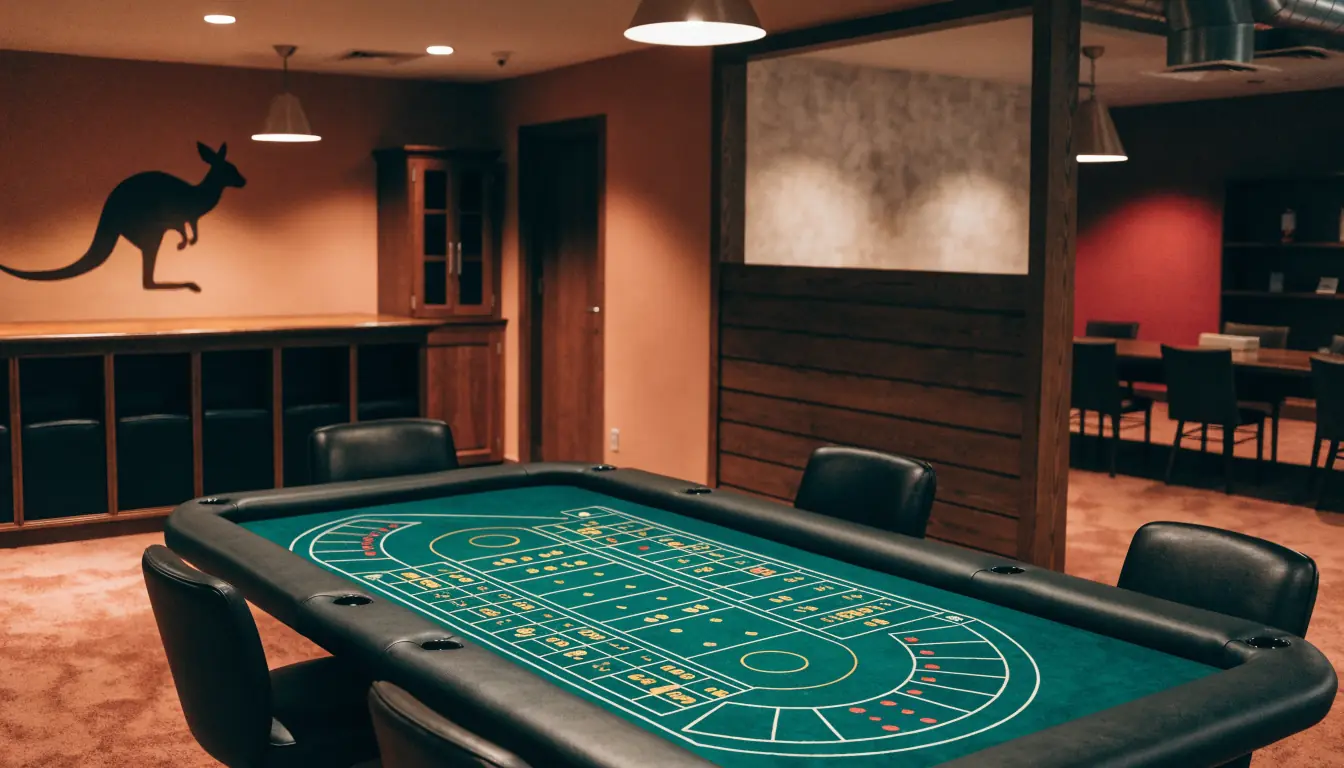
RNG integrity and what it does and does not cover
RNG technology ensures pokie outcomes are random and cannot be manipulated. That statement carries weight in the live dealer context only if the boundary is understood: RNG governs the digital side of the platform — the pokies that sit alongside the live lobby, and any digital side-bets or wheel-style games. The live tables themselves are driven by physical equipment — cards, wheels, a dealer — with optical card recognition and studio camera coverage producing the result. Both layers are audited separately, and a platform that publishes audit references for both is doing more than one that mentions neither.
RTP expectations
For the digital side of the lobby, the working benchmark is straightforward: pokies with RTP of 96% or higher are considered good. Live dealer tables carry their own published house edges, set by the rules of each variant rather than by the platform, and the published figure is the only number worth comparing between operators. A rule change at a blackjack table moves the return more than any bonus ever will.
Reading the lobby before committing
A practical checklist when comparing live dealer casino platforms:
- Table count per game type — depth in roulette and blackjack indicates a real studio commitment, not a token offering.
- Published RTP and house edge — visible before play, not buried in a help file.
- Table limits displayed up front — minimums and maximums for each table.
- Studio provenance — which game providers supply the live feed, and whether RNG-audited digital games run on the same licence.
- Pacing options — speed variants and dedicated tables for different budgets.
None of this requires insider knowledge. It requires the lobby to be read the way a contract is read: what is offered, at what return, at what cost per round, and whether the numbers are on display before the money moves. A platform that hides any of the four has already answered the quality question.
Payment Methods Accepted by Australian Live Dealer Casinos (Including Bitcoin)
Real‑time dealer tables run in AUD, and the payment rail behind them determines how quickly a player moves from deposit to seat and from winnings to bank account. The options worth comparing are few, and the differences are measurable.
PayID: the AUD benchmark
PayID is the fastest option for Australian players. According to one industry review, PayID transactions are processed in minutes, including weekends and public holidays — a property no card or bank‑transfer alternative matches, since both clear only on banking days. The same review puts the average PayID withdrawal time at top‑rated Australian online casinos at under 30 minutes. For a player comparing operators, PayID withdrawal speed is a reasonable first filter: the operator’s own published terms state the commitment, and anything slower has an explanation owed.
Bank Restrictions
Some Australian banks block gambling transactions, which can cause card deposits to be declined. Players should have an alternative method such as PayID or POLi ready.
POLi for instant deposits
POLi sits on the deposit side of the ledger. Top‑rated platforms support instant deposits via POLi, again per one industry review — the funds move straight from an Australian bank account to the casino balance without card details passing through the operator. The trade‑off is one‑sided: POLi gets money in fast, but it is not a withdrawal rail. Anything deposited this way comes back out through PayID, an e‑wallet, or a slower bank channel.
e‑Wallets
Skrill and Neteller operate in both directions. Withdrawals through these e‑wallets are processed within 2–24 hours, according to one industry review — a wide window, and operators sit at different points inside it. An operator quoting the long end of that range against a PayID cash‑out of under 30 minutes is telling the player exactly how much it values the AUD banking relationship.
Cards, banks, and what is not accepted
Some Australian banks have introduced restrictions on gambling transactions, which can lead to cards being declined at the deposit stage — not the operator’s decision, but the player still discovers it mid‑transaction. Separately, platforms complying with Australian restrictions do not accept credit cards or digital currencies for deposits or betting. Bitcoin, Ethereum, and USDT appear on the withdrawal side at some operators rather than as deposit methods, and any platform advertising crypto deposits to Australian players is stating its non‑compliance outright.
What the numbers are for
Every claim above — minutes, under 30 minutes, 2–24 hours — comes from a single industry review or from the operator’s own published terms, not from an established market standard. The correct procedure is to read the banking page of the specific operator before depositing: the posted withdrawal times, the AUD account support, and the identity verification requirement ahead of any payout are the contract. The rest is marketing.
Reviewing Live Dealer Casino Providers and Licensing
A live dealer casino review is only as good as the questions it asks. Three checks matter more than everything else combined: where the operator is licensed, how the platform secures money and data in transit, and which responsible-gambling tools are actually switched on — not merely listed in the terms.
Licensing jurisdictions
There is no Australian licence for online casino play, so every live dealer platform serving Australian players operates from offshore. That is not itself a red flag; the question is which jurisdiction issued the licence. Reputable offshore casinos operate under recognized jurisdictions such as Malta (MGA), Gibraltar, Curaçao, the Isle of Man, or the Kahnawake Gaming Commission. These bodies audit operators, handle player complaints, and can revoke licences — a supervisory relationship that a shell registration in an unknown territory does not replicate. A licence number in the footer means little on its own; the issuing authority and its complaints process are what give it substance. Note the honest framing here: "check the licence" means verifying the offshore regulator named above, since no domestic register of online casino licensees exists in Australia.
Security standards
Top-rated Australian online casinos use 256-bit SSL encryption — the same standard online banking relies on. This protects the channel between the player and the live dealer studio: card details, deposit confirmations, identity documents submitted at verification. Anything weaker, or a platform that mixes encrypted and unencrypted pages, belongs in the reject pile. Encryption does not make an operator trustworthy; it makes the pipe safe. Trustworthiness comes from the licence and the operator’s conduct.
Responsible-gambling features
The third check is what the platform lets a player do about their own play. Complete setups offer deposit limits, loss limits, session time limits, reality checks, self-exclusion options, and cooling-off periods. A provider that ships all of these and makes them reachable in a few taps is demonstrating something about its business model. A provider that buries the self-exclusion link in a terms-and-conditions appendix is demonstrating the opposite.

Free tables and demo play
"Free live dealer casino" appears in many searches, and the reality is limited: streaming a real croupier costs the operator money per seat, so genuinely free real-time dealer tables are rare and, where they exist, come with tight restrictions. Free play is standard on RNG pokies; at a live table, expect deposits to be the price of entry.
A provider passing all three checks — recognized offshore licence, 256-bit SSL, and a full set of player-control tools — is reviewable on its games and payouts. One failing any of them needs no further review.
Top Bitcoin‑Friendly Live Dealer Casinos for Australian Players
Bitcoin has carved out a specific role in the real‑time dealer segment: it is the fastest way to move a balance back out after a session at the tables. According to one industry review, cryptocurrency withdrawals are processed in under 30 minutes — quicker than any e‑wallet or bank‑linked method an Australian account holder can access. That speed is the main practical argument for choosing a Bitcoin‑compatible operator over one that works exclusively with cards and transfers.
What separates a worthwhile Bitcoin‑friendly casino from a mediocre one is not the presence of a BTC logo in the cashier. The relevant checks are concrete:
- Withdrawal processing time. The figure cited in one industry review — under 30 minutes for crypto payouts — is the benchmark. Operators whose terms stretch processing into days are not competing on the same terms.
- Instant deposit options. A casino that handles Bitcoin well should also handle AUD deposits without friction. According to one industry review, top‑rated platforms support instant deposits via POLi, which matters when the table is open and the balance is empty.
- Table coverage. Bitcoin compatibility means little if the operator runs two blackjack tables and a single roulette wheel. The quality operators pair crypto banking with a full real‑time dealer catalogue — blackjack, roulette, baccarat and game‑show formats across multiple studios.
One banking restriction deserves a place in any assessment. According to one industry review, some Australian banks have introduced restrictions on gambling transactions, which can lead to cards being declined. This is not the player’s fault and not the casino’s fault — it is a policy sitting between them. Bitcoin and instant deposit rails such as POLi work around it; a card‑only operator does not.
Names are deliberately absent here. Specific brands rise and fall in quality faster than any annual ranking can track, and the criteria above — payout speed, deposit friction, table depth — identify the same operators the reader would find on any shortlist, without the marketing gloss. The banks, at least, have made part of the selection process easier: an operator that still gets AUD in and BTC out cleanly in 2026 has already cleared the hardest test.
Best Online Casinos with Live Dealer Options in 2026
If you’re chasing that authentic live dealer experience in 2026, it helps to know which platforms are licensed, what welcome offers are on the table, and how deposits and payouts actually work before you sit down at the table.
License: Curacao Gaming Control Board OGL/2023/174/0082 (Dama N.V.) · Bonus: up to A$5,000 + 300 free spins across 4 deposits Operates under a Curacao Gaming Control Board licence held by Dama N.V., backed by a multi-deposit welcome package worth up to A$5,000 plus 300 free spins spread across four deposits.
License: Curacao Gaming Authority (Jumpman Gaming Ltd) · Bonus: up to A$6,600 + up to 250 free spins across 4 deposits Licensed by the Curacao Gaming Authority through Jumpman Gaming Ltd, with a generous four-deposit bonus structure reaching up to A$6,600 and up to 250 free spins.
Bonus: 240% up to A$4,100 + 300 free spins Stands out for its bonus structure, offering a 240% match up to A$4,100 alongside 300 free spins for new players.
License: Curacao eGaming OGL/2023/174/0082 (Dama N.V.) · Bonus: up to A$10,000 + 500 free spins across 4 deposits · Min. deposit: A$15 Holds a Curacao eGaming licence under Dama N.V. and pairs it with one of the larger welcome offers around, up to A$10,000 plus 500 free spins across four deposits, with a low A$15 minimum deposit making it accessible.
License: Curacao Gaming Control Board OGL/2023/176/0095 (Hollycorn N.V.) · Bonus: up to A$5,000 + 300 free spins across 4 deposits Licensed under the Curacao Gaming Control Board via Hollycorn N.V., offering a four-deposit welcome bonus of up to A$5,000 plus 300 free spins.
License: Curacao Gaming Control Board OGL/2023/176/0095 (Hollycorn N.V.) · Bonus: up to A$1,500 + 200 free spins across 3 deposits Also operating under a Hollycorn N.V. Curacao Gaming Control Board licence, this one offers a smaller but still solid bonus of up to A$1,500 plus 200 free spins across three deposits.
License: Curacao eGaming OGL/2024/923/0383 (Antillephone N.V.) · Bonus: up to A$2,000 + 100 free spins across 2 deposits · Min. deposit: A$30 Licensed through Antillephone N.V. under Curacao eGaming, with a two-deposit bonus of up to A$2,000 plus 100 free spins and a A$30 minimum deposit.
Bonus: up to A$750 + 50 jackpot spins, 35x wagering · Payout speed: crypto ~90 minutes, fiat 1-5 days · Min. deposit: A$30 Notable for fast crypto payouts of around 90 minutes alongside standard fiat withdrawals of one to five days, plus a jackpot spins bonus up to A$750 with 35x wagering and a A$30 minimum deposit.
License: Curacao · Bonus: up to A$2,000 Curacao-licensed with a straightforward welcome bonus of up to A$2,000 for new players.
License: Curacao Gaming Control Board (TechSolutions Group N.V.) · Bonus: 100% up to A$250 + 100 free spins (1st deposit) Licensed by the Curacao Gaming Control Board via TechSolutions Group N.V., offering a first-deposit match of 100% up to A$250 plus 100 free spins.
Ranking live dealer casinos in 2026 comes down to two measurable inputs: where the money is and where the sessions are. By the estimate of one industry review, Australia’s online gambling market generates $7.2 billion in annual revenue, and 73% of Australian online casino sessions now happen on mobile devices — a figure reported in a single industry review, but consistent with how the market has shifted since 2024.
A site that ranks well in this environment is mobile-first, with real-time dealer tables that load over a phone connection without lag, AUD accounts that skip conversion costs, and payout terms stated up front. According to one industry review, the average PayID withdrawal time at top-rated Australian online casinos is about 2 hours; sites falling well outside that window answer for it in their terms, not in marketing copy.
The operators that lead in 2026 pair that speed with offshore licensing under recognised jurisdictions, 256-bit SSL encryption, and working responsible-gambling tools — deposit limits, session reminders, self-exclusion. That combination, not bonus size alone, is what separates the ranked from the rest.
Gambling Help Online provides free, confidential support 24/7 in Australia.
What payment methods are available for Australian players at online casinos?
Australian-friendly casinos typically support PayID, POLi, crypto, eWallets like Skrill and Neteller, debit/credit cards and bank transfer. Crypto and PayID are the fastest options, with withdrawals often processed in under 30 minutes, while cards take 1–5 business days and bank transfers 3–7 business days.
How can a player verify that an online casino holds a valid licence for Australia?
No Australian licence exists for online casinos — the Interactive Gambling Act 2001 prevents both local and offshore operators from holding one. Instead, check that the site operates under a recognized offshore regulator such as Malta (MGA), Gibraltar, Curaçao, the Isle of Man or the Kahnawake Gaming Commission.
Is online gambling legal in Australia?
Yes for players — an individual Australian who plays at an offshore-licensed online casino breaks no law, since the Interactive Gambling Act 2001 targets operators, not players. The minimum age is 18, and all sites serving Australians run on foreign licences.
Published by the Casino Regional Guide team.