
Live Roulette in Australia with English-Speaking Dealers
 Available in AU
- Online Roulette Landscape in Australia
- Land‑Based Casinos and Their Regulatory Environment
- Understanding Roulette as a Game
- How to Play Live Roulette and What Determines Wins
- Bonuses, Lightning Roulette and Deposit Considerations
- Finding the Best Odds in Live Roulette
- The Roulette Wheel: Types and Technical Details
- Table Layout and Player Advantage
- Common Strategies for Winning at Live Roulette
- Playing for Real Money: Legal Risks and Player Protections
Online Roulette Landscape in Australia
The legal position of online roulette in Australia is unusually lopsided: the game itself is ordinary, the table is streamed from a studio somewhere in Europe or Asia, and everything about the transaction that puts an Australian player in front of it sits outside Australian law. There is no domestic licence for it, no pathway to obtain one, and no regulator with the power to approve it. What exists instead is a federal prohibition on supply, a permissive silence toward players, and an offshore industry that has grown precisely into that gap.
The Commonwealth prohibition
The primary Commonwealth law governing online gambling in Australia is the Interactive Gambling Act 2001 (IGA). Its stated purpose is public protection with a focus on harm minimisation — the legislation is framed as a consumer-safety measure rather than a revenue or morality instrument. Under the IGA, online casino-style games are prohibited outright: the prohibited categories include pokies, poker, blackjack and roulette, along with live dealer versions of the same games.
One point of confusion is worth settling openly, because sources disagree. Some references describe an Interactive Gambling Act 1997 as the law prohibiting provision of online casino games to Australian residents; others date the Act to 2001. The weight of official material sits with the 2001 Act as the operative Commonwealth statute, but the discrepancy exists in published sources and is not resolved here by picking one silently. What both accounts agree on is the substance: providing online casino games to Australian residents is a federal offence.
Three consequences follow from that substance.
First, it is illegal to offer online casino gambling in Australia, and it is not possible to obtain a licence to operate an online casino domestically. This is not a moratorium or a licensing backlog. The category of "Australian-licensed online roulette operator" does not exist in law and cannot be created by application.
Second, there are no domestically licensed real-money online casino operators available to Australian players. None. Any site presenting an Australian casino licence is either describing something other than an online casino licence — a sports bookmaking licence, for instance — or misrepresenting its position.
Third, and this is the part most often misunderstood: it is not illegal for individual Australians to play at offshore-licensed online casinos. The law targets operators, not players. An Australian who opens a live roulette stream from an offshore studio is not committing an offence under the IGA. The asymmetry is deliberate. The Commonwealth chose to attack the supply side and left the demand side alone, which produces the peculiar market structure described below.
What is prohibited and what is not
The federal prohibition is narrower than "gambling," and the distinctions matter for anyone trying to understand where roulette sits.
Online sports betting is legal in Australia, licensed at the state and territory level. Wagering on racing and sport through domestically licensed bookmakers is a normal, regulated, taxed industry. Online casino games, online poker and in-play online betting are prohibited federally under the IGA. Live in-play betting online is illegal, but the same bet placed by telephone is legal — a legacy carve-out that has survived because the Act was drafted around the communication channels of its era rather than around the substance of the bet.
Roulette, as an online casino product, falls squarely inside the prohibited category. It does not matter whether the wheel is a physical one filmed in a studio with an English-speaking croupier calling the action, or a simulated animation: both are online casino-style games under the Act, and both are unlawful to provide to Australian residents.

The two-level regulatory structure
Australia has no single overarching gambling statute and no single overarching gambling authority. Regulation occurs at both the state/territory level and the federal level, and the division of labour is reasonably clean, if occasionally confusing to outsiders.
At the federal level, the Australian Communications and Media Authority (ACMA) is the regulator that enforces the Interactive Gambling Act 2001. ACMA’s jurisdiction covers prohibited interactive gambling services — the online casino side of the market. It does not license casinos, does not approve games and does not supervise operators, because there is nothing in the prohibited category to license or supervise. Its role is enforcement against supply: investigating prohibited services and acting against them.
At the state and territory level, each jurisdiction has its own separate gambling regulator. These bodies license and supervise what is lawful in their territory: land-based casinos, lotteries, and sports and racing wagering. The Northern Territory Racing Commission (NTRC) has become, in effect, Australia’s de facto online gambling regulator — not because it has national authority, but because it licenses most of the national online bookmakers, who are drawn there by lower tax settings. The NTRC regulates the lawful online wagering industry; it has nothing to do with online roulette, which no Australian regulator licenses.
Legal risk
Providing online roulette to Australian residents breaches the Interactive Gambling Act 2001 and can lead to enforcement action against the operator.
One state body illustrates the cross-border character of the lawful side of the market. The Victorian Gambling and Casino Control Commission (VGCCC) monitors all wagering service providers — including those based in other states — for compliance with the National Consumer Protection Framework. A regulator in Victoria overseeing a bookmaker licensed in the Northern Territory is normal in this structure. The same arrangement cannot extend to online casino games, because there is no licensed population of casino operators for any state regulator to monitor.
Land-based casinos are regulated by state government regulators and law enforcement agencies, separate from the federal ACMA regulation of online gambling. Crown in Melbourne answers to the VGCCC; The Star in Sydney answers to its NSW regulator. A player can lawfully walk into those venues and play roulette at a physical table. The same game delivered over the internet to that player’s home is a federal enforcement matter. The distinction between the two regimes — physical tables under state law, online wheels under Commonwealth prohibition — is the single most important structural fact in the Australian roulette landscape, and it is covered in its own right further in this article.
The offshore layer
Because supply is prohibited but play is not, the market for online roulette accessible to Australians is entirely offshore. Every live roulette stream an Australian can join is operated from outside the country, under a licence issued by a foreign authority, with the studio, the croupiers and the payment infrastructure all located beyond Australian jurisdiction.
This is not a grey market in the sense of ambiguous legality. It is unambiguous in both directions at once: the operator is breaking Australian law by offering the service to Australian residents, and the Australian resident breaks no law by accepting the offer. The prohibition is enforced against the operator; the player is treated as the protected party rather than the offender, consistent with the Act’s harm-minimisation framing.
The practical effect is that none of the protections Australians take for granted in domestically licensed gambling attach to offshore roulette. State and territory regulators like the VGCCC and Liquor & Gaming NSW have limited power over offshore online casinos — limited to the point of practical irrelevance, since the operators hold no Australian licence to condition or revoke. ACMA can act against the services themselves, but its toolkit is aimed at blocking and disruption, not at consumer redress. An Australian with a dispute against an offshore roulette operator has no Australian regulator to take that dispute to. That gap, and the risks it creates, is the subject of the final section of this article.
Live roulette specifically
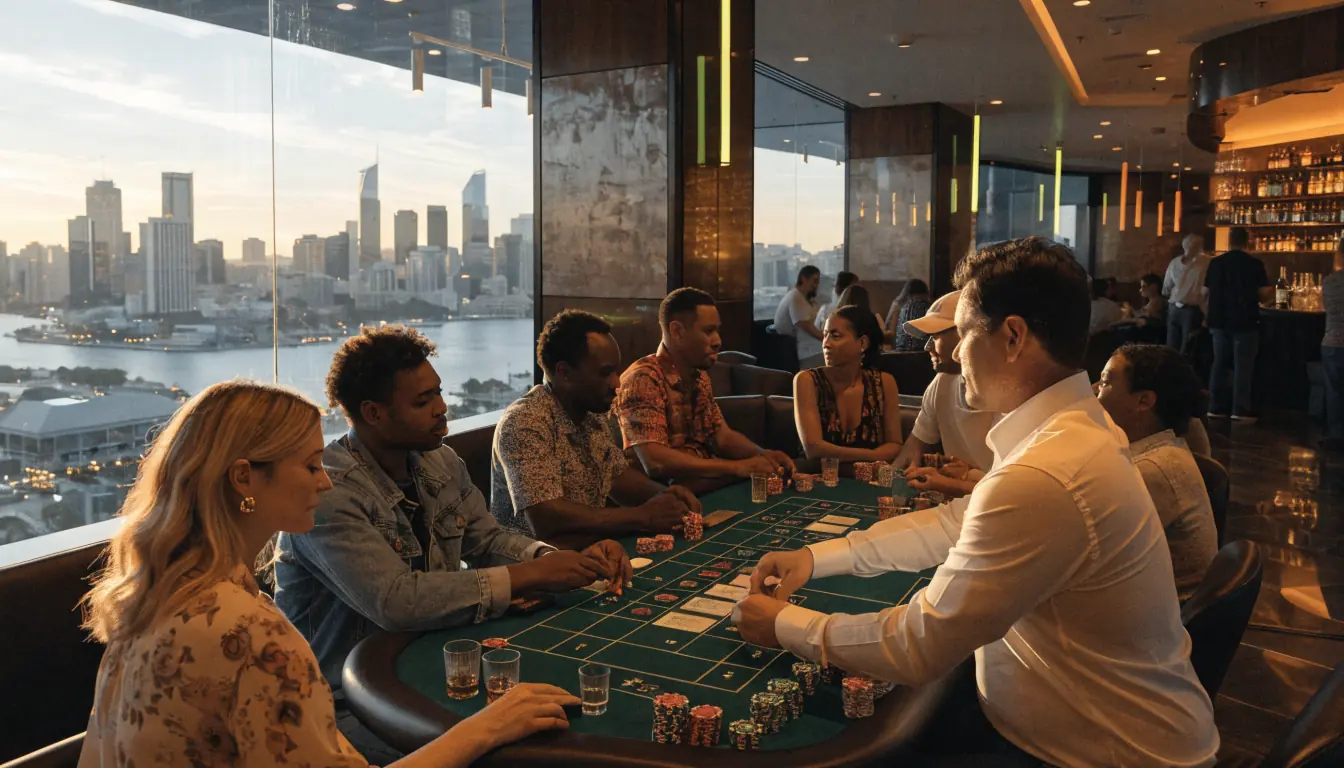
Within the offshore offering, live dealer roulette — a real wheel, a real croupier, a video stream — occupies its own position. The legal analysis does not change: a live stream of a roulette wheel is an online casino-style game under the IGA in exactly the same way an animated one is. There is no exemption for live format, no exemption for games with English-speaking croupiers, and no exemption for games marketed at an Australian audience in Australian dollars. If anything, services that specifically target Australian players — local language, local currency, local payment options — are the clearest cases of prohibited provision.
What the live format does change is the product’s resemblance to the lawful, land-based alternative. A player in Sydney or Perth can sit at a roulette table in a licensed casino without legal complication; the live dealer product replicates much of that experience at a distance. The law distinguishes sharply between the two, even where the player experience barely does. That dissonance — near-identical game, opposite legal treatment — is a defining feature of the Australian market and explains why the offshore sector concentrates so heavily on live dealer products for Australian traffic.
Where this leaves the market
The complete picture of online roulette in Australia can be stated in a few propositions.
- Providing online roulette to Australian residents is prohibited federally under the Interactive Gambling Act 2001, alongside online pokies, online poker and online blackjack.
- No Australian licence for online casino operation exists or can be obtained; there are no domestically licensed real-money online casino operators.
- Playing at offshore-licensed online casinos is not illegal for the individual Australian. The IGA targets operators, not players.
- ACMA enforces the prohibition at the federal level; state and territory regulators govern land-based casinos and licensed wagering, and have no licensing role in online roulette.
- Live dealer roulette, whatever its format or croupier language, falls under the same prohibition as any other online casino game.
The result is a market in three layers: a lawful land-based casino sector under state regulation, a lawful online wagering sector under state and territory licences policed for consumer-protection compliance, and an unlawful-to-supply but lawful-to-use offshore online casino sector that supplies roulette to Australians from beyond any Australian regulator’s licensing reach.
For a player evaluating where to play, that structure defines the decision more than any bonus, table limit or studio production value. The land-based option comes with full regulatory protection and none of the convenience. The offshore live dealer option comes with the convenience, the English-speaking croupiers and the streaming production — and with the protections of whatever foreign licence the operator happens to hold, which is the only licence in the transaction. There is no third option that combines the two. The sections that follow treat the game, the tables and the odds on their own terms, but every one of them operates inside the structure described here: prohibited to supply, lawful to play, and regulated only from the outside.
Land‑Based Casinos and Their Regulatory Environment
Australia has no single gambling authority. The word "casino" sits inside two entirely separate regulatory worlds: the physical casino floor, licensed and supervised by the states, and the online casino, which no Australian government licenses at all. The same game of roulette — the same wheel, the same layout — exists in both worlds under rules that share almost nothing.
Two regimes, one word
Physical casinos are a state and territory matter. Each jurisdiction licenses its own venues through its own regulator — the Victorian Gambling and Casino Control Commission (VGCCC) in Victoria, Liquor & Gaming NSW in New South Wales, and equivalent bodies elsewhere. These regulators license the venue, approve the games on the floor, supervise conduct, and enforce state gambling law. A roulette table in a Melbourne casino answers to the VGCCC; a table in Sydney answers to Liquor & Gaming NSW. There is no federal agency standing between the croupier and the state regulator.
The online world is inverted. Under the Interactive Gambling Act 2001 (IGA), the Commonwealth prohibits offering online casino games — roulette among them — to Australian residents, and no licence to run an online casino domestically can be obtained. Enforcement sits with the Australian Communications and Media Authority (ACMA), a federal regulator, not with the state bodies that supervise the casino floors. The result is a clean split: states own the physical tables, the Commonwealth polices the digital ones.
The state regulators’ writ stops at the border in a way the casino floor does not make obvious. VGCCC and Liquor & Gaming NSW have limited power over offshore online casinos. A state regulator can license, inspect and sanction a casino building within its territory; it cannot reach an operator running live dealer roulette from a studio overseas. That gap is exactly what the federal regime exists to address, with tools the states do not have.
What ACMA actually does
ACMA’s enforcement powers are real but bounded. Since November 2019 it has ordered internet service providers to block access to illegal offshore gambling sites — online casinos chief among them. The figures reported on this enforcement shift over time and between sources, and they should be read as reports rather than settled numbers. One source, reporting as of 2024, put the count of blocked illegal gambling and affiliate websites at 975; another, iclg.com, stated that as of August 2025 ACMA had blocked 1,296 illegal sites and affiliates since 2019. The counts are not reconcilable, and neither should be quoted as the figure. What is not in dispute is the mechanism: ACMA issues notices to ISPs, and the blocked sites include the online casino services that carry live dealer roulette.
Blocking statistics
ACMA has issued blocking notices for hundreds of illegal gambling sites since 2019, but the exact count varies between sources and changes over time.
The same caution applies to the exit figures. Sources including theiaga.org and boomaff.com report that illegal gambling services have left the Australian market under ACMA pressure — one report puts the number above 100 since enforcement rules took effect in 2017, another, iclg.com, reports 220 voluntary exits as of August 2025. These are single-source claims about a moving target, not an established market norm. The direction of travel is documented; the precise count is not.
Beyond blocking, ACMA can request the blocking of websites offering games not permitted under Australian law — online casinos, online pokies, and in-play online sports betting. It can instigate civil proceedings, notify border protection agencies about the directors and principals of offending offshore operators, liaise with foreign regulators, and issue letters to software developers and other parties seen as ancillary to a contravention. It has served warning notices and referred matters to the Australian Federal Police. These powers target operators and their supply chains. The player at the table — physical or streamed — is not the object of enforcement.
What the state licence covers — and what it does not
The state licensing regime gives a land-based roulette table an audit trail an offshore stream cannot match. The venue holds a licence from a named regulator, subject to that regulator’s inspection regime and state law. The VGCCC, for instance, also monitors wagering service providers, including those based in other states, for compliance with the National Consumer Protection Framework — a reminder that the state regulators do coordinate on some national standards, even while their core authority remains territorial.
That territorial limit is the structural point. A state regulator supervises what happens inside its licence holders’ premises. Offshore live dealer roulette is broadcast from studios outside every Australian state and territory, run by operators that hold no Australian licence because none exists to hold. ACMA can block the website, pursue the operators, and refer executives to border agencies — but it cannot recover funds or settle individual disputes with those operators. The state regulators, for their part, cannot license them even in principle. Between the two regimes there is a genuine gap: no Australian authority offers a licensed online roulette product, and no Australian authority stands behind a player who uses an unlicensed one.

Why the distinction matters for roulette players
The regulatory split maps directly onto the practical position of anyone comparing a casino floor with a live dealer stream. The land-based table operates under a state licence, with a named regulator and physical premises subject to inspection. The streamed table operates under whatever overseas licence its operator holds — and Australian regulators have no supervisory power over it, only enforcement tools aimed at the operator’s access to the Australian market.
None of this changes the game itself; the roulette rules are the same in both settings, and that is covered separately. What differs is who answers for the table. In a physical casino, the answer is a state regulator with an office, an act of parliament behind it, and the power to walk onto the floor. For an offshore stream, the answer is: no Australian regulator at all, and an enforcement agency whose tools work on domains and directors rather than on disputes. The distinction is not academic — it is the entire practical difference between the two places a roulette table can be found in Australia.
Understanding Roulette as a Game
Roulette is a game of pure chance built around a spinning wheel, a small ball, and a table of betting positions. Nothing a player does during a round changes where the ball lands. The decisions happen before the spin — which bets to place, and how much to stake — and once the croupier releases the ball, the outcome is settled by physics and luck, not by skill.
How a Round Works
A typical round proceeds in a fixed sequence:
- Players place chips on the table layout while betting is open.
- The croupier spins the wheel in one direction and launches the ball in the other.
- Betting closes — the croupier calls “no more bets.”
- The ball settles into one numbered pocket.
- Winning bets are paid, losing chips are cleared, and a new round begins.
In a live dealer game, this sequence plays out in real time: a real croupier operates a real wheel, streamed to players who place bets through an on-screen interface. The mechanics of the game itself are identical to those at a physical table.
The Wheel and Its Numbers
A roulette wheel is a rotating bowl divided into numbered pockets, alternating in colour between red and black, with one or two green pockets reserved for zero. The two principal configurations are:
- Single-zero wheel — pockets numbered 1 to 36 plus a single zero. This version, commonly called European roulette, is the standard in most live dealer studios.
- Double-zero wheel — the same 36 numbers plus both a zero and a double zero. Known as American roulette, it carries a higher house edge, since the extra green pocket increases the share of outcomes where all standard bets lose.
The numbers are not arranged in ascending order around the wheel; they follow a fixed historical sequence designed to distribute high, low, odd and even numbers across the circumference. The pattern matters to wheel-watchers, but for a standard bettor it changes nothing — each spin remains independent of the last.
The Bets
Roulette betting divides into two families, both available in every version of the game:
Outside bets cover large groups of numbers at lower payouts:
- Red or black
- Odd or even
- Low (1–18) or high (19–36)
- Dozens (1–12, 13–24, 25–36)
- Columns (vertical lines on the layout)
Inside bets are placed on specific numbers or small clusters within the numbered grid:
- Straight-up — a single number
- Split — two adjacent numbers
- Street — three numbers in a row
- Corner — four numbers in a square
- Six line — six numbers across two rows
The trade-off is mechanical: the fewer numbers a bet covers, the higher the payout when it lands, and the lower the chance of it landing at all. Payout scales are fixed by the game’s rules and do not vary between tables of the same wheel type.
What Roulette Is Not
Two things the game is often mistaken for, and is not:
- A game of skill. No betting pattern influences the ball. Progression systems and “hot number” tracking alter the shape of a session’s results, not the underlying probabilities.
- A game with a player-favourable variant. Every standard bet on every standard wheel carries a house edge, embedded in the payout structure itself — most visibly through the green zero pockets that sit outside the red/black and odd/even divisions.
Where roulette is played, and under what legal conditions, is a separate question from how the game works — and in Australia it is a question with a complicated answer, covered in the sections on the regulatory landscape. The rules of the game travel unchanged across borders; the rules around the game do not.
How to Play Live Roulette and What Determines Wins
Joining a live table
The mechanics of a live dealer roulette table follow the same sequence regardless of where the studio sits. The process runs as follows:
- Choose a table. Live roulette streams from a studio with a real croupier and a physical wheel. Tables differ by presenter, language and variant — a separate matter from odds, covered elsewhere on this page.
- Take a seat. Live dealer games allow multiple players to watch the same stream simultaneously. Joining a table places the stream on screen; no registration for the seat itself is needed.
- Place bets within the betting window. The croupier announces when betting opens and closes. Chips are placed on the table layout — inside numbers, outside columns, red or black. Once the croupier calls an end to betting, no further wagers are accepted.
- Watch the spin. The wheel spins in one direction, the ball is released in the other, and the outcome is read from the pocket where the ball settles.
- Settlement. Winning bets are paid, losing bets are cleared, and the next round begins. The session is continuous — rounds run whether a given player participates or not.
Player responsibilities
The betting window is short and enforced. A bet not placed before the croupier closes betting does not exist, and a bet placed cannot be withdrawn once the ball is in motion. Two further responsibilities sit with the player rather than the table: managing the bankroll across rounds, and verifying identity with the operator before any withdrawal, which follows anti-money-laundering practice rather than anything specific to roulette.
One structural point matters for Australians before any of the above. There is no domestically licensed online casino in Australia — online casino games, roulette included, are prohibited under the Interactive Gambling Act 2001. What players access are offshore-licensed sites. Playing at them is not an offence for the individual; the law targets the operators. The consequence is practical: the player, not an Australian regulator, carries the weight of choosing where to play, because no local licence exists to verify. This page describes how the game works, not an endorsement of where to play it.
What determines the result
At a live table, the outcome is determined by three things, in this order of importance:
- The physical spin. The wheel and ball are real equipment operated by a real croupier. The result is where the ball stops, not a drawn outcome. Velocity, deflector contact and pocket settling do the rest.
- The bet selection. Which bets a player places determines what gets paid and when. Nothing placed on the table changes where the ball lands.
- The table rules and wheel in play. These affect the odds available rather than any individual spin, and are treated in the sections on odds and wheel types.
What does not determine the result: prior outcomes. A run of red does not make black more likely on the next spin — the wheel holds no memory. Betting systems built on that assumption are examined later in this article.
Deposits are a precondition rather than a gameplay step, and in Australia a constrained one: the regulatory position on payment methods, including the prohibition on credit cards and digital currencies for betting, belongs to the next section.
Bonuses, Lightning Roulette and Deposit Considerations
Bonuses, lightning-style roulette variants and deposit methods sit in a different category from the mechanics of the game itself. None of them change what happens at the wheel; all of them are shaped by regulation — and in Australia, that regulation is restrictive.
Bonuses: what the rules require, not what the ads promise
Because online roulette cannot lawfully be offered to Australian residents under the Interactive Gambling Act 2001, there is no domestic framework governing a roulette casino bonus or a no deposit bonus of any kind. The operators that advertise these offers to Australians are offshore entities outside the reach of Australian regulators.
Two points follow from this, and both are verifiable conditions rather than opinions:
- The Australian Communications and Media Authority (ACMA) cannot recover funds from an offshore operator or settle a dispute over a bonus that was never paid as advertised. A bonus dispute with an unlicensed offshore site is a private matter with a counterparty that no Australian regulator supervises.
- Marketing restrictions apply regardless of where the operator is based. Advertising prohibitions under Australian law cover online casino services, and ACMA has no power to require platforms such as Facebook to block gambling advertisements targeting Australia — a gap in enforcement that offshore bonus advertising exploits.
Any bonus offer aimed at Australian players therefore carries a structural risk that has nothing to do with wagering arithmetic: the party offering it operates outside any licensing regime available to Australians, and no domestic complaints body has jurisdiction over it.
Lightning Roulette and live dealer variants
Lightning-style roulette — a live dealer format where random multipliers are applied to straight-up numbers before each spin — is streamed from studios operated by game providers, not from Australian venues. Since no real-money online casino can be licensed domestically, every live casino lightning roulette table an Australian can reach is hosted under a foreign licence.
This matters for enforcement rather than gameplay. ACMA issues blocking notices to internet service providers for offending sites — typically online casinos — and it can also issue letters to software developers and other third parties believed to be ancillary to a contravention of the IGA. The regulator has demonstrated it will serve warning notices and refer matters to the Australian Federal Police where illegal gambling products are offered in Australia. The supply chain for live dealer roulette — studio, provider, aggregator, site — falls within that enforcement perimeter.
The game variant itself is not the legal question. Whether the table is standard European roulette or a lightning format, offering it online to Australian residents is what the law prohibits.
Deposit methods: the crypto question
A search for crypto casino roulette or bitcoin roulette casino Australia runs into a second layer of restriction on top of the IGA. Australian rules prohibit gambling operators from accepting credit cards and digital currencies for deposits or betting. Bitcoin and Ethereum deposits are outside what a compliant gambling service in Australia may accept — though for online roulette, the point is largely academic, since no compliant online roulette service exists to deposit into in the first place.
For an offshore site accepting crypto from Australians, the prohibition signals the posture of the regulator: the deposit channel itself is treated as part of the contravention, not merely the game offering.
What this means in practice
Tips for roulette in a casino setting — which bets to place, how to manage a bankroll — are separate questions, and they belong to the game, not to the regulatory environment. What this section adds is the accounting around those tips: a bonus has value only if the entity offering it can be held to its terms, and no Australian regulator can hold an offshore operator to anything. ACMA can block the site, notify ISPs, and refer operators to federal police. What it cannot do is return a deposit, enforce a bonus condition, or arbitrate a payout dispute. That asymmetry is the number that never appears in the bonus terms.
Finding the Best Odds in Live Roulette
Before joining a live roulette table with English-speaking dealers, it’s worth checking how each casino is licensed and what kind of welcome offer backs up your first sessions.
License: Curacao Gaming Control Board OGL/2023/174/0082 (Dama N.V.) · Bonus: up to A$5,000 + 300 free spins across 4 deposits Licensed under the Curacao Gaming Control Board via Dama N.V., this operator backs new players with a multi-deposit welcome package worth up to A$5,000 plus 300 free spins spread across four deposits.
License: Curacao Gaming Authority (Jumpman Gaming Ltd) · Bonus: up to A$6,600 + up to 250 free spins across 4 deposits Operating under a Curacao Gaming Authority license held by Jumpman Gaming Ltd, this casino offers a sizeable welcome bundle of up to A$6,600 and up to 250 free spins spread over four deposits.
Bonus: 240% up to A$4,100 + 300 free spins This operator stands out for a straightforward high-percentage bonus of 240% up to A$4,100 alongside 300 free spins.
License: Curacao eGaming OGL/2023/174/0082 (Dama N.V.) · Bonus: up to A$10,000 + 500 free spins across 4 deposits · Min. deposit: A$15 Licensed through Curacao eGaming under Dama N.V., this casino offers one of the larger welcome packages here, up to A$10,000 plus 500 free spins across four deposits, with a low A$15 minimum deposit to get started.
License: Curacao Gaming Control Board OGL/2023/176/0095 (Hollycorn N.V.) · Bonus: up to A$5,000 + 300 free spins across 4 deposits Regulated by the Curacao Gaming Control Board under Hollycorn N.V., this casino provides a welcome offer of up to A$5,000 plus 300 free spins across four deposits.
License: Curacao Gaming Control Board OGL/2023/176/0095 (Hollycorn N.V.) · Bonus: up to A$1,500 + 200 free spins across 3 deposits Also licensed by the Curacao Gaming Control Board via Hollycorn N.V., this operator keeps its welcome offer more modest, up to A$1,500 plus 200 free spins across three deposits.
License: Curacao eGaming OGL/2024/923/0383 (Antillephone N.V.) · Bonus: up to A$2,000 + 100 free spins across 2 deposits · Min. deposit: A$30 Licensed under Curacao eGaming through Antillephone N.V., this casino offers up to A$2,000 plus 100 free spins across two deposits, with a A$30 minimum deposit.
Bonus: up to A$750 + 50 jackpot spins, 35x wagering · Payout speed: crypto ~90 minutes, fiat 1-5 days · Min. deposit: A$30 This operator offers a jackpot-spin welcome bonus of up to A$750 plus 50 jackpot spins under 35x wagering, with a A$30 minimum deposit, and is notable for fast crypto payouts around 90 minutes alongside fiat withdrawals taking one to five days.
License: Curacao · Bonus: up to A$2,000 Licensed in Curacao, this casino keeps things simple with a welcome bonus of up to A$2,000.
License: Curacao Gaming Control Board (TechSolutions Group N.V.) · Bonus: 100% up to A$250 + 100 free spins (1st deposit) Licensed by the Curacao Gaming Control Board under TechSolutions Group N.V., this casino offers a first-deposit bonus of 100% up to A$250 plus 100 free spins.
The odds in roulette are fixed by the design of the game, not by the operator running the stream. The house edge is a product of the payout structure — the wheel pays as if each outcome were one pocket less likely than it actually is. That gap between true probability and the posted payout is where the edge lives, and it exists on every bet on the felt, not just some of them.
What players can control is which wheel they sit at. A single-zero wheel carries a lower house edge than a double-zero wheel for the same payout structure, so the configuration of the wheel matters more than any individual bet selection. No bet on the table overcomes that difference; inside bets and outside bets on the same wheel face the same underlying disadvantage. The specifics of wheel types are covered separately, but the arithmetic consequence belongs here: the single structural decision — which wheel — outweighs every betting decision made after it.
Australian regulations do not change the odds of any given wheel, but they change which tables are reachable at all. Live roulette with real croupiers cannot be offered to Australian residents under domestic law, so there is no locally licensed table whose payout structure a regulator has reviewed. Every live table available to an Australian player sits outside that framework, which means the posted payouts carry no domestic oversight — no local authority verifies that a table pays what it claims, and none will intervene in a dispute over it.
Enforcement shapes the supply of tables rather than their mathematics. ACMA has been blocking illegal gambling and affiliate websites since November 2019; reporting on the numbers differs — one account puts the figure at 975 blocked sites as of a 2024 publication, while iclg.com reports 1,296 blocked sites and affiliates as of August 2025, alongside 220 services that left the market voluntarily. The two figures cannot both describe the same point in time, and neither source reconciles the other. The consequence for odds-seeking is indirect but real: a table blocked this month is simply gone, and a replacement table may carry a different wheel configuration.

The practical reading: evaluate the wheel first, the bets second, and treat any payout claim on an offshore table as unverified. The best odds available are a function of the wheel — regulation determines only whether that wheel loads at all.
The Roulette Wheel: Types and Technical Details
A roulette wheel is a rotating bowl with numbered pockets around its rim, a spinning inner disc, and a small ball that decays from the track into one pocket. Every variation of the game starts here, and the differences between wheels are structural, not cosmetic.
Single-Zero and Double-Zero Wheels
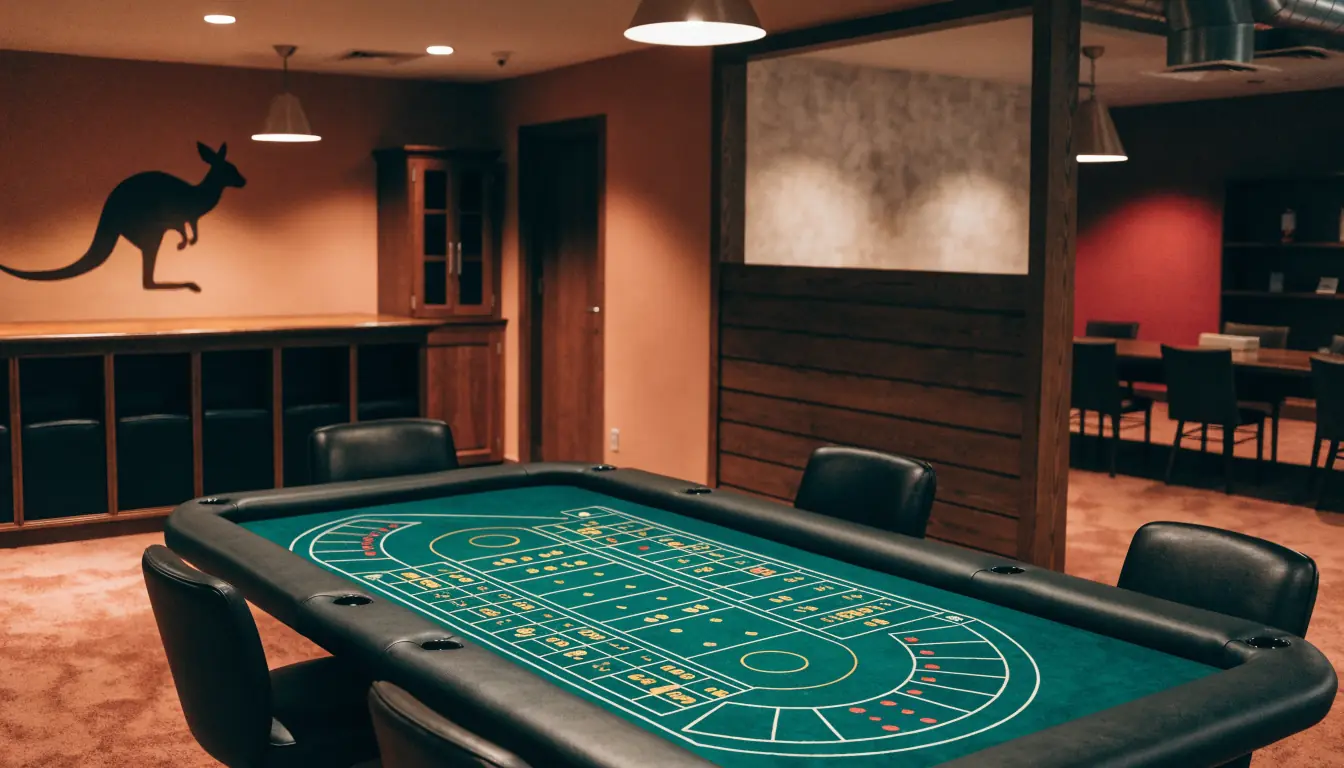
The single-zero wheel — the European layout — carries one green zero pocket alongside the red and black numbers. The double-zero wheel — the American layout — adds a second green pocket. That extra pocket is the entire distinction, and it exists for one reason: each additional zero increases the house edge. Which layout a live dealer table uses is set by the game’s designer, not by the croupier, and a studio running English-speaking tables can offer either configuration.
Wheel Speed and Design
Modern live dealer studios run wheels built to casino-manufacturing standards: balanced, precision-machined rotors, pockets with fixed deflectors, and a ball release timed by the croupier to keep the spin within the pace of the broadcast. Wheel direction typically alternates between spins. None of this changes the outcome of a spin — the result is governed by where the ball settles, and no design feature makes a pocket more likely. The engineering serves consistency and a watchable game, not predictability.
Enforcement and Availability
Whether a given wheel configuration reaches an Australian player at all is a regulatory question, not a technical one. Online casino games, including roulette in any wheel format, are prohibited services under the Interactive Gambling Act 2001, and ACMA can request the blocking of websites offering games not permitted under Australian law — online casinos and online pokies among them. Enforcement operates against the site, not the wheel: a single-zero table on an offshore platform carries the same legal status as a double-zero one. Boomaff.com reports that over 220 illegal gambling services have ceased operations in Australia due to ACMA’s actions, though the count shifts as enforcement continues. The consequence for wheel choice is indirect — when a site exits or is blocked, every table it hosted goes with it, regardless of layout. ACMA’s reach has limits; it has no power to require platforms such as Facebook to block gambling advertisements, owing to the wording of the law prohibiting advertising "in Australia."
Table Layout and Player Advantage
The layout of a casino roulette table is standardised, and for a player it is worth reading as a map of where the house edge is applied. The felt is divided into two distinct zones: the inside area, carrying the numbers of the wheel in a grid, and the outside area around it, carrying the proposition bets — columns, dozens, red or black, odd or even, high or low.
The inside grid is where the straight-up numbers sit alongside split, street, corner and line positions. Each of these marks a different grouping of adjacent numbers, and the felt makes the groupings visible: a split takes two numbers sharing a line, a corner takes four meeting at one intersection. Nothing about the inside grid changes the underlying mathematics of the game — it only determines how a stake is distributed across numbers.
The outside zone takes the bets built on large sections of the wheel. Red or black and odd or even each cover the numbers of one parity or colour; dozens split the numbers into three consecutive blocks; columns do the same by the grid’s vertical lines. The layout enforces the grouping; the player chooses only which group to back.
What the felt cannot show is the zero pocket. That is the structural source of the casino advantage: the payout structure pays as though the zero did not exist, and it does. This is covered in detail elsewhere in this article, together with the difference between single-zero and double-zero wheels.
For Australian players, one caveat belongs here rather than in the odds discussion. Live dealer roulette reached from Australia runs on offshore services outside ACMA’s licensing reach, and ACMA — while it can investigate and block prohibited interactive gambling services — cannot recover funds or settle individual disputes with those operators. A layout-based strategy does not change that position: the table rules stay the same, the recourse does not exist. Table literacy tells a player what a bet covers; it says nothing about who answers when a bet goes wrong.
Common Strategies for Winning at Live Roulette
Widely circulated strategies — Martingale, where the stake is doubled after each loss, and its inverse, D’Alembert, which raises the stake by a fixed unit — share one statistical property: none of them changes the house edge. Each spin of the wheel is independent, so past results carry no information about the next outcome. A progression system reallocates money across spins; it does not alter the probability of any single spin.
Strategies built on "hot" and "cold" numbers, or on tracking a croupier’s supposed signature, rest on the same error: the gambler’s fallacy, the belief that deviations must correct themselves. They do not, and no betting pattern converts a negative-expectation game into a positive one.
This applies regardless of where the game is offered. For Australian residents, live roulette sits outside the domestic licensing system: ACMA issues notices to Internet Service Providers to block offending sites, typically online casinos, and can also issue letters to software developers and other third parties believed ancillary to a contravention of the Interactive Gambling Act. A strategy that cannot beat the mathematics also cannot change the legal position of the table it is applied to.
What remains is bankroll management: setting limits before play and treating any session outcome as a cost of entertainment rather than recoverable loss. That is discipline, not an edge.
Playing for Real Money: Legal Risks and Player Protections
Playing online roulette for real money sits in a specific legal position in Australia. The law targets operators, not players: it is illegal to offer online casino gambling to Australian residents, and no domestic licence for an online casino exists, so every site offering real-money roulette to Australians operates from offshore under a foreign licence. The individual placing the bet commits no offence.
The asymmetry matters for anyone depositing funds. Because the operator is unlicensed in Australia, regulators have limited reach: the Australian Communications and Media Authority can investigate and block prohibited gambling services, but it cannot recover funds or settle individual disputes with offshore operators. A withheld withdrawal has no Australian avenue of appeal — the money sits with an entity no local authority supervises.
Protections that do exist are preventive. ACMA can instigate civil proceedings, refer operators to the Australian Federal Police and notify border protection agencies about the people behind offending sites. For the player, the practical protection is informational: regulated domestic gambling exists in legal forms — licensed online wagering, and live betting placed by phone rather than online — while roulette for real money remains outside that framework entirely.
Anyone gambling despite this should be 18 or older and can contact Gambling Help Online or register with BetStop, the national self-exclusion register, which licensed Australian wagering operators must honour. Offshore roulette sites are under no such obligation.
Is it legal for Australians to play live roulette online at offshore casinos?
Yes. The Interactive Gambling Act 2001 targets operators, not players, so an individual Australian playing at an offshore-licensed online casino commits no offence under the IGA. Only supplying online casino games to Australian residents is illegal.
Can an online casino get an Australian licence to offer roulette?
No. Online casino games, including live dealer roulette, are prohibited outright under the Interactive Gambling Act 2001, and there is no licence category or application pathway for an online casino operator — such a licence cannot be created by application.
Who regulates online gambling in Australia?
There is no single national authority. The Australian Communications and Media Authority (ACMA) enforces the Interactive Gambling Act 2001 at the federal level, while each state and territory licenses land-based casinos, lotteries and sports wagering — with the Northern Territory Racing Commission licensing most national online bookmakers.
What can ACMA do about illegal offshore casino sites?
ACMA can investigate prohibited services, order internet service providers to block offending websites, instigate civil proceedings, notify border protection agencies about the directors of offshore operators, and refer matters to the Australian Federal Police. It cannot recover players’ funds or settle individual disputes with offshore operators.
Is live in-play betting legal online in Australia?
No. Online in-play betting is prohibited federally under the Interactive Gambling Act 2001, but placing the same live bet by telephone is legal — a legacy carve-out from how the Act was drafted. Online sports betting itself is legal through state/territory-licensed bookmakers.
How do I file a complaint against an offshore casino?
You cannot do it through ACMA — the regulator has no power to recover funds or settle individual disputes with offshore operators. State regulators such as the VGCCC and Liquor & Gaming NSW also have limited power over offshore online casinos, so there is no Australian authority that handles such complaints.
Created by the ”Casino Regional Guide” editorial team.