
Casinos That Accept Bitcoin in Australia: 2026 Guide

- Legal framework for Bitcoin casino games in Australia
- How online Bitcoin casinos operate in Australia
- Which Australian casinos accept Bitcoin in 2026
- Defining the best Bitcoin casino for Australian players
- Best live and online Bitcoin casino experiences
- Bitcoin slots bonuses: what to expect
- Playing Bitcoin slots: tips and considerations
- Depositing Bitcoin: methods accepted by Australian casinos
- Bitcoin slot game selection in Australian markets
- Casinos with Bitcoin: security, fees and withdrawal policies
Legal framework for Bitcoin casino games in Australia
The legal starting point for anyone looking to play casino games with Bitcoin from Australia is the Interactive Gambling Act 2001 (IGA) — the primary Commonwealth law governing online gambling in the country. The Act was introduced with a public-protection mandate and an explicit focus on harm minimisation, and it draws a line that matters for every Bitcoin casino game a player might encounter.
Under the IGA, online casino-style games — slots, poker, blackjack, roulette — are prohibited from being provided to Australian residents. The prohibition targets the operator, not the player: it is not illegal for an individual Australian to play at an offshore-licensed online casino, but no operator may lawfully offer online casino gambling within Australia itself. A domestic licence for this kind of gambling does not exist and cannot be obtained. Sports betting and lotteries sit on the other side of the line, licensed at state and territory level, but that licensing path does not extend to casino games.

A note on sources: some references cite an Interactive Gambling Act 1997 as the law prohibiting the provision of online casino games to Australian residents, while others name the Interactive Gambling Act 2001. The two versions conflict, and the 2001 Act is the one most consistently identified as the operative Commonwealth statute.
Where Bitcoin fits
Cryptocurrency does not create a separate legal category. A Bitcoin casino game is still an online casino game in the eyes of the Act, and using BTC as a payment method changes nothing about the prohibition: an operator accepting Bitcoin deposits from Australian residents is doing exactly what the IGA forbids, just through a different payment channel. The same applies to any bitcoin casino payment arrangement — the legal question is the game being offered, not the currency funding it.
What this means in practice:
- No domestic option. There are no locally licensed real-money online casino operators available to Australian players, Bitcoin or otherwise.
- Offshore operators are outside the licensing frame. Casinos that accept BTC and serve Australians do so under foreign licences or none at all; Australian law does not validate either.
- The player is not the target. The statute’s enforcement logic runs at the provider level, which is why offshore Bitcoin casinos remain accessible rather than legal.
What follows from this
Because no Australian licence exists, the familiar advice to "check the operator’s licence in a public register" has nothing to check against here — there is no domestic register of casino licensees. That gap, rather than any rule about Bitcoin specifically, is what shapes the rest of this article: the sections that follow describe how offshore BTC casinos actually operate for Australian players, which of them accept Bitcoin deposits in 2026, and on what terms — payments, verification, wagering and withdrawals — an Australian player is dealing.
The minimum gambling age in Australia is 18, and that threshold applies regardless of jurisdiction or currency.
How online Bitcoin casinos operate in Australia
A Bitcoin online casino serving Australian players is, at its core, a payment architecture wrapped around a standard gambling platform. The games — pokies, table games, live dealer tables — behave the same way whether the balance is denominated in AUD or in satoshis. What changes is the money in and the money out: how it arrives, how it is verified, and how long the operator holds it before releasing it. That pipeline, not the game library, is what a player is actually choosing when choosing a Bitcoin casino.
The deposit side: how Bitcoin arrives
Cryptocurrency payments are widely accepted across Australian-facing online casinos, which is precisely why the category exists. A Bitcoin deposit is a blockchain transfer from the player’s wallet to an address generated by the casino for that session or account. The operator credits the account once the transaction confirms on the network — a process measured in minutes, not business days, and one that does not depend on any Australian banking rails.

This is the structural difference from card payments. A Visa or Mastercard deposit moves through card networks and an acquiring bank; a Bitcoin deposit moves through neither. The practical consequence is that a crypto deposit cannot be blocked or reversed by the card issuer, and it is not subject to the same processing windows that card transactions inherit from the banking system. The same architecture applies whether the player is on a desktop platform or a mobile bitcoin casino — the wallet, the address, and the confirmation mechanics are identical across devices.
Most Australian casinos accept AUD as the native currency. What this means in a Bitcoin context is that the operator typically converts the incoming crypto into an AUD-denominated balance at the prevailing rate, or maintains a parallel BTC balance, depending on how the platform is built. Which of the two models applies matters for one reason: it determines whether the player’s exposure to Bitcoin’s price begins at deposit or only at withdrawal.
Conversion model risk
If the casino converts your Bitcoin deposit into AUD on arrival, the Same Method Rule may require you to withdraw in AUD rather than BTC, potentially exposing you to additional FX fees and a slower payout process.
Verification: where the delay actually lives
KYC checks are mandatory at every Australian online casino — this is not a differentiator between operators, it is a constant. A Bitcoin deposit does not exempt a player from them. The wallet may be pseudonymous; the account is not.
The sequence matters. Most delays in Australian casino withdrawals are caused by verification steps, payment method limits, and operator processing windows — not by the games or by the payment technology itself. A withdrawal that sits for days is, more often than not, sitting in a KYC queue: a document under review, a proof-of-address pending, a source-of-funds question triggered by the transaction pattern. The most common reason for a paused withdrawal in Australian casinos is verification or unmet bonus conditions. Bitcoin changes none of this. It accelerates the transfer leg of the pipeline; it does not touch the compliance leg.
A player who completes identity verification before requesting a first withdrawal is, in effect, removing the single largest source of delay in advance. The casino will still have its own processing window before it signs and broadcasts the transaction, but the document review — the slow part — is already done.
Wagering requirements as a lock on funds
The second mechanism that determines how a Bitcoin casino operates in practice is the wagering requirement. Bonus funds in Australian online casinos can carry conditions that lock the deposited balance until the playthrough is met. From an operational standpoint, this is a hold on the account: the withdrawal request will not be processed while an active bonus is attached to the balance, regardless of how fast the payment method is.
This is where the speed of Bitcoin interacts with the structure of the offer. A crypto withdrawal processed within a day is meaningless if the account cannot request one because a bonus is still active. The withdrawal pipeline has two gates — the bonus gate and the compliance gate — and Bitcoin only accelerates what happens after both are cleared. Any realistic picture of how these casinos operate treats the bonus terms as part of the payment mechanics, not as a separate marketing layer.

Withdrawals: the Same Method Rule and the crypto leg
Australian casinos generally require withdrawals to be sent to the same payment method used for deposits. For a Bitcoin player, this works in the player’s favour: the deposit went out from a wallet, so the withdrawal comes back to a wallet. There is no fallback to a bank account, no card that accepts deposits but not payouts, and no mismatch between the inbound and outbound rails.
The crypto withdrawal itself is the fastest leg of the journey. The operator processes the request, signs the transaction, and broadcasts it to the network; from there, confirmation is a function of the blockchain, not of any intermediary. Fees in this environment are rare on the casino side — where they appear, they take the form of crypto network fees, passed through from the blockchain itself rather than charged as a percentage by the operator. A network fee is paid to miners, not to the casino, and it is a known quantity before the transaction is signed.
How the payment profiles compare
Cards, e-wallets, bank transfers and crypto have different speed and fee profiles for Australian casino payments, and the differences are structural rather than promotional:
- Bitcoin and other cryptocurrencies. Deposits confirm on the network; withdrawals are processed by the operator once verification and bonus conditions clear. No card network, no acquiring bank, no Australian banking holidays in the chain.
- Cards. Visa is widely accepted; Mastercard is accepted for deposits but may be limited on the withdrawal side, per the terms of individual operators. Card payouts inherit the card networks’ processing cycles.
- E-wallets. A competing fast option; the available e-wallets and their payout behaviour vary by operator, and the terms are set in the conditions of the casino itself rather than by any market-wide standard.
- Bank transfers. The slowest rail, dependent on banking hours and interbank processing.
By data from one industry review, availability of cards, bank transfers, e-wallets and crypto varies by operator and by location in Australia. There is no uniform menu: each operator publishes its own list of supported methods, and the only reliable source for what a specific casino accepts is that casino’s own cashier, checked before the deposit rather than after.
Mobile, live and desktop: one pipeline
The search patterns — mobile casino bitcoin, live bitcoin casino, bitcoin pokie sessions on a phone — describe the same underlying operation viewed from different screens. A live bitcoin casino runs the deposit-withdrawal pipeline described above underneath a real-time video stream; a mobile bitcoin casino runs it underneath a smaller interface. The wallet mechanics, the KYC requirement, the wagering locks and the Same Method Rule do not change between a desktop browser, a mobile browser and a native app, because they are properties of the account, not of the device.
Mobile‑only loop
Using a mobile wallet keeps the entire deposit‑play‑withdrawal cycle on a single device, eliminating the need to transfer addresses between desktop and mobile and reducing the chance of address‑entry errors.
What mobile does change is the wallet relationship. A player who holds Bitcoin in a mobile wallet and plays at a mobile bitcoin casino keeps the entire loop — deposit, play, withdraw — on one device, which removes handoffs between platforms. The security of that loop depends on the wallet and the operator’s site security, both of which are auditable before the first deposit: the wallet’s own controls, and the casino’s encryption standards as published in its security and privacy documentation.
What the mechanics add up to
An online bitcoin casino in Australia operates as three sequential systems: a blockchain payment layer, a compliance layer that is mandatory and non-negotiable, and a bonus layer that can hold the balance hostage to its own conditions. Bitcoin compresses the first of these to minutes and hours. It does nothing to the second, and it interacts with the third only by making the eventual payout faster once everything else has been satisfied. A player evaluating any specific bitcoin casino online is therefore evaluating three separate clocks, and only one of them is set by the cryptocurrency.

Which Australian casinos accept Bitcoin in 2026
Cryptocurrency payments are widely accepted across the online casino market that serves Australian players, but the geography of that acceptance has one important boundary. Under the Interactive Gambling Act 2001, online casino games cannot be offered to Australian residents from within Australia at all — there is no domestic licence to apply for, and therefore no domestic operator with a Bitcoin cashier. Every casino that takes BTC from an Australian account is an offshore operator. That does not make playing illegal for the individual: the law targets the operators, not the players. It does mean that the question "which casinos accept Bitcoin" resolves into a list of offshore names, each licensed elsewhere and each setting its own crypto terms.
The operators below are the ones whose own published terms list Bitcoin among accepted deposit and withdrawal currencies in 2026. This is a statement about their cashiers, not a ranking — the criteria that separate a workable Bitcoin casino from a bad one sit in the next section.
Operators whose cashiers list Bitcoin
Based on the terms published by each operator:
- Gamblezen — Bitcoin listed among deposit and withdrawal options.
- Gangsta Casino — Bitcoin accepted for deposits; withdrawals follow the same-method principle described below.
- Moonwin Casino — Bitcoin in the cashier, alongside AUD deposit methods.
- Spinfest — Bitcoin accepted for deposits and withdrawals.
- Spinline — Bitcoin listed among supported cryptocurrencies.
- Spinrise Casino — Bitcoin in the cashier, with AUD as the native display currency.
What each of these operators does with that acceptance — how fast it pays, what it charges, whether its bonus terms are survivable — varies, and none of it is implied by appearing on this list. A casino that takes Bitcoin and a casino worth depositing into are two different questions.
What "accepting Bitcoin" actually covers
Acceptance has three parts, and a casino can offer any subset of them:
- Deposits in BTC. The player sends Bitcoin to an address generated by the casino, and the balance is credited once the transaction confirms on the network. Per one industry review, cryptocurrency deposits take a few minutes — the waiting time is set by network confirmation, not by the casino’s staff.
- Withdrawals in BTC. The reverse operation, and the part that matters more. According to the same review, crypto withdrawals are usually processed within 24 hours, meaning the operator’s internal approval is the slow step rather than the transfer itself. Actual timing is stated in each operator’s own terms and is worth reading there before depositing rather than after.
- BTC as a balance currency. Some operators hold the balance in Bitcoin; others convert the deposit into AUD or another fiat currency at the prevailing rate on arrival. The second model reintroduces FX exposure on both ends of the transaction — the player buys BTC, the casino converts it, and the conversion rate is the operator’s to set. Which model a given casino uses is disclosed, or not disclosed, in its own terms; where it is not disclosed, that silence is itself information.
The Same Method Rule
Australian-facing casinos generally require withdrawals to be sent to the same payment method used for the deposit. In Bitcoin terms this is mechanically straightforward — the withdrawal goes back to a BTC address — but it has one consequence worth counting in advance. If a casino credits a BTC deposit and then converts it to an AUD balance, the "same method" for withdrawal may be interpreted as the fiat side, not the crypto side. A player expecting a BTC payout from an AUD balance may find the payout routed through a different channel entirely, with that channel’s fees and timing. The rule is standard; the interpretation is each operator’s. The withdrawal section of the terms, read before depositing, settles it.
Fees: where they come from
Fees are rare in the Australian-facing casino market, but Bitcoin is one of the places they surface. Where they appear, they take a specific form:
- Crypto network fees. The miner fee for the BTC transaction itself, which is a property of the Bitcoin network on the day, not of the casino. A congested network makes both deposits and payouts more expensive regardless of the operator’s goodwill.
- FX conversion. If the BTC deposit is converted to AUD or another currency, the conversion spread is a cost, even when no line item labelled “fee” exists.
- Withdrawal-side charges. Some operators pass on the cost of processing a crypto payout. Whether any given operator does this is stated in its terms — or not stated, in which case the absence of disclosure is a fact about the operator rather than a reason for optimism.
None of these are large numbers in absolute terms most of the time, but they compound at both ends of the cycle: buy BTC, deposit, convert, play, convert back, withdraw. Each hop that touches a price or a network fee takes its share. The operators that hold the balance in BTC end to end remove the conversion hops; the ones that convert on arrival keep them.
Mobile access
Bitcoin acceptance is a property of the cashier, not of the platform, and every operator listed above runs its cashier through both desktop and mobile interfaces. A mobile casino that accepts Bitcoin is not a separate category of venue — it is the same offshore operator with a responsive site or app in front of the same deposit address. What differs on mobile is nothing about the payment: the address is the same, the confirmation time is the same, the network fee is the same. The only practical check is that the mobile interface exposes the crypto withdrawal option, not just the deposit option, since some mobile layouts compress the cashier menu. Where it is compressed, the desktop view of the same account shows the full list.
What this list is not
This section answers one question: which operators’ cashiers list Bitcoin in 2026. It does not answer whether any of them is a good place to put money. Speed of payouts, the treatment of wagering requirements attached to BTC deposits, verification demands, and the gap between the advertised withdrawal window and the actual one — all of that is the subject of the next section, and it is where the difference between the names above actually shows up. Acceptance is the entry fee; it is not the argument.
Defining the best Bitcoin casino for Australian players
Since bitcoin play depends heavily on licensing, deposit terms, and how bonuses are structured, it helps to see how each crypto-friendly casino stacks up before you sign up.
License: Curacao Gaming Control Board OGL/2023/174/0082 (Dama N.V.) · Bonus: up to A$5,000 + 300 free spins across 4 deposits Licensed under Curacao’s Gaming Control Board through Dama N.V., this casino backs its offering with a multi-deposit welcome package worth up to A$5,000 plus 300 free spins spread across four deposits.
License: Curacao Gaming Authority (Jumpman Gaming Ltd) · Bonus: up to A$6,600 + up to 250 free spins across 4 deposits Operating under a Curacao Gaming Authority licence issued to Jumpman Gaming Ltd, it offers a sizeable four-deposit welcome bonus reaching up to A$6,600 with as many as 250 free spins.
Bonus: 240% up to A$4,100 + 300 free spins Stands out for a high-percentage 240% match bonus worth up to A$4,100 alongside 300 free spins, making it notable for its bonus structure.
License: Curacao eGaming OGL/2023/174/0082 (Dama N.V.) · Bonus: up to A$10,000 + 500 free spins across 4 deposits · Min. deposit: A$15 Licensed via Curacao eGaming under Dama N.V., this casino pairs a low A$15 minimum deposit with one of the larger welcome offers on this list, up to A$10,000 and 500 free spins across four deposits.
License: Curacao Gaming Control Board OGL/2023/176/0095 (Hollycorn N.V.) · Bonus: up to A$5,000 + 300 free spins across 4 deposits Regulated by the Curacao Gaming Control Board under Hollycorn N.V., it offers a four-deposit bonus package of up to A$5,000 plus 300 free spins.
License: Curacao Gaming Control Board OGL/2023/176/0095 (Hollycorn N.V.) · Bonus: up to A$1,500 + 200 free spins across 3 deposits Also licensed under Hollycorn N.V. through the Curacao Gaming Control Board, it provides a more modest welcome bonus of up to A$1,500 with 200 free spins over three deposits.
License: Curacao eGaming OGL/2024/923/0383 (Antillephone N.V.) · Bonus: up to A$2,000 + 100 free spins across 2 deposits · Min. deposit: A$30 Holding a Curacao eGaming licence via Antillephone N.V., it requires a A$30 minimum deposit and offers a two-deposit bonus of up to A$2,000 plus 100 free spins.
Bonus: up to A$750 + 50 jackpot spins, 35x wagering · Payout speed: crypto ~90 minutes, fiat 1-5 days · Min. deposit: A$30 Notable for fast crypto withdrawals of around 90 minutes versus a longer 1-5 day wait for fiat, plus a jackpot-spins bonus up to A$750 with 35x wagering and a A$30 minimum deposit.
License: Curacao · Bonus: up to A$2,000 Curacao-licensed with a straightforward welcome bonus of up to A$2,000, offering a simple entry point for new players.
License: Curacao Gaming Control Board (TechSolutions Group N.V.) · Bonus: 100% up to A$250 + 100 free spins (1st deposit) Licensed by the Curacao Gaming Control Board under TechSolutions Group N.V., it keeps things simple with a first-deposit match of 100% up to A$250 plus 100 free spins.
"Best" is not a mood — it is a set of measurable conditions. A Bitcoin casino either clears them or it does not, and every one of them can be checked before a single satoshi leaves the wallet. What follows is the checklist: withdrawal speed, fee structure, wagering mechanics and the policies that govern cash-outs. Specific venues belong to the next section; this one defines the yardstick.
Speed: where the time actually goes
The fastest withdrawals in the Australian market — by the account of one industry review — land in under two hours, occasionally instantly. That benchmark matters because the alternative is measured in days. The same review puts Visa and Mastercard withdrawals at one to five business days, with deposits instant by contrast. A Bitcoin casino that quotes card timelines while advertising crypto convenience is quoting the wrong product.
Cryptocurrency deposits themselves take a few minutes — that is the blockchain settling, not the operator — and withdrawals, per the same review, are processed within twenty-four hours. So the realistic question for any venue is narrower than "is it fast": it is whether the operator’s own processing window sits closer to the two-hour end of the market or the twenty-four-hour ceiling. The delay is rarely the game. Most hold-ups trace back to verification steps, payment method limits and operator processing windows.

Verification: the fixed cost of withdrawal
KYC checks are mandatory at every Australian online casino — government-issued ID, before any withdrawal moves. This is not a differentiator between good and bad venues; it is a constant. What differs is when the check happens. A venue that runs verification at sign-up has already spent the delay. A venue that runs it at first withdrawal has saved the operator’s time and transferred the wait to the player’s cash-out. Same rule, opposite experience.
The most common reason for a paused withdrawal in Australian casinos is verification (KYC) or bonus conditions. Both are knowable in advance. The first is settled by submitting documents early; the second brings the discussion to wagering.
Wagering: the lock on the funds
Wagering requirements can lock funds until their conditions are met. This is the single clause that determines whether a bonus is a discount or a debt. A deposit bonus that cannot be withdrawn until its playthrough condition is satisfied has, in effect, converted the player’s own deposited Bitcoin into collateral.
Two behaviours separate a venue worth depositing at:
- Wagering terms displayed before the bonus is claimed, not after. The terms live in the operator’s own conditions; if they require a support ticket to produce, that placement is itself the answer.
- Wagering attached to the bonus amount, not to the deposit plus bonus, where the operator states it plainly. Where the operator does not disclose the calculation base, treat that silence as data.
Fees: rare, but with named exceptions
Fees are rare in Australian casinos, but they do not arrive unnamed. Four forms appear: crypto network fees, bank transfer fees, FX conversions, and e-wallet withdrawal fees. Three of the four are irrelevant to a Bitcoin withdrawal — which is precisely the point. A pure BTC deposit-and-withdrawal loop faces only the network fee, which the operator does not set and does not keep.
The fee test for a Bitcoin venue is therefore a conversion test. Many Australian casinos accept AUD as the native currency to avoid conversion fees; a Bitcoin player who deposits BTC and withdraws BTC never touches that machinery. A player who deposits BTC and withdraws to a card or e-wallet does, and the FX line lands on their statement. One industry review attributes faster e-wallet withdrawals to casino processing and verification status rather than the rail itself — meaning the method choice matters less than the operator’s queue.

The Same Method Rule and its Bitcoin corollary
Australian casinos generally require withdrawals to be sent to the same payment method used for deposits. For Bitcoin this cuts both ways. On the favourable side, the rule forces the cash-out back onto the same fast rail the deposit came in on. On the unfavourable side, a player who deposits BTC but wants AUD out may find the rule blocks the exit they had planned. The terms of the individual operator govern here — the rule is a market habit, not a law — and a deposit method chosen without reading it is a deposit made on someone else’s terms.
The criteria, assembled
A Bitcoin casino earns the label "best for Australian players" when five conditions hold simultaneously:
- Withdrawal processing inside the market’s fast band — hours, not business days — with the timeline stated, not discovered.
- KYC resolved at or before sign-up, so the mandatory check never lands on a pending withdrawal.
- Wagering requirements published up front, with the calculation base and lock conditions explicit before any bonus is accepted.
- A fee profile limited to the crypto network fee — no FX conversion inserted into a BTC-to-BTC cycle.
- A Same Method Rule that returns funds to the deposit rail rather than stranding them in a channel the player did not choose.
None of these qualities require trust in the operator. Each one is verifiable from the operator’s own published terms before deposit — which is exactly where the check belongs, because after the deposit, the leverage is gone. A venue that fails the list does not need to be argued with. It needs to be skipped.
Best live and online Bitcoin casino experiences
A Bitcoin casino review that stops at the game library tells half the story. The other half is timing: when a deposit lands, when a withdrawal leaves, and what stands between the two. For Australian players using Bitcoin at offshore-operated sites — there being no domestically licensed online casino under the Interactive Gambling Act 2001 — the experience splits into two distinct formats: live-dealer tables and fully online play. Both run on the same payment rails, but they place different demands on them.
Live-dealer play and what it costs in waiting
Live tables — blackjack, roulette, game-show formats streamed in real time — sit at the slow end of the deposit cycle in one specific sense: a session can’t start until funds clear. This is where the Bitcoin advantage is most visible. Cryptocurrency deposits take a few minutes, so a player deciding to join a live table is waiting on network confirmation, not on a payment intermediary. Card deposits are also instant, but the comparison collapses at the withdrawal stage: Visa and Mastercard cash-outs can take one to five business days, according to one industry review, while Bitcoin withdrawals are usually processed within 24 hours. A live-session bankroll that returns to the wallet same-day behaves differently from one frozen on a card for the working week.

Where the delays actually come from
Most withdrawal delays at Australian-facing casinos are caused by verification steps, payment method limits and operator processing windows — not by the game, the table or the currency. That distinction matters when reading any bitcoin casino review. The fastest withdrawals in the Australian market are usually under two hours, sometimes instant, one industry review reports, but that ceiling belongs to players who have already cleared KYC checks. Identity verification with government-issued ID is mandatory at every Australian online casino before a withdrawal, so the first cash-out is structurally slower than every one after it. A player comparing two sites on speed is often comparing two verification queues.
The pattern holds across methods. E-wallet withdrawals can be faster than card withdrawals, depending on casino processing and verification status — same caveat, same mechanism. The game being live or RNG-based changes nothing here.
What separates a workable site from a frustrating one
Judging an online casino that accepts Bitcoin comes down to a short list of operational questions, none of which involve the games:
- Processing window. Whether the operator releases withdrawals on request or batches them on a schedule. The terms of the operator itself state this; where they don’t, treat the silence as information.
- KYC timing. Whether verification happens at registration or at first withdrawal. The second arrangement converts the first cash-out into the slowest transaction on the account.
- Network fees. Bitcoin withdrawals carry blockchain network fees; these belong to the currency’s infrastructure rather than the casino, but the site chooses whether to absorb or pass them on.
- Same Method Rule. Australian casinos generally require withdrawals to be sent to the same payment method used for deposits. A Bitcoin deposit creates a Bitcoin withdrawal path; mixing in a card mid-session complicates the exit.
The practical shape of a good session
The best-functioning Bitcoin casino experience — live or fully online — follows the same sequence: a deposit confirmed in minutes, a KYC check completed before it’s urgent, and a withdrawal that clears within the 24-hour window rather than the card-method alternative measured in business days. Players holding an AUD-denominated account avoid conversion steps on the fiat side, though Bitcoin balances move in BTC regardless of the display currency.
One honest gap: no public registry of licensed online casino operators exists for this market, because no such licence is issued domestically. Reviews that award rankings on that basis are ranking offshore operators against each other, not against a local standard. What a review can verify — and what this one weighs — is the withdrawal record: the documented processing time, the fee schedule in the operator’s own terms, and whether verification is front-loaded or saved for the moment the player asks for their money. That is the whole difference between a casino accepting Bitcoin as a feature and one accepting it as infrastructure.
Bitcoin slots bonuses: what to expect
A Bitcoin slots bonus is a contract with a payout schedule attached. The headline figure — the matched deposit percentage, the free-spin count, the no-deposit credit — is the least important line in it. What determines whether the bonus has any value is the wagering requirement, the fee structure around it, and how quickly the resulting balance can leave the casino. Those three lines are worth reading before the first one.
How the bonus value gets consumed
The deposit bonus works as leverage: the casino credits extra funds against a Bitcoin deposit, and those funds carry conditions. Wagering requirements can lock funds until the conditions are met — the bonus balance, and sometimes the deposit itself, stays unavailable for withdrawal while play continues. This is the mechanism that turns a generous-looking offer into a long grind on slots, and it applies at Australian-facing operators the same way it does elsewhere.
A no-deposit Bitcoin bonus carries the same structure in miniature. Free play credits or free spins credited without a deposit still activate wagering terms in most cases, and the conditions attached to them are stated in each operator’s own terms rather than by any market-wide standard. The specific figures vary by operator; the mechanics do not.
Free Bitcoin slots — playable in demo mode without a deposit — sit outside this structure entirely. No deposit, no bonus, no wagering, no withdrawal. Useful for checking how a game behaves; worth nothing as a payout.
Fees and speed: where the net value moves
Fees are rare at Australian-facing casinos, but they are not absent. Where they appear, they come in four forms: crypto network fees, bank transfer fees, FX conversions, and e-wallet withdrawal fees. For a Bitcoin player, the first and third matter most. A network fee is paid on every blockchain transaction regardless of the casino’s policies, and an FX conversion applies when a bonus denominated in one currency is played out in another. Both come off the top of whatever the bonus eventually returns.
Withdrawal speed determines when that net value is actually realised. By the account of one industry review, cryptocurrency deposits take a few minutes and withdrawals are usually processed within 24 hours — the fastest practical cycle available to a slots player. The same review places the fastest withdrawals in the Australian market at under two hours, sometimes instant, once verification is complete. Compare that with cards: Visa and Mastercard deposits are instant, but card withdrawals can take one to five business days. A bonus won on Bitcoin slots and withdrawn to a card loses up to a week of float before it lands.
What to check before accepting
The order of reading matters less than the completeness of it. The checklist:
- Whether the wagering requirement locks only the bonus, or the deposit as well.
- Whether the bonus is credited in BTC or converted into a fiat currency — and at whose exchange rate.
- Which fees attach to the withdrawal path, per the operator’s own terms.
- Whether verification is already complete, since KYC checks are mandatory at every Australian online casino and a pending check pauses any withdrawal regardless of the method chosen.
One caveat worth stating plainly: operators do not publish uniform bonus terms. Percentages, caps and free-spin counts differ by venue and change over time, and none of that is verifiable from a market-wide source. The structural terms above are the stable part; the headline figures are not, and should be read in the operator’s current conditions rather than assumed from any review.
Playing Bitcoin slots: tips and considerations
Playing Bitcoin slots in Australia comes down to two practical variables: how quickly funds move in, and how quickly winnings move out. Both work in the player’s favour compared to card or bank options — provided a few conditions are checked before the first spin.
Deposit timing. Cryptocurrency deposits take a few minutes to clear, per the terms listed by operators themselves. Once the transaction is confirmed on the network, the balance is playable. There is no card-verification step and no bank window to wait for.
Withdrawal timing. Withdrawals are usually processed within 24 hours at crypto-enabled casinos, according to one industry review. The fastest withdrawals in the Australian market are usually under two hours, sometimes instant — again, per one industry review rather than a market-wide standard. The single most common reason a cash-out stalls is a pending KYC check or unmet bonus conditions, so completing identity verification early removes the main delay.
Practical checklist before playing:
- Confirm the operator accepts BTC for both deposits and withdrawals, not deposits alone — digital vouchers such as CashtoCode and Neosurf are deposit-only, and a casino that mixes channels may apply the same restriction elsewhere.
- Check whether withdrawals must return to the same method used for the deposit; most Australian casinos apply this Same Method Rule.
- Read the bonus terms first: wagering requirements lock funds until conditions are met, and that lock applies regardless of how fast the payment channel is.
- Expect the network fee on the Bitcoin side — fees are rare at the casino itself, but crypto network charges are the exception.
On the "provably fair" question: some crypto casinos advertise verifiable slot outcomes, but no verified data confirms which Australian-facing operators meet that standard in 2026. Treat the label as a claim, not a guarantee.
The rest is arithmetic. A channel that deposits in minutes and pays out within a day only delivers that speed if verification is done and no bonus balance is tied up.
Depositing Bitcoin: methods accepted by Australian casinos
Bitcoin reaches a casino account through a small number of channels, and they are not equal in speed or cost.
Direct wallet transfer. The player copies the casino’s BTC address or scans its QR code and sends from a personal wallet. By the account of one industry review, cryptocurrency deposits take a few minutes to clear — the figure depends on network confirmation times stated by the operator itself. The cost is the network fee set by the Bitcoin network, not by the casino.
Third-party crypto gateways. Some operators accept Bitcoin through a payment processor that converts the deposit on arrival. This adds a conversion step the player does not control; the fee profile appears in the operator’s own terms, and it is worth reading them before the transfer rather than after.
What Bitcoin does not do here: it cannot be charged like a card, and it does not route through a bank. That removes card-network and bank-side fees, but replaces them with a network fee whose size changes with network load — a cost no operator fixes in advance.
The distinction between channels matters less than one habit: checking that the deposit address is current before sending. Bitcoin transfers are irreversible, so a wrong address is a settled loss, not a support ticket. The speed advantage of crypto deposits — minutes against the days a bank transfer takes — is only realised when the address is right the first time.
For players comparing options, cards, e-wallets, bank transfers and crypto each carry different speed and fee profiles for Australian casino payments; Bitcoin sits at the fast end on deposits, at the price of a fee the operator neither quotes nor caps.

Bitcoin slot game selection in Australian markets
Slot catalogues at Bitcoin-accepting casinos are built the same way as their fiat counterparts: the range is defined by the operator’s provider agreements, not by the deposit method. A player funding an account in BTC gets access to the same slot titles, tables and live-dealer floors as an AUD player at the same venue. No separate, crypto-only slot library exists at Australian-facing operators.
Currency handling matters more than game count. Most Australian casinos accept AUD as the native currency, avoiding conversion fees — a Bitcoin deposit is converted on arrival, and the balance, bets and winnings are then tracked in AUD. The practical consequence: slot stakes and payouts are quoted in AUD, and BTC price movements during a session do not affect the amount held in the account.
Withdrawal behaviour follows the payment path, not the game. Slots winnings withdrawn to an e-wallet can be faster than card withdrawals, depending on casino processing and verification status, per one industry review. Verification, not the slot floor, remains the variable that decides when a payout moves.
No verified provider-level data on crypto-specific slot catalogues is published for the Australian market; operators do not break down their libraries by deposit method.

Casinos with Bitcoin: security, fees and withdrawal policies
Any casino that handles Bitcoin deposits in Australia runs on the same payment infrastructure as its fiat channels: SSL/TLS encryption across the platform and PCI-DSS compliance for every payment option on the cashier page. The crypto rail does not exempt an operator from these standards — the Bitcoin deposit address sits inside the same secured cashier as Visa or e-wallet options.
KYC checks are mandatory at every Australian online casino, and a Bitcoin deposit does not bypass them. Government-issued ID is required before any withdrawal is released, regardless of whether the payout goes to a BTC wallet or an e-wallet. A paused Bitcoin withdrawal is, in most cases, a verification step or an unmet bonus condition — not a failure of the payment method itself.
On fees, the environment is generally low. Casinos rarely charge their own fees; where costs appear, they come from the Bitcoin network itself, along with the occasional FX conversion or e-wallet withdrawal fee. Withdrawals back to a BTC wallet are typically processed within the crypto window — a day or less in practice — which keeps the total cost of a round trip modest.
What payment methods are available for Australian players at online casinos?
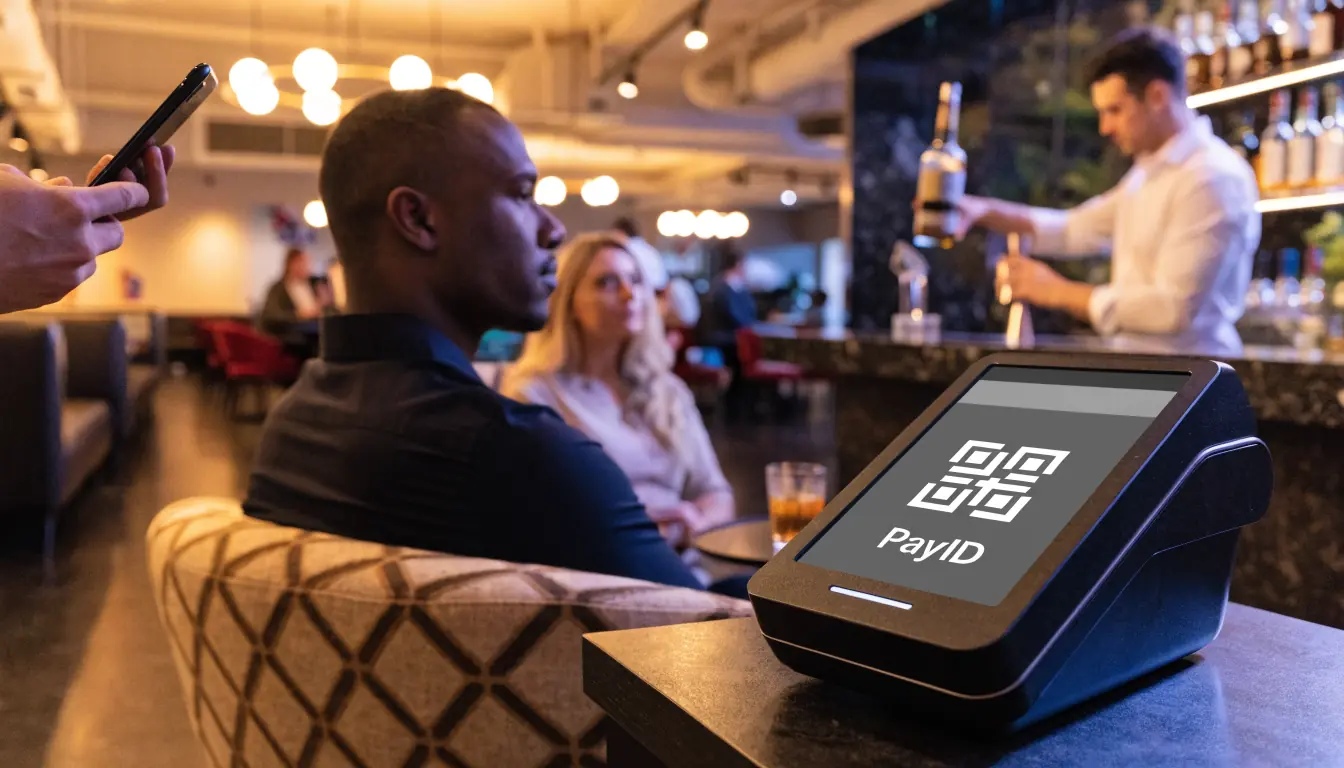
Australian players commonly use Visa and Mastercard (instant deposits, withdrawals 1–5 business days), e-wallets (same-day to 48-hour withdrawals), PayID for AUD deposits, prepaid vouchers like Flexepin, Neosurf and CashtoCode (deposit-only), bank transfers (up to 7 business days), and cryptocurrency. Crypto deposits confirm within minutes and withdrawals are usually processed within 24 hours, making them one of the fastest options.
How do I claim a bonus at a bitcoin casino?
Bonuses come with wagering requirements that lock your funds until the conditions are met, so check the terms before opting in. Bonus conditions are also one of the most common reasons a withdrawal gets paused, alongside KYC verification.
What are the typical withdrawal times for crypto casinos?
Cryptocurrency withdrawals are usually processed within 24 hours, with the fastest in the Australian market under two hours and sometimes instant. Most delays come from verification (KYC) steps, payment method limits and operator processing windows — not the crypto itself.
What law governs online gambling in Australia?
The Interactive Gambling Act 2001 (IGA) is the primary Commonwealth law governing online gambling, introduced with a public-protection and harm-minimisation mandate. It prohibits operators from offering online casino games to Australian residents — the ban targets the provider, not the player, so individuals are not breaking the law by playing at offshore casinos.
What is the minimum legal gambling age in Australia?
The minimum gambling age in Australia is 18, and this threshold applies regardless of jurisdiction or payment method, including crypto.