
Casino VIP Programs in Australia: 2026 Legal Overview
 Available in AU
- Online VIP Casinos in Australia – Legal Landscape
- VIP Casino Bonuses and Deposit Offers – What Australian Players Must Know
- Offshore Online Casinos and Their VIP Programs – Access and Risks
- Deposit Bonuses, Crypto Payments and Regulatory Restrictions
- Loyalty Schemes for Slot Players – How They Operate Under Australian Law
- Reward Structures in Australian VIP Casinos – Points, Cashback and Their Limits
- VIP Program Mechanics – Eligibility, Tier Progression and Compliance
- VIP Rooms and Crypto – Why Digital Currencies Are Not Accepted
- The 2026 Australian VIP Casino Program Overview – Key Takeaways
- VIP Casino Clubs – Structure and Regulatory Context
Online VIP Casinos in Australia – Legal Landscape
The phrase "VIP online casino" carries a certain promise: higher limits, personal account managers, invitations to exclusive tables. In Australia, that promise runs into a legal structure that is unusually lopsided. The games exist, the players exist, the demand exists — but the domestic licence does not. Any discussion of VIP programs at online casinos in Australia has to begin with this fact, because everything else follows from it.
What the Interactive Gambling Act 2001 Actually Does
The primary Commonwealth law governing online gambling in Australia is the Interactive Gambling Act 2001 (IGA). It was introduced to protect the public, with a stated focus on harm minimisation, and it does something quite specific: it criminalises the supply of online casino games by any operator, anywhere in the world, to persons located in Australia.
The scope is broad. Online casino-style games — slots, poker, blackjack, roulette — are prohibited under the IGA. It does not matter whether the operator sits in Malta, London or the Caribbean; if the service is delivered to someone physically in Australia, the supply is an offence under Australian federal law. There is no domestic licence an operator can obtain to run an online casino for Australian residents. The legal pathway simply does not exist. A bookmaker can get licensed; a casino operator cannot.
If you’re chasing a strong VIP program in 2026, it pays to check licensing, deposit bonus structure, and payout terms before committing loyalty to any casino.
License: Curacao Gaming Control Board OGL/2023/174/0082 (Dama N.V.) · Bonus: up to A$5,000 + 300 free spins across 4 deposits Operates under a Curacao Gaming Control Board license held by Dama N.V., with a welcome package spread across four deposits that includes free spins alongside the cash match.
License: Curacao Gaming Authority (Jumpman Gaming Ltd) · Bonus: up to A$6,600 + up to 250 free spins across 4 deposits Licensed by the Curacao Gaming Authority through Jumpman Gaming Ltd, offering a sizeable multi-deposit welcome bonus paired with free spins.
Bonus: 240% up to A$4,100 + 300 free spins Stands out for a high percentage match bonus combined with a generous batch of free spins, though other details remain unspecified.
License: Curacao eGaming OGL/2023/174/0082 (Dama N.V.) · Bonus: up to A$10,000 + 500 free spins across 4 deposits · Min. deposit: A$15 Holds a Curacao eGaming license via Dama N.V. and backs it with one of the larger welcome packages spread over four deposits, plus a low minimum deposit requirement.
License: Curacao Gaming Control Board OGL/2023/176/0095 (Hollycorn N.V.) · Bonus: up to A$5,000 + 300 free spins across 4 deposits Licensed by the Curacao Gaming Control Board under Hollycorn N.V., with a welcome offer split across four deposits that combines cash and free spins.
License: Curacao Gaming Control Board OGL/2023/176/0095 (Hollycorn N.V.) · Bonus: up to A$1,500 + 200 free spins across 3 deposits Also licensed under Hollycorn N.V. via the Curacao Gaming Control Board, offering a welcome bonus across three deposits with a moderate spins allocation.
License: Curacao eGaming OGL/2024/923/0383 (Antillephone N.V.) · Bonus: up to A$2,000 + 100 free spins across 2 deposits · Min. deposit: A$30 Operates under a Curacao eGaming license held by Antillephone N.V., with a two-deposit welcome bonus and a defined minimum deposit threshold.
Bonus: up to A$750 + 50 jackpot spins, 35x wagering · Payout speed: crypto ~90 minutes, fiat 1-5 days · Min. deposit: A$30 Notable for fast crypto payout turnaround alongside standard fiat processing times, with a jackpot-spins bonus carrying clear wagering terms and a set minimum deposit.
License: Curacao · Bonus: up to A$2,000 Curacao-licensed with a straightforward welcome bonus, though further specifics on terms are not detailed.
License: Curacao Gaming Control Board (TechSolutions Group N.V.) · Bonus: 100% up to A$250 + 100 free spins (1st deposit) Licensed by the Curacao Gaming Control Board through TechSolutions Group N.V., offering a first-deposit match bonus paired with free spins.
One point of housekeeping: some sources refer to an Interactive Gambling Act 1997 as the law prohibiting online casino games for Australian residents. The 2001 Act is the Commonwealth statute that regulators and enforcement actions actually cite. The discrepancy appears in secondary literature, and it is worth naming rather than smoothing over — the operative federal framework is the IGA 2001.
The Player Is Not the Target
This is the part most international commentary gets wrong, and it matters for anyone evaluating a VIP program from an Australian address. It is not illegal for a player in Australia to access and gamble at an online casino. The law targets operators, not players. An individual Australian who holds an account at an offshore-licensed online casino, plays at its tables and accrues loyalty points has not committed an offence under the IGA.
That asymmetry produces the market you actually observe: no enforcement risk on the player side, full enforcement risk on the operator side. Operators who accept Australian players do so in breach of Australian law and without any Australian licence to fall back on. Everything a VIP program offers — tiers, cashback, dedicated hosts — sits on top of that structural position. The perks are real enough as commercial propositions; the legal footing beneath them is not.
Who Regulates What: The Two-Level System
Australia has no single overarching statute and no single overarching gambling authority. Regulation occurs at two levels simultaneously: federal and state/territory. Understanding which regulator does what explains most of the confusion around "licensed" and "unlicensed" casinos in this market.

Federal level. The Australian Communications and Media Authority (ACMA) enforces the Interactive Gambling Act 2001. Its remit covers prohibited interactive gambling services — which includes online casinos and online slots — and it has the tools to act against them: investigation, formal warnings, and requests to internet service providers to block access to sites offering games not permitted under Australian law. ACMA, however, cannot recover funds for players or settle individual disputes with offshore operators. It polices the supply; it does not adjudicate the relationship between a player and a VIP host.
State and territory level. Each Australian state and territory has its own separate gambling regulator. These bodies license and supervise the gambling that is legal domestically — sports betting, lotteries, land-based casinos. The Victorian Gambling and Casino Control Commission (VGCCC), for example, monitors all wagering service providers, including those based in other states, for compliance with the National Consumer Protection Framework. Land-based casinos are regulated by state government regulators and law enforcement agencies, a separate track from ACMA’s federal oversight of online gambling.
The practical consequence: when an online casino advertises a VIP program to an Australian audience, no Australian regulator — state or federal — stands behind that program. There is no licence to verify, no registry to consult, no local authority to escalate a dispute to. State regulators have limited power over offshore online casinos; their jurisdiction ends where the domestic licence system ends.
Why There Is No "Best VIP Online Casino" in the Licensed Sense
Search interest in this market often takes the form of looking for the best VIP program at an online casino operating in Australia. The question assumes a comparison set that Australian law refuses to create. In jurisdictions with licensed online casinos — the United Kingdom under the UK Gambling Commission, for instance — a VIP program is a supervised product: the regulator can set conditions on it, inspect it, and sanction the operator over it. In Australia, that supervisory layer cannot exist, because the underlying service cannot be licensed in the first place.
Supplying online casino games to Australian players is a criminal offence for operators under the Interactive Gambling Act 2001.
This does not make VIP programs invisible. Offshore operators market them to Australian players — tiered membership, personalised bonuses, invitations to private tables — and players do enrol. But the comparison a UK or European reader can run, checking which licensed operator offers the better tier structure, has no Australian equivalent. The relevant comparison here is not between licensed programs; it is between unlicensed ones. Later sections of this article examine offshore operators and their VIP schemes in detail, including the risks that come with a program no Australian regulator will examine.
The VIP Room and the Law’s Blind Spots
The "VIP room" — an invitation-only space inside an online casino, with higher-stakes tables and a dedicated host — is a marketing construction, not a regulatory category. Australian law does not distinguish between a casual player spinning slots and a high-roller in a private roulette room. Both are accessing a prohibited interactive gambling service; neither commits an offence by doing so; the operator supplies both unlawfully.
This means the entire VIP apparatus — eligibility, tier progression, exclusive promotions — operates outside any Australian consumer protection framework designed for it. The National Consumer Protection Framework that the VGCCC and its counterparts enforce for wagering applies to licensed betting services. It does not extend to an offshore casino’s VIP lounge. Whatever rules govern that lounge are the operator’s own, changeable by the operator, and enforceable by nobody in Australia.
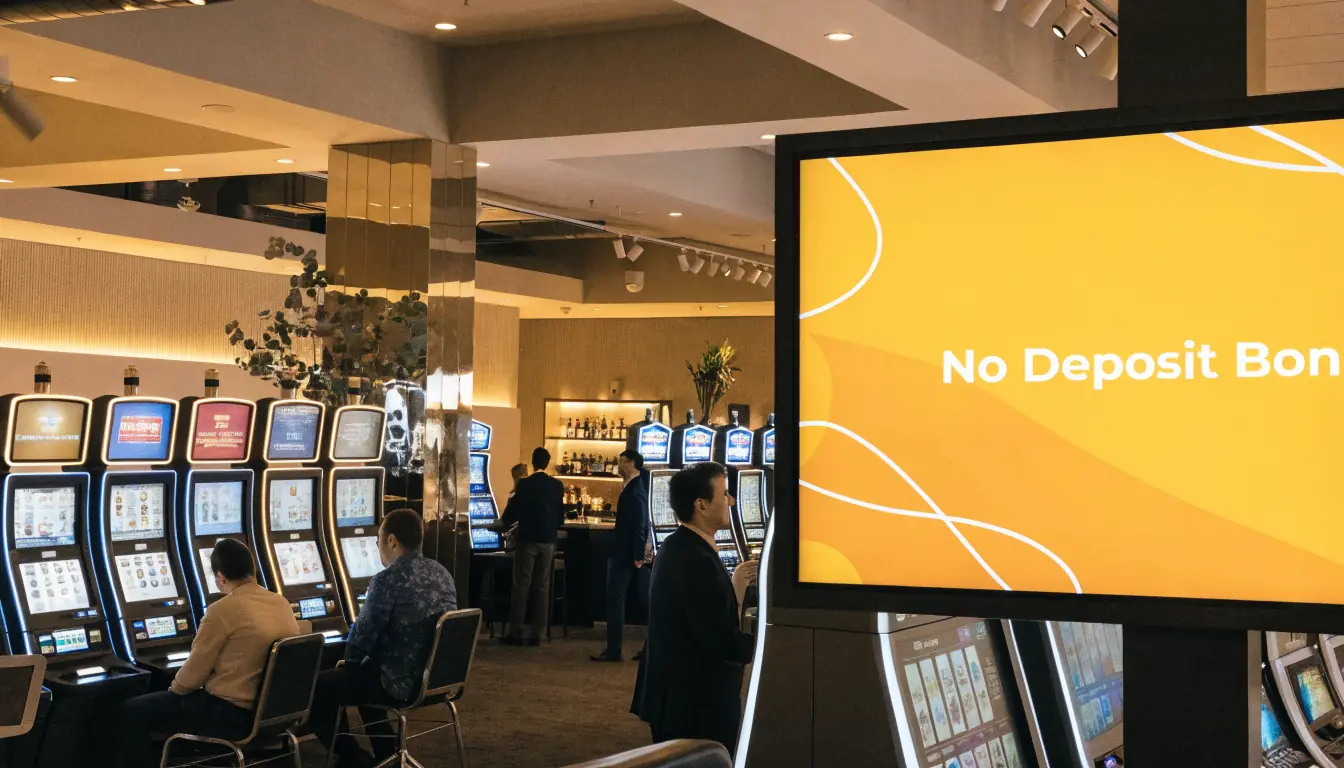
What This Means in Practical Terms
The legal landscape for online VIP casinos in Australia, stated without embellishment:
- Supply is prohibited. No operator, domestic or foreign, may lawfully provide online casino games — slots, poker, blackjack, roulette — to persons in Australia. There is no licence to obtain and no pathway to obtain one.
- Play is not prohibited. An individual Australian accessing and gambling at an online casino commits no offence. The IGA targets operators, not players.
- Enforcement is federal. ACMA enforces the IGA, investigates prohibited interactive gambling services, and can have illegal sites blocked. It does not recover player funds or resolve disputes.
- Domestic licensing covers other products. Sports betting is legal under state and territory licences; online casino games are not. Each state and territory maintains its own regulator for the products it licenses.
- VIP programs have no Australian regulatory status. Because the underlying service cannot be licensed, no Australian body supervises the VIP tiers, promotions or rooms attached to it.
The harm-minimisation purpose behind the IGA is worth keeping in view. The Act was not drafted as a revenue measure; it was drafted on the premise that online casino play presents risks that a licensing regime would not adequately contain. Whatever position one takes on that premise, the architecture it produced is coherent in its own terms: block the supply, leave the player alone, and give a federal regulator the tools to push illegal services out of reach.
For anyone weighing a VIP program from Australia, the calculation this section supplies is a denominator. The perks offered by an online VIP casino — whatever their size — are offered by an operator that Australian law defines as supplying a prohibited service, supervised by no Australian regulator, with no domestic licence behind any promise made. Subsequent sections address what that means for bonuses, deposits, offshore access and the mechanics of loyalty schemes specifically. Here, the point is narrower and prior to all of them: in Australia, the VIP online casino exists only in the space the law has declined to license, and every feature of it inherits that position.
VIP Casino Bonuses and Deposit Offers – What Australian Players Must Know
A bonus is a contract. It has a value, conditions attached to that value, and a set of rules that determines whether the value ever reaches the player. VIP bonuses are no different — they simply carry larger numbers and, usually, stricter conditions. Neither the size of the offer nor the label attached to it changes the underlying arithmetic, and none of it changes the legal position of the person accepting it in Australia.
What the market actually looks like
The starting point is fixed: online casino games — slots, poker, blackjack, roulette — are prohibited federally under the Interactive Gambling Act 2001, and there are no domestically licensed real-money online casino operators available to Australian players. Every VIP bonus, deposit offer or loyalty reward marketed to an Australian player comes from an operator holding no Australian licence, because no such licence exists to hold. That fact sits behind every offer in this category, whatever the landing page says.
Bonus enforcement
No Australian regulator will enforce VIP bonus or cashback terms – players rely solely on the offshore operator’s goodwill.
It also means there is no Australian regulator checking the bonus terms. The Australian Communications and Media Authority (ACMA) enforces the Interactive Gambling Act against the supply of prohibited services — it has ordered internet service providers to block illegal offshore gambling sites since November 2019, and according to iclg.com, as of August 2025 it had blocked 1,296 illegal gambling sites and affiliates since 2019, with 220 illegal services having voluntarily exited the Australian market. But ACMA does not verify whether an operator honours a bonus, and it cannot recover funds or settle disputes between a player and an offshore site. A bonus dispute is between the player and the operator alone.
The player, however, is not the offender. It is not illegal for individual Australians to play at offshore-licensed online casinos; the law targets operators, not players. Accepting a VIP bonus does not expose the player to liability. It exposes them to the terms of a contract with an entity outside Australian jurisdiction — a distinction that matters more than any percentage on the offer.
The types of offers on the table
VIP casino bonuses come in several recurring forms. Deposit matches, where the operator credits additional funds proportionally to a deposit, are the most common entry point. Reload offers repeat that structure for subsequent deposits. Cashback arrangements return a portion of losses over a defined period. So-called high-roller or VIP packages bundle several of these together and attach them to an invitation-only tier of the operator’s loyalty structure.

What separates a VIP offer from a general promotion is not the mechanism — a deposit match works identically at every tier — but the scale and the account manager attached to it. VIP support, dedicated hosts, expedited withdrawals and bespoke offers are the standard bundle. None of these are audited against any Australian standard, because no Australian standard applies. The specific numbers, wagering conditions and caps attached to VIP offers in this market are not published in any verifiable official source; operators set them individually and change them at will. Any site quoting exact figures for these terms is estimating.
Mandatory terms — and the ones worth insisting on
A bonus is only worth the conditions attached to it. The terms that determine value are:
- Wagering requirements. The multiple of the bonus that must be staked before withdrawal. This is the single number that converts an advertised amount into a realistic one, and it must be displayed before the offer is accepted. Operators that bury it are not offering a bonus; they are offering a wagering contract with a headline.
- Eligible games. Which games count toward the requirement, and at what weighting. Slots commonly count fully; table games often count fractionally or not at all. A bonus spent on excluded games is a bonus not received.
- Time limits and caps. The window in which the requirement must be completed, and any ceiling on winnings derived from bonus funds.
- Verification. Before any withdrawal, a government-issued identity document and a recent utility bill as proof of address are standard requirements. This applies to VIP accounts as much as any other, and delays in providing it are the most common source of stalled payouts.
Only players 18 and over may hold these accounts — the minimum legal gambling age in Australia is 18, and it applies to offshore play in practice if not in enforcement.
How bonus offers differ from VIP program structures
A bonus is a discrete transaction: one deposit, one set of conditions, one outcome. A VIP program is a standing arrangement built on accumulated play. The confusion between the two is where most disappointment originates. A large welcome deposit offer says nothing about how the operator treats long-term high-value players, and a prestigious-sounding VIP tier says nothing about the quality of its constituent bonuses. Each must be assessed on its own terms.
Two further points of separation deserve attention. First, VIP status is sometimes transferable in marketing claims — "transfer your VIP status" appears in promotional material from operators seeking to poach high-value players from competitors. There is no Australian framework governing such transfers, no registry confirming the transferred status, and no recourse if the receiving operator declines to honour it. The transfer is worth exactly as much as the operator’s willingness to honour it, which is to say: unverifiable in advance.
VIP status transfers are not recognised by any Australian authority; any promised transfer is purely at the operator’s discretion.
Second, payment methods are not neutral. Australian-facing operators do not accept credit cards or digital currencies for deposits — Bitcoin and Ethereum are not available as deposit routes on compliant services, a restriction examined in detail later in this article. A VIP bonus funded through a method the operator later queries is a bonus that can be revoked with the deposit attached.
The honest summary
VIP bonuses in this market are real offers from operators outside Australian jurisdiction, enforceable only by the operator’s own goodwill and any licence it holds elsewhere. The numbers attached to them are not published in any verifiable Australian source. What is verifiable: the player commits no offence by accepting one; no Australian body will arbitrate it; and the terms — wagering, eligible games, limits, verification — are the entire substance of the offer. Read them before the headline, not after.
Offshore Online Casinos and Their VIP Programs – Access and Risks
A domestically licensed online VIP casino does not exist in Australia. The Interactive Gambling Act 2001 criminalises the supply of online casino games — slots, blackjack, roulette, poker — to persons located in Australia, and no licence can be obtained domestically to operate such a service. Every VIP program an Australian player encounters online is therefore offered by an operator based and licensed elsewhere. That single fact shapes everything else about access, protection and risk.
Who the operators are and why they are offshore
The operators running VIP programs for Australian players hold licences from foreign regulators — the Malta Gaming Authority, the UK Gambling Commission and comparable bodies elsewhere. Their right to serve customers in those jurisdictions says nothing about their right to serve customers here. Under the Interactive Gambling Act 2001, supplying online casino games to a person in Australia is an offence regardless of where the operator sits. An offshore licence does not cure that defect; it simply places the operator beyond the practical reach of Australian authorities.

Two consequences follow. First, Australian regulators cannot licence, supervise or audit these programs — no regulator here inspects their loyalty terms, their tier criteria or their payout practices. Second, state and territory bodies such as the Victorian Gambling and Casino Control Commission and Liquor & Gaming NSW have only limited power over offshore online casinos. Their mandate covers domestic licensees; an operator with no Australian licence falls largely outside it.
Access: not illegal for the player, blocked at the network
The law targets the supplier, not the customer. It is not illegal for an individual in Australia to access and gamble at an offshore online casino, and no player has reason to fear prosecution for it. The enforcement burden sits entirely on the other side of the transaction.
The federal regulator, the Australian Communications and Media Authority (ACMA), enforces the Act through blocking. Since November 2019 it has ordered internet service providers to block access to illegal offshore gambling sites, including online casinos and their affiliate pages. The blocking figures grow over time and sources disagree on the current count: one figure reported in 2024 put the number at 975 blocked sites and affiliates, while a later source, iclg.com, put it at 1,296 as of August 2025, with over 220 services having exited the Australian market rather than remain blocked. The two counts describe different points in time; what is not disputed is the direction of travel. A VIP casino accessible today may not resolve next month.
Blocking is also the practical ceiling of ACMA’s power. The regulator can investigate and block prohibited interactive gambling services, but it cannot recover funds from an offshore operator or settle an individual player’s dispute. If a VIP program withholds a cashback payment, closes an account or changes tier terms after the fact, there is no Australian body that can compel a remedy. Whether the operator’s own licence authority — Malta, the UK or another — will intervene depends on whether the dispute falls within that authority’s remit for a non-domestic player, and the player bears the burden of finding out.
Site blocking
ACMA can block access to offshore gambling sites at any time, which may instantly cut off a player’s VIP account.
Risks specific to VIP arrangements
The structural risks of offshore play are compounded by how VIP programs are built. Eligibility for a VIP tier depends on volume — deposits, wagers, playing time. An offshore program with no Australian oversight applies its own criteria, changes them at its own discretion, and discloses only what its own licence requires. For programs serving markets where online casino gambling is prohibited, the disclosure baseline can be minimal. Official sources publish nothing on the mechanics, limits or terms of VIP programs offered to Australians; that absence is itself information. Any specific figure a site quotes — a cashback rate, a tier threshold, a withdrawal priority — is that site’s assertion, not a verifiable market norm.
Two further points deserve weight:
- Enforcement asymmetry. No operator has ever been charged with an offence under the Interactive Gambling Act 2001. Enforcement has relied on blocking and voluntary exits rather than prosecution, which means offshore operators face a game of access, not existential legal risk.
- Payment restrictions travel poorly. Australian rules prohibit deposits by credit card and digital currencies. Offshore VIP programs marketed internationally — including those advertising Bitcoin and Ethereum deposits — operate outside those rules. What is offered and what is lawful here are two different questions, addressed separately in the section on crypto payments and deposit bonuses.
The comparison with what is regulated
The contrast with legal domestic gambling is instructive. Land-based casinos in Australia are regulated by state government regulators and law enforcement agencies — a Victorian or New South Wales casino operates under continuous supervision, and a high-roller dispute has a regulator to go to. Online sports betting is licensed at state and territory level, with the Northern Territory Racing Commission licensing most national bookmakers, and consumer protections applying to those licensees. Online VIP casino play has no equivalent. The player deals with a foreign entity, under foreign rules, reachable only through channels the entity itself controls.
That is the honest arithmetic of the arrangement. Access carries no legal penalty, but it also carries no protection: no Australian licence to verify, no domestic regulator to complain to, no fund-recovery mechanism, and a network-level block that can remove the service at any time. A VIP tier at an offshore casino is only as durable as the operator’s continued willingness — and technical ability — to serve this market.
Deposit Bonuses, Crypto Payments and Regulatory Restrictions
A deposit bonus is the mechanism most commonly attached to VIP offers at online casinos serving Australian players: the operator matches a deposit with bonus funds, and the money becomes withdrawable once conditions attached to it are met. How those offers are funded — and specifically whether cryptocurrency can be used to claim them — is not a matter of operator preference in Australia. It is a matter of regulation, and the regulation is restrictive on both counts.

Digital currencies are off the table
Digital currencies such as Bitcoin and Ethereum cannot be used for deposits or betting in the Australian gambling context. The prohibition is not a policy adopted by individual operators that a competitor might waive; it applies across the regulated market. Operators are equally barred from accepting credit cards for deposits or betting.
The practical consequence for VIP bonus hunting is straightforward: any offer advertised as a Bitcoin VIP casino bonus or a crypto welcome package sits on the opposite side of the regulatory line from the accounts a compliant operator maintains. Bitcoin and Ethereum appear in the payment arsenals of offshore operators that still serve Australians, but an offer denominated in digital currency is, by that fact alone, an offer from a service outside what Australian law permits. Section 8 of this article examines the crypto ban in VIP rooms in detail; the point here is narrower — the deposit bonus itself is treated as a regulated financial product, not a free gift, and the payment channel feeding it is regulated with it.
Digital‑currency deposits are prohibited for Australian players; crypto‑based VIP offers are therefore unavailable under local law.
What the regulator actually does about these offers
The Australian Communications and Media Authority (ACMA) enforces the Interactive Gambling Act 2001 against prohibited interactive gambling services. Its enforcement record on that front is measurable:
- Since November 2019, ACMA has ordered internet service providers to block illegal offshore gambling sites.
- Reported figures on the scale of blocking diverge. One account, published in 2024, put the number of blocked gambling and affiliate websites at 975 since November 2019. A later source (iclg.com, as of August 2025) puts the figure at 1,296 blocked illegal sites and affiliates since 2019, with over 220 services having voluntarily exited the Australian market. The two counts are not reconcilable from published data; the direction, however, is consistent — the list grows.
- One source (theiaga.org) reports more than 100 illegal gambling services, including online casinos, having exited the Australian market since ACMA began enforcing new rules in 2017. Again, a single-source figure, and again one that understates rather than overstates the position once later exits are counted.
Blocking matters for deposit bonuses specifically because it removes the entire commercial apparatus behind them: a blocked domain does not resolve, an affiliate link does not convert, and a pending bonus balance on a blocked service is not recoverable through the regulator. ACMA can investigate and block prohibited services, but it cannot recover funds or settle individual disputes with offshore operators. A no-deposit bonus or a matched VIP deposit bonus held with a blocked offshore service is, from the player’s side, an unsecured claim against an unregulated counterparty.
Where that leaves the bonus itself
None of this makes the deposit bonus unlawful to hold — just as playing at an offshore casino is not unlawful for the individual. It makes the bonus an offer whose enforceability depends entirely on the operator’s own terms, with no Australian regulator available as a fallback. The terms attached to such offers — wagering requirements, eligible games, caps — are set unilaterally by operators outside Australian jurisdiction, and official Australian sources publish no comparison data on those conditions. What is verifiable is the enforcement environment the offer sits in, and that environment is documented above: blocking orders since 2019, a growing block list, and services exiting the market under pressure.

Loyalty Schemes for Slot Players – How They Operate Under Australian Law
Slot loyalty schemes occupy an awkward position in Australia. They are among the most heavily marketed features of VIP casino programs overseas, yet the games they reward cannot lawfully be offered to Australian residents online.
What the law actually prohibits
The Interactive Gambling Act 2001 is the operative statute. Under it, online casino-style games — slots, poker, blackjack and roulette — are prohibited from being provided to persons in Australia. This is not a licensing question: there is no domestic licence an operator could hold to run online slots legally, so there is no lawful local product to which a slot loyalty scheme could be attached.
The Australian Communications and Media Authority (ACMA) is the federal regulator that enforces the Act. Its tools include requesting internet service providers to block websites that offer prohibited games — online slots among them. Any loyalty program built around online slot play is, by extension, attached to a service that sits squarely within ACMA’s enforcement remit.

Where loyalty schemes do operate lawfully
Loyalty structures around slot play exist legally in one place: land-based venues. Physical casinos and clubs in Australia are regulated by state and territory authorities, each with its own separate gambling regulator. Membership programs, points earned on machine play and associated perks at physical venues operate under those state-level frameworks — a different regulatory lineage from anything offered online.
This distinction matters for anyone comparing offers. An online casino advertising a slot loyalty program to Australian players is not offering a locally regulated version of what a land-based club provides. It is offering a program attached to a service that federal law prohibits, enforced by ACMA at the Commonwealth level, with state regulators holding limited power over offshore operators.
How this separates slot schemes from other VIP benefits
Other components of VIP programs — cashback, deposit-linked offers, tier progression — are at least arguable in other regulated contexts, such as licensed online sports betting. Slot loyalty schemes have no such fallback. The rewards themselves may look identical to what a player earns in a licensed venue: points accrued per wager, redeemable for benefits. The legal footing is not identical, and the difference is structural rather than cosmetic.

What operators do not publish
There are no published, verifiable terms for how slot loyalty schemes apply specifically to Australian players — neither regulators nor operators release standardised accrual rates, redemption values or tier thresholds for this market. Any specific figures a site presents in its marketing are the operator’s own unverified claims, produced outside any Australian regulatory framework that could check them.
The practical position
A player earning loyalty points on online slots through an offshore site is gambling with an operator that no Australian regulator licenses, supervises or can compel to honour the scheme. ACMA can investigate and block prohibited services, but it cannot recover funds or settle disputes over loyalty points, redemptions or perks. The scheme’s terms bind the player to whoever wrote them — and to nobody else.
Land-based programs, by contrast, sit under a state regulator with a licence to lose. That asymmetry, more than any difference in rewards, is what Australian law produces.

Reward Structures in Australian VIP Casinos – Points, Cashback and Their Limits
VIP casino rewards in Australia exist in two separate worlds, and the distinction matters more than the rewards themselves.
Points and Cashback: Where They Actually Exist
Points-based reward structures, cashback and tiered perks are features of offshore online casinos. There are no domestically licensed real-money online casino operators available to Australian players, so every points scheme, cashback rate or invitation-only VIP tier marketed to Australians is run by an operator holding a licence elsewhere — typically Malta or the United Kingdom — not in Australia.
This has a concrete consequence. The Australian Communications and Media Authority (ACMA) is the federal regulator that enforces the Interactive Gambling Act 2001, and ACMA can investigate and block prohibited interactive gambling services, but it cannot recover funds or settle individual disputes with offshore operators. A cashback promise that goes unfulfilled has no domestic complaint body behind it. ACMA has ordered internet service providers to block illegal offshore gambling sites since November 2019, which is the extent of its leverage: blocking, not arbitration.
What VIP Casino Reviews Can and Cannot Verify
A vip casino review published offshore may describe a points accrual system, a cashback percentage or a redemption schedule. None of those figures can be checked against an Australian register, because no such register exists — there is no domestic online casino licence and therefore no licensed VIP scheme to compare against. The review is only as reliable as its source.
What is verifiable is the surrounding framework:
- Points and cashback offers sit under the Interactive Gambling Act 2001, which prohibits the supply of online casino games to persons in Australia.
- The player is not the target: it is not illegal for individual Australians to play at offshore-licensed online casinos.
- Payment rules apply regardless of tier: credit cards and digital currencies are not accepted for deposits or betting, so a VIP perk promising crypto cashback is not a benefit available under Australian rules.
- Identity verification applies before any withdrawal, and it applies to VIP members the same as everyone else: a government-issued identity document and a recent utility bill.
The Limits That Define the Category
The legal limits on these reward structures do not come from a cap on cashback or a points-accrual ceiling — no such Australian figures are published, and inventing them would serve no one. The limits come from structure: an unlicensed-in-Australia operator, a regulator with enforcement power but no dispute power, and no domestic recourse if the rewards fail to arrive. That is the full shape of the offer, and it is visible before the first point is earned.
VIP Program Mechanics – Eligibility, Tier Progression and Compliance
VIP programs in the online casino world follow a familiar template: a player accumulates turnover, crosses a threshold, and is moved into a tier with attached benefits. Eligibility is decided by the operator, tier progression is calculated by the operator, and the perks are granted at the operator’s discretion. None of this is governed by an Australian licence, because no such licence exists — there is no domestic pathway to becoming a regulated online casino, and therefore no Australian authority that supervises how a VIP tier is defined, entered, or maintained.

Where the supervision actually sits
Gambling regulation in Australia is split across two levels. There is no single overarching statute or single gambling authority covering the whole country; regulation occurs at both the federal level and the state and territory level, and each state and territory maintains its own separate gambling regulator. At the federal level, the Interactive Gambling Act 2001 governs online gambling, while bodies such as the Victorian Gambling and Casino Control Commission and Liquor & Gaming NSW operate within their own jurisdictions.
For online wagering specifically, the Northern Territory Racing Commission has become the de-facto national regulator — it licenses most of the country’s online bookmakers, who benefit from lower tax under the Territory’s regime. But the NTRC’s reach extends to sports betting, not to casino VIP schemes. A points ladder on an offshore casino site sits outside every one of these regulators’ remits.
What that means for eligibility and progression
The practical consequences are straightforward:
- Eligibility criteria are unpublished and unstandardised. Operators do not disclose thresholds under any Australian disclosure obligation, because none applies to them. What counts toward a tier, and how quickly, is information the operator alone holds.
- Tier progression is not appealable locally. Australian regulators can investigate and block prohibited interactive gambling services, but they cannot recover funds or settle individual disputes with offshore operators. A demotion or a frozen tier is, in regulatory terms, a dead end.
- Compliance runs one way. The operator may demand identity documents, but no regulator checks whether the operator honours its own VIP terms.
This is not an argument against VIP programs as a concept. It is a description of who answers for them: nobody in Australia.
VIP Rooms and Crypto – Why Digital Currencies Are Not Accepted
A VIP room in an online casino is the top tier of an operator’s loyalty structure: the point where a player is moved out of the general queue and into personalised service. Overseas, the "crypto casino VIP" model is well established — offshore sites built around Bitcoin and Ethereum market dedicated VIP rooms with cryptocurrency deposits as a core feature. In Australia, that combination does not exist in any regulated form, and the reason is structural rather than commercial.
The first barrier is the Interactive Gambling Act 2001. Online casino games — slots, blackjack, roulette, poker — cannot be offered to persons located in Australia under any licence, domestic or foreign, and no domestic online casino licence exists to apply for. A VIP room is a feature of an online casino product; where the product itself is prohibited, the feature does not have a lawful version. This is covered in detail in the legal landscape section earlier in this article and is not repeated here.
The second barrier applies even to offshore operators that accept Australian players despite the ban. Australian law prohibits accepting digital currencies for deposits or betting. An offshore site running a crypto VIP program for other jurisdictions cannot extend that deposit channel to Australian accounts without breaching Australian rules on top of the Interactive Gambling Act. Credit cards are in the same category. The result: for an Australian account, whatever a site offers elsewhere, the crypto entry point is closed.
Enforcement gives the position practical weight. The Australian Communications and Media Authority (ACMA) can request that internet service providers block websites offering games not permitted under Australian law — online casinos, online slots and in-play online sports betting are named categories. According to iclg.com, as of August 2025 ACMA had blocked 1,296 illegal gambling sites and affiliates since 2019, and 220 illegal services had voluntarily exited the Australian market. Sites whose Australian-facing offer leans on crypto deposits sit squarely in that enforcement pool.

What this leaves is a narrow set of facts. Crypto-based VIP rooms are popular in markets where online casinos are licensed and digital-currency deposits are permitted; Australia meets neither condition. A player searching for a crypto casino VIP experience accessible from Australia is looking at offshore operators operating outside Australian law — the risks of that route are set out in a separate section. There is no regulated Australian alternative, and no official source publishes one, because the underlying product cannot be licensed here.
The 2026 Australian VIP Casino Program Overview – Key Takeaways
The regulatory position that shapes every VIP casino program in Australia in 2026 has not changed in its fundamentals. Online casino games — slots, poker, blackjack, roulette — remain prohibited under the Interactive Gambling Act 2001, and no domestic licence exists that would allow an operator to offer them legally. A VIP program attached to an online casino therefore operates in a legal grey zone at best: the law targets the operator, not the player, but the product itself has no lawful domestic channel.
Key regulatory points:
- The Interactive Gambling Act 2001 remains the primary Commonwealth law, with harm minimisation as its stated focus.
- The Australian Communications and Media Authority (ACMA) enforces the Act and has blocked illegal gambling and affiliate websites since November 2019. Figures vary by source and date — reporting in 2024 cited 975 blocked sites, while data published by iclg.com as of August 2025 put the number at 1,296, with over 220 services voluntarily exiting the market.
- Each state and territory regulates gambling separately. The Victorian Gambling and Casino Control Commission (VGCCC) monitors all wagering service providers, including those based in other states, for compliance with the National Consumer Protection Framework — but regulators like VGCCC and Liquor & Gaming NSW have limited power over offshore online casinos.
Operational consequences for VIP programs:
- There are no domestically licensed real-money online casino operators, so any VIP scheme marketed to Australian players sits with an offshore operator outside local regulatory reach.
- Payment restrictions apply: credit cards and digital currencies cannot lawfully be accepted for deposits or betting.
- Identity verification — government-issued ID before withdrawals, and proof of address for account verification — is a standard compliance requirement.
The practical summary is short. VIP rewards, tiers and perks exist in this market only through operators Australian regulators cannot directly control, while the enforcement tools that do work — site blocking — target the operators themselves. No official source publishes standard VIP program terms for Australia, because no such program operates under an Australian licence.
VIP Casino Clubs – Structure and Regulatory Context
A VIP casino club, in the Australian context, is a membership-based arrangement attached to a licensed gambling venue. The club tiers its patrons by play volume and issues rewards accordingly. What separates this arrangement from anything discussed earlier in this article is jurisdiction: a physical VIP club operates inside a land-based casino, and land-based casinos answer to state government regulators and law enforcement agencies — a framework entirely separate from the federal ACMA regime that governs, and prohibits, online casino play.
This division of power is structural. Australia has no single gambling authority and no single statute covering the whole market. Each state and territory maintains its own regulator — the Victorian Gambling and Casino Control Commission in Victoria, Liquor & Gaming NSW in New South Wales, and their counterparts elsewhere. A VIP club operating in a Melbourne casino room is licensed, supervised and, where warranted, disciplined by the Victorian regulator. The same club’s conduct would fall to a different body in Perth or Adelaide.
The practical consequences for club members follow from this structure:
- Licensing is verifiable. Unlike the offshore online space, a land-based club sits behind a licence issued by an identifiable state authority, with enforcement powers attached.
- Compliance obligations run to the venue, not the patron. Identity verification, responsible-gambling obligations and exclusion procedures are the regulator’s instruments against the operator.
- Oversight stops at the border of the venue. State regulators have limited power over offshore online casinos; their authority is real but local.
What the clubs themselves do not publish is the internal detail: tier thresholds, reward rates and host arrangements at specific venues are set by each operator and are not held to a common disclosure standard. Regulators supervise the conduct; they do not publish the terms of membership.
For anyone comparing a VIP club membership against the online VIP programs described elsewhere on Casino Regional Guide, the distinction is a fixed one: the club sits inside a regulated, state-licensed venue, while the online program sits in the space the Interactive Gambling Act 2001 closes to operators. That difference — not the rewards themselves — is the whole of the regulatory context.
Are crypto casinos legal in Australia in 2026?
No. The Interactive Gambling Act 2001 prohibits the supply of online casino games to persons located in Australia regardless of currency or payment method, so crypto casinos cannot be licensed or legally offered here.
Is it illegal for a player in Australia to access and gamble at an online casino?
No. The IGA targets operators, not players — an individual Australian who plays at an offshore-licensed online casino has not committed an offence. The enforcement risk sits entirely on the operator side.
What is the process of applying for a Licence for a Relevant Product?
There is no such pathway for online casinos in Australia — it is illegal to offer online casino gambling domestically and no licence to operate one can be obtained. Licences under state/territory regimes exist only for legal products like sports betting and lotteries.
Published by the Casino Regional Guide team.