
Best New Australian Online Pokies in 2026

What Are the Latest Australian Online Pokies in 2026?
The short answer to what the newest online pokies look like in 2026 is structural, not nominal: the games themselves have not changed as much as the environment around them. What sits behind the reels — who hosts the game, under whose licence, through which payment rails, and with what verification requirements — is where almost all of the movement has happened. The reels are the stable part.
Before any of that, one framing point that everything else depends on. Under the Interactive Gambling Act 2001, the Commonwealth law that governs online gambling in Australia, online casino games — pokies included — cannot be lawfully offered to Australian residents by operators targeting this market. There is no domestic licence an online casino can hold here, and there is no public register of licensed casino operators, because no such licence exists to list. The law is enforced by the ACMA, and it is aimed at providers, not at individuals. It is not illegal for an Australian to play at an offshore-licensed casino; the prohibition sits with the party offering the service. This distinction shapes everything about how new pokies reach Australian players in 2026: the games arrive through offshore platforms, not through a regulated local market. Any discussion of "the latest pokies" that skips this point is describing a shelf without describing the shop.
With so many new pokies sites launching in Australia for 2026, it helps to see at a glance what each licence and welcome offer actually covers before you sign up.
License: Curacao Gaming Control Board OGL/2023/174/0082 (Dama N.V.) · Bonus: up to A$5,000 + 300 free spins across 4 deposits Holds a Curacao Gaming Control Board licence issued to Dama N.V., and backs its offering with a multi-deposit welcome package worth up to A$5,000 plus 300 free spins spread across four deposits.
License: Curacao Gaming Authority (Jumpman Gaming Ltd) · Bonus: up to A$6,600 + up to 250 free spins across 4 deposits Licensed under the Curacao Gaming Authority through Jumpman Gaming Ltd, with a sizeable four-deposit welcome bundle reaching up to A$6,600 and up to 250 free spins.
Bonus: 240% up to A$4,100 + 300 free spins Stands out for a straightforward percentage-based bonus, offering 240% up to A$4,100 alongside 300 free spins.
License: Curacao eGaming OGL/2023/174/0082 (Dama N.V.) · Bonus: up to A$10,000 + 500 free spins across 4 deposits · Min. deposit: A$15 Operates under a Curacao eGaming licence held by Dama N.V. and pairs a low A$15 minimum deposit with a large four-deposit bonus package worth up to A$10,000 and 500 free spins.
License: Curacao Gaming Control Board OGL/2023/176/0095 (Hollycorn N.V.) · Bonus: up to A$5,000 + 300 free spins across 4 deposits Licensed by the Curacao Gaming Control Board under Hollycorn N.V., offering a welcome package of up to A$5,000 plus 300 free spins across four deposits.
License: Curacao Gaming Control Board OGL/2023/176/0095 (Hollycorn N.V.) · Bonus: up to A$1,500 + 200 free spins across 3 deposits Also holds a Curacao Gaming Control Board licence via Hollycorn N.V., with a more modest three-deposit bonus structure of up to A$1,500 and 200 free spins.
License: Curacao eGaming OGL/2024/923/0383 (Antillephone N.V.) · Bonus: up to A$2,000 + 100 free spins across 2 deposits · Min. deposit: A$30 Licensed under Curacao eGaming through Antillephone N.V., requiring a A$30 minimum deposit for a two-deposit bonus of up to A$2,000 plus 100 free spins.
Bonus: up to A$750 + 50 jackpot spins, 35x wagering · Payout speed: crypto ~90 minutes, fiat 1-5 days · Min. deposit: A$30 Notable for its payout speed, with crypto withdrawals processed in around 90 minutes and fiat in one to five days, alongside a jackpot-spins bonus of up to A$750 under 35x wagering and a A$30 minimum deposit.
License: Curacao · Bonus: up to A$2,000 Operates under a Curacao licence and offers a welcome bonus of up to A$2,000.
License: Curacao Gaming Control Board (TechSolutions Group N.V.) · Bonus: 100% up to A$250 + 100 free spins (1st deposit) Licensed by the Curacao Gaming Control Board via TechSolutions Group N.V., with a first-deposit bonus matching 100% up to A$250 plus 100 free spins.
With that in place, the actual landscape can be described honestly.
What "New" Means in Pokies in 2026
Newness in pokies has three distinct layers, and conflating them produces most of the confusion in this space.
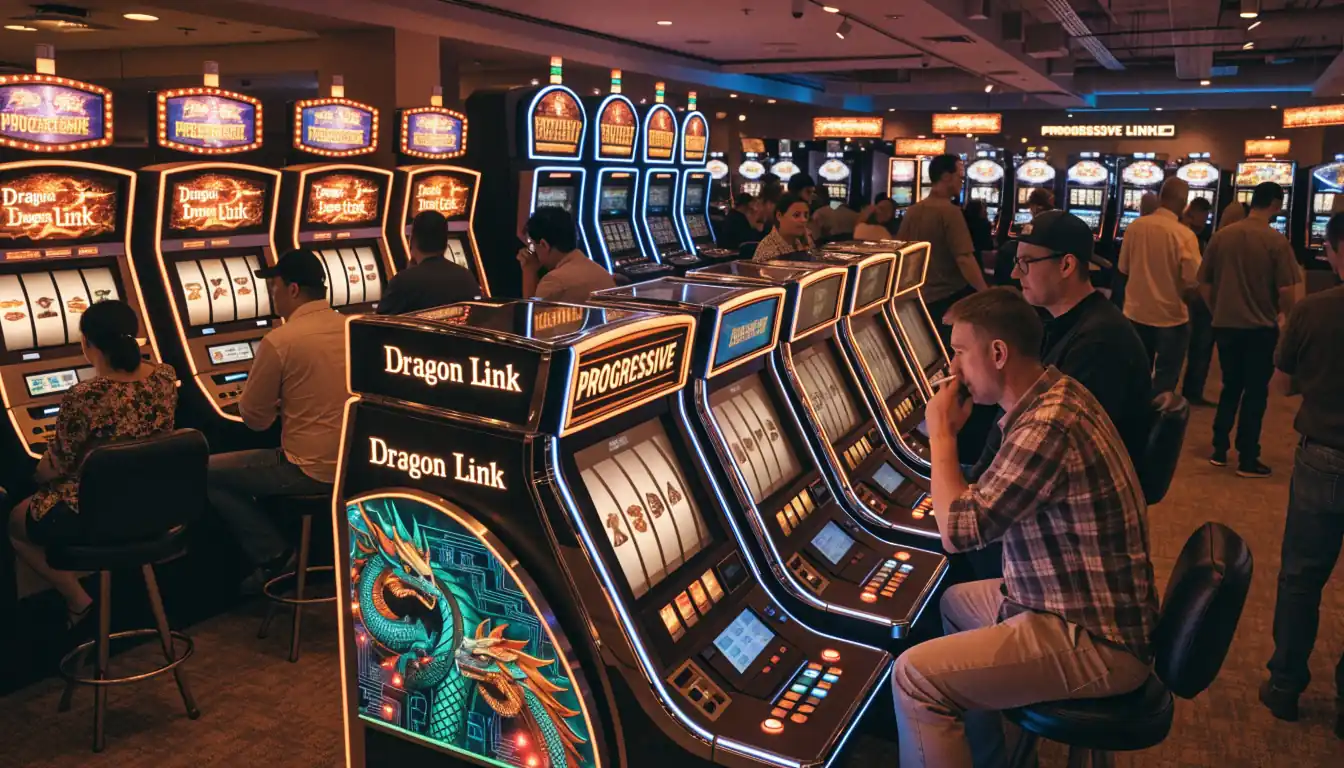
The first layer is the game build. New releases each year bring updated mechanics — cluster pays instead of fixed paylines, cascading or tumbling reels that replace winning symbols, hold-and-respin features, buy-a-bonus options where a feature round can be purchased outright instead of chased, and expanding or multiplier wilds layered on top of base gameplay. These mechanics are not unique to any one title or provider; they spread across studios the way camera features spread across phone manufacturers. A "new" pokie in 2026 is far more likely to be a recombination of established mechanics with a new skin than a genuinely novel engine. That is not a criticism — the mechanics that survive are the ones players return to — but it recalibrates what a new release is worth.
The second layer is the platform. A game can be years old and still be "new" to a player if the casino hosting it launched recently, or added that provider’s catalogue in the current year. A great deal of what gets marketed as new pokies is new hosting, not new games. When a fresh offshore casino enters the Australian-facing market, its marketing leans heavily on its pokies library precisely because the library is the cheapest thing to assemble: studios licence their games broadly, and a new platform can launch with a catalogue that looks enormous on day one.


The third layer is the payment and account model wrapped around the game. This is the layer that genuinely changed in recent years, and it is the one Australian players most need to understand — because it is the layer where the law, not the game design, determines what is available.
Game Mechanics: What Current Releases Actually Do
Since no specific titles can be responsibly named here — there is no verified source for a ranked list of 2026 releases with measurable attributes, and inventing one would be worse than saying so — the mechanics themselves are the useful unit of description.
Cascading and tumbling reels. Winning symbols disappear and new symbols drop into the gaps, allowing consecutive wins from a single spin. The mechanic has been standard long enough that its absence in a new release is now more notable than its presence.
Cluster pays. Wins formed by adjacent symbol groups rather than by lines running left to right. Combined with cascades, this is the backbone of most current feature-heavy builds.
The listed mechanics – cascades, clusters, hold‑and‑respin, buy‑a‑bonus and multiplier wilds – are standard across both offshore and crypto platforms; they do not indicate a uniquely Australian offering.
Hold-and-respin. Special symbols lock in place while remaining positions respin, often with a countdown of respins that resets when new locking symbols land. It is the structure behind most jackpot-style features in current releases.
Buy-a-bonus. The player pays a fixed multiple of the base bet to trigger the feature round directly. The fixed multiple is disclosed at the point of purchase on platforms that publish game rules, and it is the single most useful number to read before using the feature — it prices the feature precisely and lets the purchase be judged as the transaction it is.
Multiplier wilds and expanding symbols. Wild symbols carrying multipliers, or expanding to cover a reel, are now so common in new builds that they function as baseline expectations rather than selling points.
None of these mechanics is specific to Australian-facing platforms, and none is specific to crypto casinos. The difference between platforms is not the engine; it is everything around the engine.
Themes and Presentation
Themes in current pokie releases run in well-marked grooves: ancient civilisations, gold rushes and bushranger-era Australiana, Irish luck, Norse mythology, luxury-and-wealth imagery, animal safaris, fruit-machine nostalgia, and licensed or pseudo-licensed entertainment properties. The theming is largely cosmetic — it sets the art, the sound design and the symbol set, but the mathematics underneath is built from the mechanics above and is indifferent to whether the symbols are scarabs or gold nuggets.


The one trend worth separating from the rest is presentation depth. Newer releases increasingly use short animated intros, persistent character animation during base play, and evolving environments — a background that changes state as the session progresses. This is a retention design decision: sessions that feel like they are going somewhere keep players seated. It is neither a feature to seek out nor one to avoid, but recognising it as retention design rather than gameplay value is a fairer way to read it.
Where themes intersect with the Australian market specifically, local imagery — outback, native wildlife, colonial-gold motifs — is reliably overrepresented in catalogues marketed to Australian players. Platforms curate by audience, and the curation is visible in the front page of any offshore casino that targets this market. That front-page curation, not the studio’s release calendar, is what determines which new games an Australian player actually encounters first.
The Platforms Hosting New Pokies
Here the picture sharpens, because the hosting layer is where verified statements can be made.
There are no domestically licensed real-money online casino operators available to Australian players. Every platform offering real-money pokies to this market operates from offshore licensing — commonly Curacao or Malta. This is not a loophole description; it is simply the entire structure of the market. The ACMA’s enforcement powers under the Interactive Gambling Act are directed at unlicensed offshore operators actively offering casino services to Australian residents, and the regulator has used those powers against operators and, separately, against payment paths. The platforms that continue to serve this market do so from jurisdictions whose licences do not carry Australian regulatory protection — which matters when something goes wrong, because there is no Australian authority to complain to about an offshore casino’s conduct.
Legal risk
Offering real‑money online pokies to Australian residents without an Australian licence breaches the Interactive Gambling Act and can lead to enforcement action against the operator.
Within that structure, the hosting market divides broadly by payment model.
Card-and-wallet offshore casinos operate on the conventional model: account registration, identity verification, deposits by card or regionally available payment rails, and game catalogues assembled from the same studios that supply regulated markets elsewhere. The mechanics and themes described above are identical here; the difference sits in account friction, withdrawal processing, and the operator’s own conduct standards, which vary widely because no Australian oversight applies.
Crypto casinos are the structurally newer hosting model, and the verified facts about them are specific. They offer faster banking and wider payment flexibility than card-led systems — deposits can be confirmed quickly, often within minutes. Bitcoin is the most widely accepted cryptocurrency, and many crypto casinos also support Ethereum, Litecoin, USDT, Dogecoin, Solana, Ripple and other altcoins. Withdrawals are the point of genuine divergence in the reporting on this market: some sources describe withdrawals as instant or processed within hours, often clearing in minutes with low fees, while others note that withdrawals depend on casino approval and blockchain processing, which may delay them. Both statements describe real experiences — the approval step sits with the operator, the processing step sits with the blockchain, and only the second is predictable. A withdrawal speed estimate that ignores the operator’s approval queue is not an estimate.

Two technical features distinguish the stronger end of the crypto casino segment. The first is provably fair technology: the outcome-generating randomness is committed to a cryptographic hash before the play, and the player can verify afterwards that the result was not altered after the fact. This is a genuine verification mechanism, not a marketing label, and its presence or absence in a platform’s documentation is a checkable fact. The second is decentralised operation: some platforms run on protocols where no single company controls player funds or game outcomes. This is a smaller segment, and one industry review attributes to it — and, separately, to a handful of platforms issuing native tokens with staking rewards and governance rights — features that should be treated as characteristics of specific platforms rather than norms of the category. On the question of which crypto casinos sit at the top for Australian players, one industry review names three operators; that ranking reflects one review’s methodology, not a settled market consensus, and the names are better checked against the operators’ own published terms than against any single review.
The common user mistakes in crypto casino play are documented and worth stating plainly: sending funds on the wrong blockchain, which can be unrecoverable; overlooking transaction fees, which sit on the network rather than with the casino; and assuming crypto removes identity checks — it does not, and the withdrawal stage in particular is where verification requirements typically surface, regardless of what the deposit stage implied.
Withdrawal speeds on crypto casinos vary: some advertise instant payouts, but actual times depend on operator approval and blockchain processing, which can cause delays.
What Has Not Changed: The Legal Constant
It is worth being precise about what the payment changes of recent years did and did not do. Amendments to the Interactive Gambling Act sought to restrict operators from accepting digital currency payments from Australians, and in mid-2024 the Act was amended to prohibit the use of cryptocurrencies and credit cards on Australian licensed gambling sites — a prohibition that, per one industry review, also traced back to the 2023 amendment effort. Note the scope: these restrictions bind Australian licensed gambling sites. Since no Australian licensed online casinos exist, the practical effect falls on the licensed gambling sectors that do exist domestically — sports betting, lotteries and keno, where online lotteries and keno are exempt from the crypto gambling ban — and on the payment paths offshore operators use to reach Australian customers. The Act’s core prohibition on offering online casino games to Australian residents has been in place since 2001, and it did not need amending to remain a prohibition.
The result is a market with a stable legal core and a shifting payment perimeter. New pokies reach Australian players through offshore platforms whose game catalogues are current and whose mechanics are indistinguishable from those in regulated markets elsewhere. What differs — and what the following sections address directly — is the payment layer: what Australian players can use to deposit, why the locally permitted options look the way they do, and how platforms licensed elsewhere, including in New Zealand, fit into the picture.
Reading a New Release Without a Verified List
Since no verified list of specific 2026 titles can be given here, the practical substitute is a checklist that works on any new release, on any platform.
Read the game’s published rules first. Every legitimate release publishes its paytable, feature triggers and mechanics in-game. The buy-a-bonus price, if the feature exists, is stated there. The rules screen is where marketing claims go to be confirmed or discarded.
Distinguish theme from mathematics. The theme is decoration. The mechanics list — cascades, clusters, hold-and-respin, multiplier wilds — is the game. Two releases with identical mechanics and different skins will play the same way over time.
Treat the platform as the variable, not the game. The same title plays identically across hosts. The withdrawal approval queue, the verification demands and the complaint path differ by host, and none of them is governed by Australian regulators when the host is offshore.
Check whether provably fair documentation exists, on crypto platforms. It is either published and verifiable or it is absent. On a crypto casino, its absence is information.
Assume identity checks arrive at withdrawal, not deposit. The deposit stage of any platform is the low-friction stage. Budgeting attention for the withdrawal stage — documentation, approval time, blockchain processing where applicable — is the realistic sequence, not a pessimistic one.
Treat any single review’s rankings as one review’s rankings. Catalogue sizes, bonus terms and payment speeds quoted in reviews reflect the review’s testing, at the time it was done. Operator-published terms are the primary source; reviews are secondary colour at best.
Deposit checklist
- Verify the deposit method is listed in the casino’s cashier with fees disclosed
- Ensure identity verification will be required before the first withdrawal
- Confirm crypto deposit address matches the intended blockchain network
Where the Section Leaves Off
The games, then, are the least controversial part of this market. New pokies in 2026 are mechanically recombined, thematically familiar, and hosted on offshore platforms of two broad payment models — conventional and crypto — neither of which holds an Australian licence, because no such licence exists to hold. The questions that actually decide the experience are downstream of the reels: how money moves in, how it moves out, and what the law says about each step. Those questions have specific answers, and they are what the next sections take up.
One factual note on where numbers sit in all of this: RTP percentages, volatility ratings and provider attributions for specific titles are published per-game inside the games themselves, not in any central register, and no verified cross-title dataset for 2026 releases exists to cite here. Where a figure matters to a decision, the game’s own rules screen is the source of record. Anything else — a review’s summary, a platform’s promotional copy — is a copy of that source, with the copying errors that implies.
Depositing with PayID and Other Australian Payment Options in 2026
Payments are where Australian gambling law bites hardest. A player can find a game, open an account and claim an offer, but the moment money changes hands, the rules of the Interactive Gambling Act 2001 (IGA) apply — and those rules decide which methods exist at all, not which ones happen to be convenient.

The legal starting point
There is no such thing as a locally licensed online casino in Australia. The IGA, the primary Commonwealth law governing online gambling, prohibits online casino games — pokies, poker, blackjack, roulette — from being offered to Australian residents, and no licence to operate an online casino domestically can be obtained. The law targets providers and operators, not individual players: there is no criminal penalty for an Australian who plays at an offshore-licensed site.
That asymmetry produces a payment landscape with two distinct halves. On one side sit locally licensed gambling services — sports betting under state and territory licences, lotteries — where payment rules are strict and enforced. On the other side sit offshore pokies sites, where the methods available are set by the operator and its licensing jurisdiction, not by Australian law.
PayID: why it dominates local deposits
PayID is the payment identifier built on Australia’s New Payments Platform, the same rails that move money between Australian bank accounts. For gambling deposits at locally licensed services, it works for a structural reason: the transaction is a domestic bank transfer, in Australian dollars, into a licensed entity’s account. It is a method that exists inside the regulated system rather than around it.
For players, the practical properties follow from that structure:
- Deposits are bank transfers, so they clear on the same payment infrastructure used for any other domestic transfer — there is no third-party processor sitting between the player and the operator’s account.
- The identifier is a phone number, email address or ABN rather than a BSB and account number, which reduces mistyped-recipient errors — one of the few genuinely useful consumer features in this space.
- The payment record appears in internet banking, which matters for anyone who needs to trace where money went.
Where offshore pokies sites accept PayID, they are doing something different: receiving a domestic transfer into an Australian-facing arrangement. That is an operator decision, not a regulatory guarantee, and the terms — processing time, any fees, deposit limits — are set in the conditions of each site rather than by any Australian rule. A site’s own terms are the only document that states them; general figures quoted anywhere else describe no site in particular.
What is banned, and since when
Two payment categories are off the table on Australian licensed gambling sites: credit cards and digital currencies.
The June 2024 amendment to the Interactive Gambling Act prohibited the use of cryptocurrencies and credit cards on Australian licensed gambling sites. According to one industry review, the 2023 amendments had already sought to restrict operators from accepting digital currency payments from Australians — so the 2024 change extended and formalised a direction that was already in motion, folding credit cards into the same prohibition. Neither measure is a recommendation; both are statutory bars, and their consequence for a player is simple: no locally licensed gambling service can lawfully take a credit card or crypto deposit, whatever its marketing says.
The policy logic is harm minimisation, the stated purpose of the IGA itself. Credit is borrowed money; crypto sits outside the banking system’s visibility. Removing both from licensed gambling removes the two easiest ways to lose track of what has been spent.
One boundary worth stating precisely: online lotteries and keno are exempt from the crypto gambling ban. The prohibition on digital currency applies to gambling services within its scope, and lotteries and keno sit outside that scope. Anything broader — a claim that crypto payments are simply illegal across Australian gambling — misstates the law.

AML/CTF changes in 2026
One further change affects payments this year. According to one industry review, recent AML/CTF changes in 2026 require additional reporting for the gambling sector, with the burden falling mainly on providers rather than players. For a depositor, the visible edge of that change is paperwork: identity verification before withdrawals, documentation of the source of funds where a provider requests it, and longer processing where a transaction is held for review. The reporting itself is the operator’s obligation. The player’s only exposure is that deposits and withdrawals can take longer while the provider satisfies it.
That connects to a point the crypto marketing tends to blur: crypto does not remove identity checks. Assuming it does is one of the more expensive mistakes in this market — an offshore site that pays out only after government-issued ID has been submitted has not removed verification; it has deferred it to the moment the player least wants to wait.

Offshore sites and crypto: a different rulebook
Offshore crypto casinos operate under licences from jurisdictions such as Curacao or Malta, not under Australian law. The ACMA enforces the IGA against unlicensed offshore operators that actively offer online casino services to Australian residents, but the enforcement targets the operators — and Australian players who use such sites commit no offence.
The payment experience on those sites follows the operator’s licence, not Australian rules. Bitcoin is the most widely accepted cryptocurrency, with Ethereum, Litecoin, USDT, Dogecoin, Solana and Ripple among the altcoins also supported across many crypto casinos. Deposits can be confirmed quickly, often within minutes. Withdrawals are where sources disagree: some describe them as instant or processed within hours with low fees; others note that withdrawals depend on casino approval and blockchain processing, which may delay them. Both mechanisms are real — the disagreement is about which one dominates on a given site, and that is determined by the operator’s approval process, not the blockchain itself.

The common user mistakes on this route are documented and avoidable: sending funds on the wrong blockchain, which can make a deposit unrecoverable; overlooking transaction fees, which are separate from anything the casino charges; and the identity-check assumption already noted above.
E-wallets in the middle
E-wallets occupy the space between domestic bank rails and offshore crypto. They are neither banned nor endorsed by Australian gambling law; their availability depends entirely on whether the wallet provider permits gambling transactions for Australian account holders, and whether the operator — local or offshore — accepts that wallet as a funding source. Those conditions are stated in the wallet’s own terms and the operator’s cashier, and they change; neither document is summarised reliably anywhere else.
What a depositor should actually check
The payment question resolves into a short list of verifiable items:
- Which side of the law the operator sits on — locally licensed service, or offshore site. Everything else follows from this.
- Whether the deposit method is named in the operator’s cashier, with fees and processing stated there. Terms published in the cashier are binding; terms described in affiliate copy are not.
- Whether identity verification happens before the first withdrawal, not after. A site that requests government-issued ID at withdrawal is meeting a provider obligation; a player should expect it and have the document ready.
- For crypto, whether the deposit address matches the network being sent from. A mismatch is the single most common unrecoverable error.
None of this makes any deposit advisable. It makes the cost of each method visible before the money moves — which is more than most deposit pages do.
Playing Real-Money Pokies from New Zealand and E-Wallet Access
A separate route to real-money pokies runs through platforms licensed in New Zealand and other offshore jurisdictions. Australian law targets operators, not players: it is not illegal for an individual Australian to hold an account at an offshore-licensed casino, and no domestic licence for online pokies exists to compete with them. The Interactive Gambling Act 2001 governs the supply side; the demand side is left alone.
Access works through a standard account. Some players use an e-wallet for the login and the flow of funds — the wallet sits between the bank and the platform, so deposits and withdrawals are routed through it rather than a card. On crypto-enabled platforms, deposits are confirmed very quickly, often within minutes.

Withdrawal speed is where accounts differ. One account describes payouts as instant or processed within hours, often clearing in minutes with low fees. Another account notes that withdrawals depend on casino approval and blockchain processing, both of which can delay the payout. These two descriptions are not easily reconciled: the first describes the best case, the second the governing mechanism. A payout that requires the operator’s approval before the network processes it is not instant by design — it is instant when approval is fast. Planning should assume the slower description as the working one.
Identity checks apply regardless of payment method. A common mistake is assuming crypto removes verification; reputable platforms still require government-issued ID before a withdrawal, per their stated terms.
Do Australian-regulated gambling sites accept crypto?
No. Amendments passed in June 2024 prohibit the use of cryptocurrencies and credit cards on Australian-licensed gambling sites. Australian players who want to use crypto instead turn to offshore-licensed casinos, which is not illegal for the individual player.
What payment methods are available for Australian players at online casinos?
At offshore casinos, Bitcoin is the most widely accepted cryptocurrency, and many also support Ethereum, Litecoin, USDT, Dogecoin, Solana and Ripple. Crypto banking is generally faster than card-led systems, with deposits confirmed within minutes and withdrawals processed within hours.
What is a crypto casino?
It is an online casino that accepts cryptocurrencies for deposits and withdrawals instead of, or alongside, traditional payment methods. Many operate offshore under licences from jurisdictions such as Curacao or Malta, and reputable ones use provably fair algorithms letting players verify game randomness via cryptographic hashes.
How do I deposit with Bitcoin?
Send Bitcoin to the casino’s deposit address and the transaction is usually confirmed within minutes. Avoid the common mistakes: sending funds on the wrong blockchain, overlooking transaction fees, and assuming crypto removes identity verification checks.
Do crypto casinos offer bonuses?
Yes, crypto casinos offer bonuses, and some platforms add extras like native tokens with staking rewards and governance rights. Always read the bonus terms, since a fixed cost or condition is what turns a promotion into a transaction you can judge.
What happens if I have a dispute with a crypto casino?
Most crypto casinos serving Australians are licensed offshore in jurisdictions such as Curacao or Malta, so disputes fall under that regulator’s complaint process rather than any Australian body. Some platforms run on decentralised protocols where no single company controls funds or outcomes, which can limit who you can direct a claim at.