
Casinos That Accept Google Pay in Australia

- Australian Online Gambling Landscape
- Google Pay Acceptance in Australian Online Casinos
- Depositing with Google Pay and Other Methods
- Online Pokies that Support Google Pay
- Casino Games Compatible with Google Pay
- Casino Sites and Slots Accepting Google Pay
- Bonus Offers Linked to Google Pay Deposits
- Instant Withdrawals: What’s Possible with Google Pay
- Withdrawals to Google Pay – Current Limitations
- Paying at Casinos Using Google Pay
Australian Online Gambling Landscape
The legal framework for online gambling in Australia is defined by the Interactive Gambling Act 2001 (IGA), and it draws a sharp line between operators and players. The IGA prohibits Australian-based operators from offering online casino services — slots, roulette, blackjack and similar games cannot be licensed or run domestically, and there are no locally licensed real-money online casinos available to Australian players. Online sports betting, by contrast, operates legally under state and territory licences.
The law targets providers, not individuals. It is not illegal for Australian players to gamble at online casino sites, which is why the market for Australian players is served by offshore platforms holding foreign licences from regulators such as the Malta Gaming Authority, the Curaçao Gaming Control Board or the Isle of Man Gambling Supervision Commission. The ACMA can order ISPs to block unlicensed gambling sites, but blocking operates at the network level and does not touch funds in a player’s account.
For players choosing an online Australian casino that accepts Google Pay, this framework is the starting point: the casino will be offshore-licensed, and domestic consumer protections will not apply in the same way as they do to a licensed wagering operator. The minimum legal gambling age across Australia is 18.
If you’re planning to fund your play with Google Pay, it helps to know which casinos have the licensing and welcome offers worth checking before you sign up.
License: Curacao Gaming Control Board OGL/2023/174/0082 (Dama N.V.) · Bonus: up to A$5,000 + 300 free spins across 4 deposits Operates under a Curacao Gaming Control Board licence held by Dama N.V., and pairs that with a welcome package worth up to A$5,000 plus 300 free spins spread across four deposits.
License: Curacao Gaming Authority (Jumpman Gaming Ltd) · Bonus: up to A$6,600 + up to 250 free spins across 4 deposits Licensed by the Curacao Gaming Authority through Jumpman Gaming Ltd, with a sizeable welcome offer of up to A$6,600 plus free spins split over four deposits.
Bonus: 240% up to A$4,100 + 300 free spins Stands out for a straightforward 240% match bonus up to A$4,100 alongside 300 free spins.
License: Curacao eGaming OGL/2023/174/0082 (Dama N.V.) · Bonus: up to A$10,000 + 500 free spins across 4 deposits · Min. deposit: A$15 Holds a Curacao eGaming licence via Dama N.V. and offers one of the larger welcome packages here, up to A$10,000 plus 500 free spins across four deposits, with a low A$15 minimum deposit.
License: Curacao Gaming Control Board OGL/2023/176/0095 (Hollycorn N.V.) · Bonus: up to A$5,000 + 300 free spins across 4 deposits Licensed under the Curacao Gaming Control Board through Hollycorn N.V., backed by a welcome bonus of up to A$5,000 plus 300 free spins over four deposits.
License: Curacao Gaming Control Board OGL/2023/176/0095 (Hollycorn N.V.) · Bonus: up to A$1,500 + 200 free spins across 3 deposits Also under a Curacao Gaming Control Board licence via Hollycorn N.V., with a more modest but accessible welcome bonus of up to A$1,500 plus 200 free spins across three deposits.
License: Curacao eGaming OGL/2024/923/0383 (Antillephone N.V.) · Bonus: up to A$2,000 + 100 free spins across 2 deposits · Min. deposit: A$30 Carries a Curacao eGaming licence issued to Antillephone N.V., offering up to A$2,000 plus 100 free spins over two deposits, with a A$30 minimum deposit.
Bonus: up to A$750 + 50 jackpot spins, 35x wagering · Payout speed: crypto ~90 minutes, fiat 1-5 days · Min. deposit: A$30 Notable for its payout speed, with crypto withdrawals processed in around 90 minutes and fiat within a few days, plus a welcome offer of up to A$750 and 50 jackpot spins subject to 35x wagering; minimum deposit is A$30.
License: Curacao · Bonus: up to A$2,000 A Curacao-licensed casino offering a welcome bonus of up to A$2,000.
License: Curacao Gaming Control Board (TechSolutions Group N.V.) · Bonus: 100% up to A$250 + 100 free spins (1st deposit) Licensed by the Curacao Gaming Control Board through TechSolutions Group N.V., with a first-deposit bonus of 100% up to A$250 plus 100 free spins.
Google Pay Acceptance in Australian Online Casinos
The first thing to establish: no online casino serving Australian players holds an Australian licence, because no such licence exists. The IGA prohibits domestic operators from offering casino games, so every platform an Australian player encounters is run offshore under a foreign regulator — the Malta Gaming Authority, the Curaçao Gaming Control Board or the Isle of Man Gambling Supervision Commission, among others. Google Pay acceptance is therefore a decision made by each offshore operator individually, not a feature of any regulated Australian payment framework. According to one industry review, Google Pay is accepted for instant deposits at some Australian-facing online casinos — "some" being the operative word, because there is no standard the market follows.
Where Google Pay sits in the offshore payment stack
Google Pay is not a standalone payment rail. It is a wallet layer that sits on top of whatever card the player has loaded into it. When a casino lists Google Pay as a deposit option, the transaction that actually clears is still a card transaction under the hood. This matters for Australian players for two reasons.
First, credit cards have been prohibited for online gambling in Australia since June 2024 — a fact reported in one industry review of the local market. A wallet built on a credit card is of limited use here. Second, according to the same review, some Australian banks still block debit card payments to gambling sites, regardless of whether the card number is typed in directly or masked behind a wallet. Google Pay does not bypass a bank’s gambling-transaction policy; it simply delivers the same transaction in different packaging.
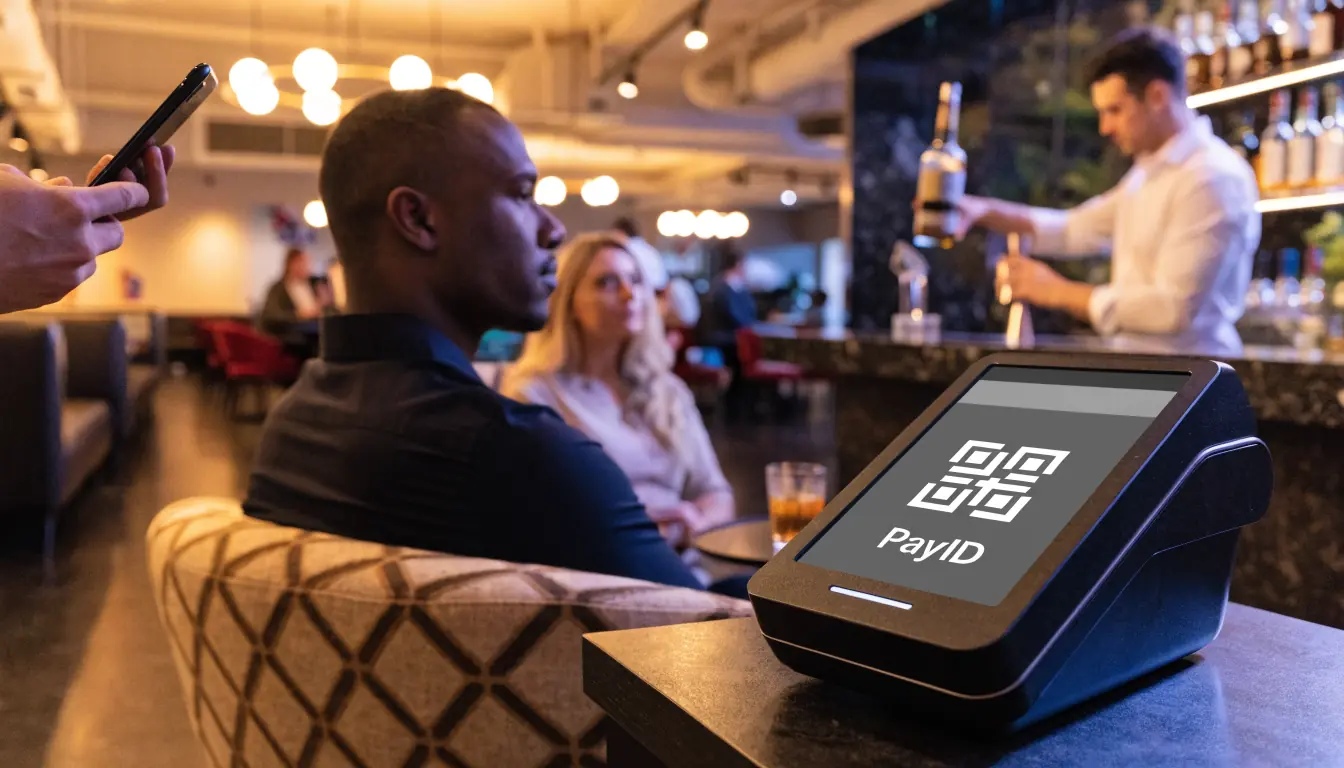
The practical consequence: whether a Google Pay deposit goes through depends on three parties, not one — the casino’s willingness to list the method, the card sitting behind the wallet, and the issuing bank’s stance on gambling payments. Two of those three are outside the casino’s control, which is part of why acceptance across offshore platforms remains uneven.
How Google Pay differs from the alternatives
The offshore casinos serving Australians run a fairly predictable set of payment options, and Google Pay occupies a specific position within it.
Debit cards. Per one industry review, debit cards are accepted for deposits but not for withdrawals at Australian online casinos. Google Pay shares this one-way character: according to a separate industry review, withdrawals are generally not supported via Google Pay at Australian online casinos. In deposit terms the two methods are close cousins; the wallet adds a confirmation step and keeps the card number off the casino’s own payment form, but the underlying flow is the same.
PayID. This is the domestic instant-payment system, supported by all major Australian banks for real-time transfers. According to one industry review, PayID is accepted by some offshore casinos for fast AUD deposits via local bank transfers. The distinction from Google Pay is structural: PayID moves money directly between bank accounts in Australian dollars, while Google Pay routes through a card. For a player whose bank blocks card payments to gambling sites, that difference decides which method works at all.
Cryptocurrencies. Bitcoin, Ethereum, Litecoin and Tether are accepted for both deposits and withdrawals at Australian online casinos. Crypto sits at the opposite end of the spectrum from Google Pay: no card, no bank in the loop, no AUD conversion at the point of payment.
eWallets and prepaid vouchers. Established eWallets and prepaid deposit methods round out the typical offshore cashier. They are covered in detail elsewhere on this page; the relevant point here is that Google Pay is the newest arrival among them and the least consistently offered.
Limited Acceptance
Google Pay deposits are only available at a subset of offshore casinos serving Australian players; always verify the cashier before registering.
What acceptance actually looks like on a casino site
An offshore casino that supports Google Pay lists it in its cashier alongside the card options it wraps. The deposit posts as instant credit — this is the one thing the method does on par with or better than typing a card number manually, since it removes the retyping and the associated failed transactions from mistyped digits.
What Google Pay does not do, on any platform reviewed, is handle the return leg. The cashier shows it under deposits; the withdrawal menu shows bank transfer options, cryptocurrencies or eWallets instead. A player who funds exclusively through Google Pay will still need to nominate a separate withdrawal method and complete whatever verification the operator requires for it. The asymmetry is worth planning for before the first deposit rather than after a win.
Judging an operator before the first deposit
Since no domestic licence exists to vouch for an offshore casino, the signals worth checking are structural rather than regulatory. A licence displayed in the site footer or terms, with a working link to the issuing regulator, is the baseline. Withdrawal rules published as standard terms rather than support-ticket answers are the second. A casino that accepts Google Pay for deposits but describes its payout process nowhere in writing has answered the important question before it was asked.
One caveat belongs here rather than in a footnote: operators do not publish comparable data on how their Google Pay acceptance rates differ from card-direct acceptance rates, or how those rates change across Australian banks. That information simply is not disclosed at market level, so any claim of a "reliable" Google Pay experience at a given casino is a claim the casino itself has not substantiated. The deposit either clears with the player’s bank or it does not, and the operator’s terms rarely promise which.

Google Pay, in short, is a deposit convenience at a subset of offshore casinos — fast on the way in, absent on the way out, and dependent on the player’s own bank for whether it functions at all. It competes less with crypto or PayID as a system than with the plain debit card it wraps, and its main advantage is the reduced friction at the cashier rather than any change in what the payment ultimately is.
Depositing with Google Pay and Other Methods
Funding an account at an offshore casino is the first transaction a player makes, and the method chosen at this step determines what happens at the other end — when the money comes back out. Google Pay sits at one end of that spectrum: built for instant deposits, not for payouts. Other methods cover the rest.
How a Google Pay Deposit Works
A casino deposit via Google Pay is not a bank transaction in the traditional sense. The wallet sits on top of a linked debit card, so the deposit is processed through the card network while the player authenticates it with a device-level confirmation rather than card details typed into a casino form. Per one industry review, Google Pay is accepted for instant deposits at some Australian online casinos — the phrasing matters, because acceptance is not universal and the cashier page of the specific operator is the only place where the answer is definitive.
The practical sequence at the cashier:
- Select Google Pay as the deposit method.
- Enter the deposit amount.
- Confirm the payment on the device.
- The funds appear in the casino balance without a pending period.
The same review notes that deposits are credited instantly. Nothing is held for clearance — which is also why the method works well for small top-ups. A player looking for a low-stakes entry point, the kind of site where a modest deposit is enough to start, will find the wallet behaves the same way regardless of the amount: the deposit is one confirmation, and the balance updates.
Debit Cards: The Layer Underneath
Google Pay deposits ride on debit cards, and a debit card can also be used directly. Per one industry review, debit cards are accepted for deposits but not for withdrawals at Australian online casinos. That asymmetry is inherited by the wallet: whatever is deposited through Google Pay has to be withdrawn by another route. The same review reports that some Australian banks still block debit card payments to gambling sites, and a card-level block stops a Google Pay transaction as well — the wallet does not bypass the issuing bank, it just changes how the card details are presented.
Credit cards are a separate matter. Credit card gambling has been prohibited in Australia, which pushes the deposit choice toward debit products and, by extension, toward wallets layered on top of them.
eWallets and Cryptocurrencies
Where Google Pay only moves money inward, eWallets move it both ways. Per one industry review, eWallets like PayPal, Neteller, Skrill, and Payz are supported for both deposits and withdrawals at Australian online casinos. That single difference is the reason a player who cares about the withdrawal path registers an eWallet account before the first deposit rather than after the first win.

Cryptocurrencies cover the same two directions. Bitcoin, Ethereum, Litecoin, and Tether are accepted for deposits and withdrawals at Australian online casinos, with the added property that the transaction runs on the asset’s own network rather than through a card issuer that may decline gambling merchants. The trade is volatility in the transfer itself for Bitcoin and Ethereum, avoided entirely by Tether, which holds a stable value during transit.
Bank Transfers and PayID
Bank transfers are supported for both deposits and withdrawals at Australian online casinos. For Australian players the relevant form is PayID: supported by all major Australian banks, it enables real-time transfers, and per esportsinsider.com it is accepted by some offshore casinos for fast AUD deposits via local bank transfers. PayID sends money directly from a bank account — no card network, no wallet intermediary — which makes it the deposit route least likely to be blocked and the slowest to set up in reverse, since a withdrawal back to a bank account moves through banking channels rather than a wallet balance.
Comparing the Methods
| Method | Deposits | Withdrawals | Notable property |
|---|---|---|---|
| Google Pay | Yes (instant, per one industry review) | No | Card details never touch the casino form |
| Debit card | Yes | No, per one industry review | Subject to bank-level blocks |
| eWallets (PayPal, Neteller, Skrill, Payz) | Yes | Yes, per one industry review | Two-directional from registration |
| Crypto (BTC, ETH, LTC, USDT) | Yes | Yes | No card issuer in the chain |
| Bank transfer / PayID | Yes | Yes | Real-time AUD transfers, per esportsinsider.com |
Every method above appears in the cashier of casinos licensed by foreign regulators such as the Malta Gaming Authority, the Curaçao Gaming Authority, or the Isle of Man Gambling Supervision Commission. Minimum and maximum limits are set per operator and per method; none of the operators publish these in a form that can be stated as a market-wide figure, so the cashier page and the terms are the source that counts.
The structure that emerges is simple: Google Pay and debit cards are entry channels, eWallets and crypto are full-cycle channels, and PayID is the direct banking route. A player who deposits with Google Pay and expects to withdraw the same way is planning a transaction that the market, per one industry review, does not currently offer.
Online Pokies that Support Google Pay
A pokie doesn’t process a payment. This distinction matters before anything else in this section, because the phrase "pokies that support Google Pay" is loosely used across casino review sites to mean something simpler: pokies available at casinos that accept Google Pay deposits. Once the money is in the account balance, it is the casino’s software, not the game, that determines what loads. A deposit made through Google Pay funds the same balance as a deposit made through a debit card or a crypto transfer, and that balance plays the same library of pokies either way.
Leading provider with popular pokies such as Big Bass Bonanza and Gates of Olympus, widely available at Australian‑facing offshore casinos.
Known for tight mathematics and distinctive themes, featured in most offshore libraries targeting Australian players.
Creator of the Megaways™ mechanic, its titles appear across many offshore operators.
Long‑standing studio supplying classic slots and progressive networks in the Australian market.
The practical question is therefore twofold: which offshore casinos serving Australian players accept Google Pay for deposits, and what pokie libraries do those casinos carry. The second half of that question is what this section works through, because the answer is more encouraging than the payment question suggests. Google Pay is accepted for instant deposits at some Australian online casinos — per one industry review, not as a market-wide rule — but the games behind those deposits come from providers whose catalogues are among the largest in online gambling.
Why "pokies" and not "slots"
Australian players call them pokies, a contraction of "poker machine" that migrated from the machines in pubs and clubs to online reels. The games themselves are the same slots offered everywhere else: five-reel video games, cluster-pays titles, jackpot pokies and the Megaways™ format licensed from Big Time Gaming. What changes for an Australian player is the interface around the game — AUD balances, local themes, and a payment flow that works from an Australian phone rather than an international card issuer that may decline the transaction.

This is where the payment method and the game category genuinely intersect. Pokies are, by a wide margin, the most phone-centred category in an online casino. They require no table etiquette, no dealer pacing, no decisions made under a clock. A player opens the casino app or mobile site, picks a title, and spins. A payment method built for phones fits that behaviour: Google Pay turns a deposit into a biometric confirmation rather than a card-number entry. When the deposit and the game both live on the same device, the friction between "decided to play" and "spinning" collapses to seconds.
The providers behind Google Pay-friendly pokie libraries
Offshore casinos serving Australian players operate under foreign regulators — the Malta Gaming Authority, the Curaçao Gaming Control Board, or the Isle of Man Gambling Supervision Commission are the names that appear in site footers — because the IGA prohibits online casino operation from within Australia. The licence determines where the casino sits, but the pokie catalogue is assembled from a handful of game studios that supply nearly the entire offshore market.
Pragmatic Play is a top software provider for Australian online casinos, and its catalogue is where two of the three pokies with verified RTP figures in this article come from. Pragmatic Play’s strength is volume and consistency: a steady release schedule, a house art style that regulars recognise instantly, and mechanics that scale from small-stake spins to high-volatility chase sessions.

Play’n GO is the other top provider named across the market. Its pokies are known for tight mathematics and distinctive themes, and the studio’s titles appear in the libraries of essentially every offshore casino that takes Australian players seriously. Where Pragmatic Play leans on release cadence, Play’n GO leans on individual titles that hold their player base for years.
Around those two sit the studios whose products define the format itself. Big Time Gaming (BTG) created the Megaways™ mechanic, in which the number of symbols on each reel changes with every spin, producing a different number of ways to win each time. The mechanic is licensed out to other studios, which is why Megaways™ versions of familiar titles exist across providers. NetEnt and Microgaming supply the long-standing catalogues — older titles still running, progressive networks, and the baseline five-reel games that fill out any credible library. A casino that carries Pragmatic Play and Play’n GO alongside BTG, NetEnt and Microgaming has, in effect, the standard offshore pokie floor.
The absence of those names is itself information. A casino whose pokie tab lists studios no independent source has heard of is a casino worth closing. Reputable providers publish RTP figures and submit their random number generators to independent testing bodies such as iTech Labs and eCOGRA; unknown studios do neither.
Three pokies worth naming, with the numbers that are actually verified
Most casino content names dozens of pokies and attaches a percentage to each. The percentages in that content are copied from provider spec sheets and are often wrong or outdated — some games ship with multiple RTP settings, and the figure quoted in a review may be the highest configuration, not the one the casino actually runs. Rather than reproduce that, this section names the titles whose RTP figures are verified, and leaves the rest unnamed rather than guessed.
-
Big Bass Bonanza — RTP 96.71%. A Pragmatic Play fishing-themed pokie and one of the most widely played titles in the Australian offshore market. The appeal is a straightforward free-spins mechanic with a money-collector feature: simple to understand on a phone screen, which is where most Australian pokie play now happens.
-
Gates of Olympus — RTP 96.50%. Also Pragmatic Play. A tumbling-reels pokie in which winning symbols disappear and are replaced, allowing consecutive wins from a single spin, with a multiplier system that can escalate quickly. This is the style of game that suits short mobile sessions: long quiet stretches punctuated by a single spin that resolves dramatically.
-
Wolf Gold — RTP 96.01%. A Pragmatic Play title with a classic outback-adjacent theme that has made it a fixture in casinos targeting Australian players. Money-respin mechanics and a fixed jackpot structure sit behind the familiar wildlife imagery.
All three are Pragmatic Play titles, which reflects reality rather than selection bias: the studio’s games dominate the "popular" tab of offshore casinos serving this market. Play’n GO, NetEnt, Microgaming and BTG titles fill the rest of the shelf — the Megaways™ family from BTG in particular for players who want variable reels — but without verified RTP figures attached here, naming more titles would mean attaching numbers that may not match the configuration a given casino runs.
A note on what RTP does and doesn’t tell you, kept brief because the following section covers it in detail: RTP is the percentage of money a game is expected to pay out over time. It is a long-run figure computed across millions of spins. It says nothing about the shape of the payouts — a game can have high RTP and high volatility, meaning wins are infrequent but larger when they land. Two pokies with near-identical RTP figures can produce entirely different sessions.
Why pokies are the natural fit for Google Pay deposits
The pairing of Google Pay and pokies is not a marketing accident. It follows from three properties of each side.

Both are mobile-first. Google Pay is designed to be used from a phone with a screen lock and a registered card. Pokies are the casino category most played on phones, because sessions are short, self-paced, and require no more screen real estate than a single game board. A player who deposits with Google Pay is, almost by definition, playing from the device the pokie was designed for.
Deposit size and session economics match. Pokies accommodate small balances. A pokie session can run on the minimum a casino accepts, whereas table games and live dealer rooms sit at stakes that make a small deposit vanish in minutes. A quick mobile deposit — confirm, done, playing — suits the incremental way pokie bankrolls are typically topped up.
The decision loop is fast. Pokies are impulse-friendly: the gap between deciding to play and playing is one spin. A payment method that requires entering card details, an expiry date and a verification code breaks that loop. A biometric confirmation preserves it. Industry commentary on Google Pay casino deposits consistently highlights the instant-confirmation property, and per one industry review it is instant deposits that Google Pay provides at the Australian online casinos where it is accepted.
None of this makes pokies a better bet than any other casino product — the house edge is the house edge, and a fast deposit to a game does not change the game’s mathematics. What it changes is convenience, and convenience in gambling is worth stating plainly rather than dressed up as advantage.
- Verify that Google Pay is listed as a deposit option on the casino’s cashier page.
- Use a debit card linked to Google Pay that is not blocked by your bank.
- Plan an alternative withdrawal method before making your first deposit.
- Assume Google Pay will work for withdrawals; it is deposit‑only.
- Rely on Google Pay if your bank has a known block on gambling transactions.
- Ignore the casino’s licence and regulator information when choosing a site.
Finding the pokies after the deposit lands
The practical sequence at a Google Pay-friendly casino runs as follows. The player registers, completes whatever KYC checks the operator requires — identity verification is standard at licensed offshore casinos, and completing it before the first deposit rather than before the first withdrawal avoids delays later — then selects Google Pay in the cashier, confirms the amount, and authenticates on the phone. The funds land in the account balance immediately, since Google Pay functions as a deposit accelerator rather than a separate account: it passes the transaction to the underlying card. Once the balance shows, the entire pokie library is open. There is no separate "Google Pay section" of the games tab, and no game that accepts Google Pay while another doesn’t.
Two caveats belong in any honest account of that sequence.
First, acceptance is partial. Google Pay is accepted for instant deposits at some Australian online casinos — the market position is best described as "available at a subset of operators," not a standard feature. Checking the cashier before registering is faster than checking after.
Second, the flow is one-directional. Withdrawals are generally not supported via Google Pay at Australian online casinos, per one industry review. The same card that funded the balance through Google Pay cannot receive winnings back through it, because Google Pay itself does not process payouts. Winnings exit through other channels, a subject covered in full in the withdrawal sections later in this article. For pokie players this matters most at the end of a good session: money goes in fast, and comes out by another route, at that route’s speed.

What to check in a pokie library before depositing
Since the deposit method tells you nothing about game quality, the games tab is where the diligence happens. A short checklist, in order of what it rules out:
- Provider names. Pragmatic Play, Play’n GO, NetEnt, Microgaming, BTG — the presence of known studios indicates the casino has commercial agreements with legitimate suppliers. A library of unrecognisable studio names is a reason to leave before depositing, not after.
- RTP visibility. Reputable casinos publish RTP in each game’s information panel, and reputable providers publish it in their own documentation. Where a casino hides it, the assumption that the figure is set low is the safe one.
- Licence disclosure. Every listed casino should display licence details in the footer, terms and conditions, or About Us section. The licence is foreign by necessity — Australian players are permitted to play at offshore-licensed online casinos, since the IGA targets operators rather than individuals — but it should still be visible and verifiable against the regulator’s own records.
- Testing certificates. iTech Labs and eCOGRA logos, where present, indicate the games’ random number generators have been independently audited. Their absence is not automatically disqualifying, but their presence removes a question.
The mobile casino angle
Search interest in Google Pay and Australian online casinos is heavily mobile-weighted, and the market has followed: offshore casinos serving this market treat the mobile site or app as the primary product, with the desktop site as the secondary one. For pokie play specifically, the mobile experience is now the reference implementation — games are built in mobile-compatible formats first, and the Google Pay flow assumes the player is holding the phone at the moment of deposit.
That alignment has one unglamorous consequence worth stating. The easier it becomes to move from impulse to spin — and Google Pay deposits are as easy as the process currently gets — the more the useful discipline moves to the setting of limits before the session rather than during it. Offshore casinos licensed under the regulators named above are required to offer deposit limits and self-exclusion tools, and Australian players additionally have access to BetStop, the national self-exclusion register, alongside Gambling Help Online. These are features of the environment, not endorsements of the activity; they exist because the activity carries a real cost, and a payment method that removes friction from deposits removes it from losses too.

A closing note on the word "best"
Lists of "best Google Pay pokies" are, structurally, lists of popular pokies at casinos that happen to accept Google Pay. The payment method contributes nothing to the game’s quality; the game contributes nothing to the payment’s speed. What can be said with confidence is narrower and more useful: the offshore casinos accepting Australian players and Google Pay deposits carry catalogues built on Pragmatic Play and Play’n GO titles — Big Bass Bonanza, Gates of Olympus and Wolf Gold among the most-played, at RTPs of 96.71%, 96.50% and 96.01% respectively — alongside Megaways™ titles from BTG and the long-running catalogues of NetEnt and Microgaming. The deposit is instant; the withdrawal is not; and the pokies themselves are the same games that run behind every other payment method on the same site. Choosing between them is a question of theme, volatility and RTP, all of which are visible in the game panel before the first spin — which is exactly where the decision belongs.
Casino Games Compatible with Google Pay
A Google Pay deposit is a funding method, not a game filter. Once the money lands in the account, the full casino library is open: online pokies, blackjack, roulette, and live dealer tables. The wallet has no bearing on which titles can be played — what matters is what the deposit buys and how each game is structured.

RTP: the number worth checking first
Return to Player (RTP) is the percentage of money a game is expected to pay out over time. It is a long-run statistical figure, not a promise about any single session. Blackjack played with optimal basic strategy can achieve an RTP of up to 99.5%, and French Roulette’s La Partage rule reduces the house edge to 1.35% — the strongest numbers on the table-game side. Among pokies, Big Bass Bonanza carries an RTP of 96.71%. Publishers display the figure in each game’s information panel; checking it before playing takes seconds and settles the question of what a game is priced at.
Volatility: the other half of the equation
RTP alone does not describe the experience. A game can have high RTP yet high volatility, meaning wins are infrequent but larger. A low-volatility pokie pays smaller amounts more often; a volatile one can consume a deposit through long dry stretches before paying out. Players funding accounts through a wallet deposit should match volatility to the size of that deposit, since a small balance and a high-variance game is a short combination.
What the payment method changes
Nothing, in terms of game access. Where Google Pay matters is at the cashier: deposits through the wallet are instant, so funds are available for any game immediately after the transaction. Game selection, RTP, and volatility are set by the providers — Pragmatic Play and Play’n GO among the leading names for the Australian market — not by the payment channel used to get there.

The practical sequence is fixed: deposit via the wallet, check the RTP and volatility of the chosen game, and treat both numbers as part of the same calculation.
Casino Sites and Slots Accepting Google Pay
A site that advertises "Google Pay accepted" is not automatically a pokies site. Some platforms promote the wallet in their payment grid yet host a thin game catalogue; others carry large slot libraries from studios such as Pragmatic Play and Play’n GO — both established names in this market — without mentioning Google Pay until the cashier screen. The two features have to be confirmed separately.
The practical filter is disclosure. A platform worth depositing at states its foreign licence — Malta Gaming Authority, Curaçao Gaming Control Board or the Isle of Man Gambling Supervision Commission — in its footer or terms, publishes its withdrawal rules without hunting through the fine print, and names the studios behind its games. A generic site hides at least one of these, and a missing licence is the disqualifier: there is no domestic licence to fall back on, so the foreign one is the entire basis of the claim.
Always check that the casino displays a verifiable foreign licence (e.g., Malta Gaming Authority, Curaçao Gaming Control Board, Isle of Man) in its footer or terms before depositing.
On deposits, according to one industry review, Google Pay is accepted for instant deposits at some casinos serving Australian players — "some", not all, which is why the cashier, not the homepage banner, decides the question.
New platforms launching with Google Pay from day one are becoming more common, particularly live casino sites, where the deposit-to-table gap matters. The same disclosure filter applies to them unchanged: a new licence is verifiable the same way an old one is.
Bonus Offers Linked to Google Pay Deposits
Bonus structures at offshore casinos serving Australian players follow a familiar pattern: a welcome offer on the first deposit, reload bonuses on subsequent deposits, and free-spin packages attached to specific pokies. What varies is whether a deposit funded through Google Pay counts toward those offers at all. According to one industry review, Google Pay is accepted for instant deposits at some Australian online casinos — but the bonus terms, not the deposit method, decide the outcome. Conditions published by the operator itself are the only reliable record here; a cashier page that lists Google Pay says nothing about whether the bonus page includes it in eligible methods.
Two checks settle the question before any money moves:
- Eligible payment methods list. Bonus terms name the methods that qualify. If Google Pay is absent, the deposit lands but the bonus does not — and the wagering requirements on an unbonded deposit are, by definition, zero, along with the bonus itself.
- Wagering requirements stated as a multiple. Terms that quantify the playthrough, the minimum qualifying deposit and the expiry window in plain figures are workable. Terms that defer these numbers to “the casino’s discretion” are not.
One structural note on the Australian side: according to one industry review, credit cards have been prohibited for online gambling in Australia since June 2024. A deposit routed through Google Pay draws on a linked debit card or account, not a credit line — which is precisely the gap the ban leaves open, and the reason deposit-linked bonuses at these casinos sit on debit-funded rails rather than credit.
No-deposit bonuses and free-pokies offers exist in this market, but their conditions are set per operator, and no public dataset compares them across Google Pay casinos. What is verifiable is the bonus page in front of the player: read the eligible-methods clause first, the wagering multiple second.
Instant Withdrawals: What’s Possible with Google Pay
The short version of the "instant Google Pay withdrawal" question: it doesn’t exist in the form search queries suggest. According to one industry review, withdrawals are generally not supported via Google Pay at Australian online casinos. Google Pay works one direction — in. Any site advertising same-day Google Pay payouts to Australian players is describing something the payment rail itself was not built to do, since the service functions as a deposit wrapper around an underlying card, not as a receiving account.
That leaves two practical questions: what "instant" actually means at an offshore casino, and which channels come closest to it for AUD players.
What Sets the Speed of a Payout
Three variables decide how quickly money arrives, and none of them involve the payment method alone:
- Processing queue. The operator reviews and releases the withdrawal. This is internal, and the only realistic lever is a completed KYC profile before requesting a payout.
- Channel. How the money moves once released — this is where methods genuinely differ.
- Verification status. A first withdrawal to a new account goes through checks that repeat withdrawals don’t.
An instant-processed request on a slow channel still arrives slowly. The channel is the part worth choosing deliberately.
The Fast Channels Compared
Cryptocurrencies. Per esportsinsider.com, crypto payouts are the fastest option, often processed within minutes to a few hours. Bitcoin, Ethereum, Litecoin, and Tether are all supported for withdrawals at Australian-facing offshore casinos. The trade-off is operational rather than temporal: the player manages wallets and network fees, and a mistyped address has no support desk to reverse it.
eWallets. According to one industry review, PayPal, Neteller, Skrill, and Payz are supported for both deposits and withdrawals at Australian online casinos. Once the operator releases funds, arrival is quick by design — the wallet is a standing account, not a bank-to-bank transfer. Two caveats apply: not every offshore casino offers every wallet, and deposit-method-to-withdrawal-method matching is often required, so an account funded via Google Pay may need a wallet or bank route registered before the first payout regardless.
Bank transfers. Supported for both directions, and the slowest of the three once released. The domestic leg moves quickly where PayID is involved — PayID is supported by all major Australian banks and enables real-time transfers — but the casino-side settlement adds time the player can’t control.
A Realistic Reading of "Instant"
For a player who deposited via Google Pay, the working sequence is: verify identity early, expect the first withdrawal to take longer than later ones, and pick the payout channel on its own merits rather than expecting the deposit method to carry through. Crypto leads on speed; eWallets trade a little of it for familiarity; bank transfers trade most of it for simplicity.

No operator publishes its internal processing queue as a commitment, and "instant" in casino marketing refers to the release step, not the arrival. The word doing the heavy lifting in that sentence is not "instant" — it’s "processing."
Withdrawals to Google Pay – Current Limitations
A Google Pay withdrawal is the one thing a Google Pay deposit does not buy. According to one industry review, payouts back to Google Pay are not supported at Australian-facing online casinos, and the terms published by operators themselves confirm the pattern: the method is deposit-only.
The reason sits in how the wallet works. Google Pay passes a stored card credential to the merchant — it does not hold a balance of its own. A casino cannot push money back through it, because there is no account on the other end to receive the payout. The limitation is structural, not a matter of a casino choosing to be difficult.
That leaves depositors needing a separate exit route for winnings. The practical work-arounds:
- Cryptocurrency — Bitcoin, Ethereum, Litecoin or Tether, usable for both directions. Esportsinsider.com reports these deliver the fastest withdrawal speeds, often processed within minutes to a few hours.
- eWallets — PayPal, Neteller, Skrill and Payz, again handled outside the Google Pay rail.
- PayID — real-time transfers supported by all major Australian banks, with some offshore casinos accepting it for AUD payouts.
- Bank transfer — slower, but available for deposits and withdrawals alike.
The deposit method and the withdrawal method being different accounts is standard practice at these casinos, so plan the exit before funding the account.
Paying at Casinos Using Google Pay
Paying with Google Pay at an online casino comes down to two transactions with two very different outcomes. Deposits work; payouts do not. According to one industry review, Google Pay is accepted for instant deposits at some Australian online casinos, while withdrawals via the service are not supported. Any player budgeting around this wallet needs to plan the deposit as a one-way street.
What a deposit actually looks like
The deposit side is where the method earns its place. The payment is confirmed through the device rather than by typing card details into a casino cashier, which removes the main point of friction: exposed card numbers. There is no separate account to fund first, no voucher code to scratch off, and no waiting for a bank batch to clear. Deposits land in the account immediately, so the money is playable in the same session it was sent.
Security follows the same pattern. The casino never sees the underlying card credentials — the transaction is tokenised on the device side. Compared with typing a debit card number into an offshore cashier page, that is a meaningful reduction in exposure, particularly given that some Australian banks still block debit payments to gambling sites and credit cards have been prohibited for online gambling since June 2024.
The withdrawal gap
The payout side is where the arithmetic stops working. When it is time to cash out, Google Pay is not on the list — the winnings have to travel back through a different channel, whether a bank transfer, an e-wallet or cryptocurrency, each with its own processing time and verification requirements.
The working summary
Google Pay is a deposit tool with strong security and no waiting time, paired with a mandatory second method for withdrawals. Players who accept that split upfront get the convenience without the surprise at the cashier later.
Can Australians use PayID to deposit at offshore casinos?
Yes, some offshore casinos accept PayID for fast AUD deposits via local bank transfers. Because PayID moves money directly between bank accounts, it can work even when a bank blocks card payments to gambling sites.
Can you withdraw money from online casinos in Australia?
Yes, but not via every method. Bank transfers, cryptocurrencies and eWallets like PayPal, Neteller, Skrill and Payz support withdrawals, while Google Pay, debit cards and prepaid vouchers such as Paysafecard are deposit-only.
How do recommended online casinos ensure game fairness?
Fairness is measured through Return to Player (RTP) — the percentage a game is expected to pay out over time. High RTP does not guarantee frequent wins, as a game can also have high volatility, meaning rare but larger payouts; for example, blackjack with optimal basic strategy can reach up to 99.5% RTP.
Can you win real money at a casino online in Australia?
Yes, Australian players can play at offshore online casinos and win real money, and winnings are generally not taxable for casual players, though the ATO may treat frequent gambling as business income.
How can a player verify that an online casino holds a valid licence in Australia?
No Australian online casino licence exists — the Interactive Gambling Act 2001 prohibits domestic operators from offering casino games. Instead, check that the platform holds an offshore licence from a regulator such as the Malta Gaming Authority, the Curaçao Gaming Control Board or the Isle of Man Gambling Supervision Commission.