Best Bonus Buy Slots in Australia: RTP and Legal Guide
 Available in AU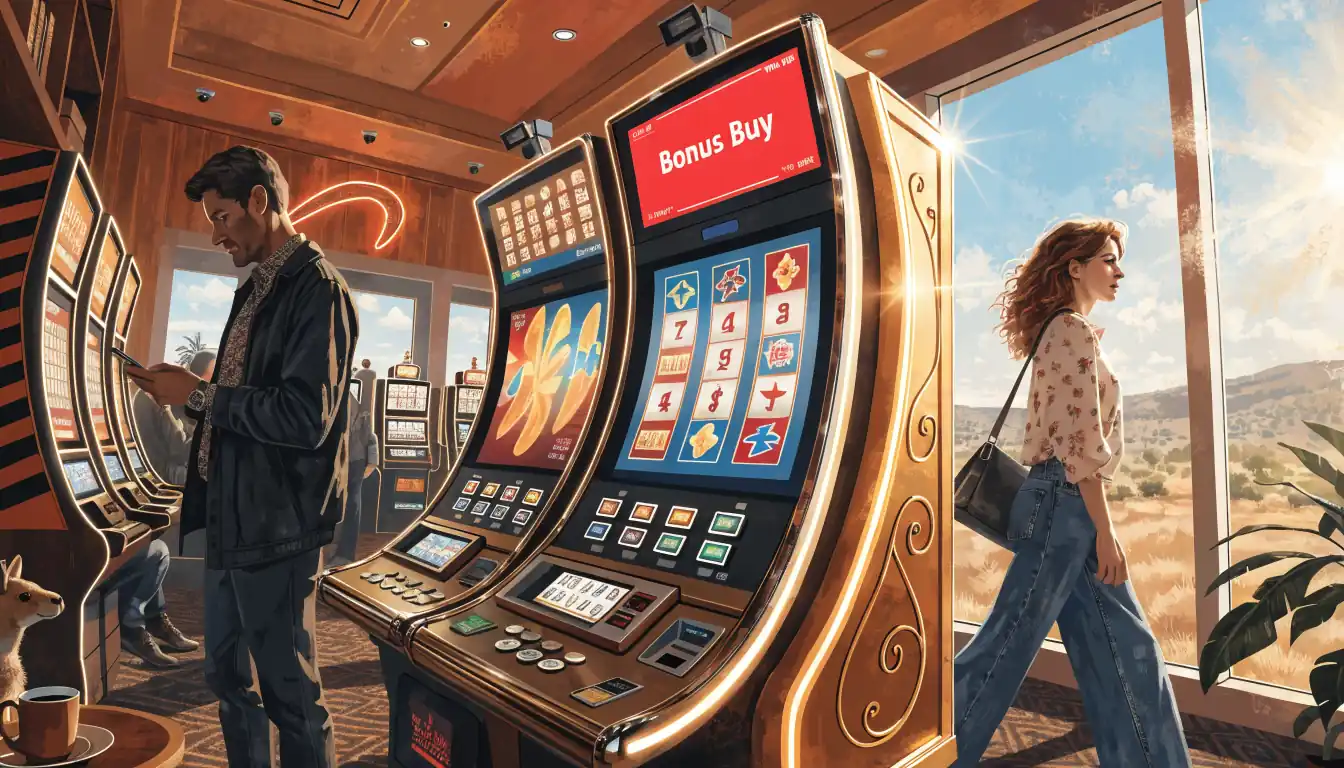
Understanding Bonus‑Buy Slots and Their RTP Impact
A bonus-buy slot is a game in which the player can pay a fixed price to skip the base game entirely and enter the feature round — free spins, hold-and-win, multiplier trails, whatever the game’s main event happens to be — without waiting for the feature to trigger naturally. The mechanic has spread from a curiosity into one of the defining categories of modern online slots, and it changes the arithmetic of play in ways that are worth understanding before any money is committed.
This section covers what the feature actually does, what it does to the expected return of a wager, and why Return to Player (RTP) is the number that governs all of it — for Australian players looking at bonus-buy games in 2026 as much as for anyone else. The legal picture in Australia and the practical steps of making a purchase are separate matters, covered later on this page.
What the Bonus-Buy Feature Actually Is
In a conventional slot, the feature round is triggered by a symbol combination: three scatter symbols land on the reels, and the free-spins round begins. The base game exists to deliver those combinations at some average frequency. A bonus-buy game keeps that base game but adds a second door: a button, usually parked in the corner of the interface, that sells direct entry to the feature for a multiple of the base bet.
If bonus buy slots are your focus, the welcome offer and how it’s structured across your first deposits matter just as much as the game library, so it’s worth checking the terms below before you sign up.
License: Curacao Gaming Control Board OGL/2023/174/0082 (Dama N.V.) · Bonus: up to A$5,000 + 300 free spins across 4 deposits Licensed under the Curacao Gaming Control Board, this operator spreads a sizeable welcome package of up to A$5,000 plus 300 free spins across four deposits, giving new players room to build their bankroll gradually.
License: Curacao Gaming Authority (Jumpman Gaming Ltd) · Bonus: up to A$6,600 + up to 250 free spins across 4 deposits Operating under a Curacao Gaming Authority license via Jumpman Gaming, it offers one of the larger welcome bundles here, up to A$6,600 with up to 250 free spins spread over four deposits.
Bonus: 240% up to A$4,100 + 300 free spins This casino stands out with a high 240% match bonus up to A$4,100 plus 300 free spins, a strong headline offer for new players.
License: Curacao eGaming OGL/2023/174/0082 (Dama N.V.) · Bonus: up to A$10,000 + 500 free spins across 4 deposits · Min. deposit: A$15 Licensed under Curacao eGaming, it features the largest welcome bonus on this list at up to A$10,000 with 500 free spins across four deposits, and a low A$15 minimum deposit makes it accessible.
License: Curacao Gaming Control Board OGL/2023/176/0095 (Hollycorn N.V.) · Bonus: up to A$5,000 + 300 free spins across 4 deposits Holding a Curacao Gaming Control Board license through Hollycorn N.V., it provides a welcome package of up to A$5,000 plus 300 free spins spread over four deposits.
License: Curacao Gaming Control Board OGL/2023/176/0095 (Hollycorn N.V.) · Bonus: up to A$1,500 + 200 free spins across 3 deposits Also licensed via Hollycorn N.V. under the Curacao Gaming Control Board, this operator offers a more modest but still solid welcome bonus of up to A$1,500 plus 200 free spins across three deposits.
License: Curacao eGaming OGL/2024/923/0383 (Antillephone N.V.) · Bonus: up to A$2,000 + 100 free spins across 2 deposits · Min. deposit: A$30 Licensed under Curacao eGaming through Antillephone N.V., it offers up to A$2,000 plus 100 free spins over two deposits, with a A$30 minimum deposit to qualify.
Bonus: up to A$750 + 50 jackpot spins, 35x wagering · Payout speed: crypto ~90 minutes, fiat 1-5 days · Min. deposit: A$30 This operator combines a bonus of up to A$750 plus 50 jackpot spins with notably fast crypto withdrawals of around 90 minutes, while fiat payouts take one to five days; a A$30 minimum deposit applies.
License: Curacao · Bonus: up to A$2,000 A Curacao-licensed casino offering a straightforward welcome bonus of up to A$2,000 for new players.
License: Curacao Gaming Control Board (TechSolutions Group N.V.) · Bonus: 100% up to A$250 + 100 free spins (1st deposit) Licensed under the Curacao Gaming Control Board via TechSolutions Group, it offers a first-deposit bonus of 100% up to A$250 plus 100 free spins, a compact but clear entry offer.
That is the whole mechanism. Everything else — the price, what the purchased round contains, whether the purchase offers choices between volatile and less volatile feature versions — is game design layered on top of the same transaction: money in, feature round out, no waiting.
Three things follow from the mechanic itself, before any statistics enter the picture.
First, the purchase collapses time. A player who buys the bonus is not playing the base game at all; the reels that would have spun between features are simply deleted from the session. The feature round is where most of a modern slot’s payout potential is concentrated, so the purchase concentrates the session’s variance into a short, intense sequence.
Second, the purchase changes the size of the bet. A bonus buy is not a spin at the base stake; it is a single wager many times larger than that stake. Whatever bankroll logic applied to the base game, it needs to be recalculated at the purchase price, because the money leaves in one movement rather than in drips.
Third, the feature round itself is still governed by the same random number generator as everything else in the game. Buying the bonus buys entry to the round, not a result. Each spin inside the purchased feature is an independent outcome; the RNG ensures results are not influenced by previous spins, including the purchase that opened the round. A bought bonus can pay nothing, and a triggered bonus can pay a fortune, and neither outcome says anything about the next one.

RTP: The Number That Governs Everything
Return to Player, or RTP, is the percentage of wagered money a slot machine returns to players over time. RTP and the house-edge percentage are inverse values: a game with a 96% RTP carries a 4% house edge, and that 4% is the mathematical margin the game is built to collect. A 96% RTP slot is built to return about $96 for every $100 wagered — not to any individual player, and not over any particular evening, but across the full run of play the game is designed around.
The calculation is not a guess and it is not derived from observed casino accounts. RTP is calculated by running computer simulations of millions or billions of spins, and the calculation uses probability-weighted outcomes: every possible result of every possible spin, multiplied by its probability, summed into a long-run expectation. Regulators in mature jurisdictions require third-party RTP verification as part of certification — independent laboratories such as BMM Testlabs, GLI, iTech Labs and eCOGRA exist in large part to check that the number a game advertises is the number its mathematics produces.
RTP is not a promise
RTP indicates a long‑run average return and does not guarantee any specific outcome in a short session, especially when using bonus‑buy features.
None of this makes RTP a promise. The industry benchmark for RTP is around 96%; percentages above that are considered high RTP, percentages below it low. Online slots carry higher RTP than land-based slots — a fact consistent with the floor minimums of physical venues, where all slot machines at Crown Perth in Australia, for instance, operate at a minimum RTP of 90%. But a high RTP is a long-run property of the machine, not a property of a Tuesday.
Theoretical RTP Versus Experienced RTP
This distinction matters more with bonus buys than with almost anything else in slots, so it is worth stating precisely.
Theoretical RTP is the built-in percentage — the number from the simulations, the number in the game’s information screen, the number that third-party verification checks. It belongs to the game and does not move.
Experienced RTP is what a player actually sees over a limited session. It is the ratio of money out to money in across the spins that actually happened. In a short session — and a bonus-buy session is short by construction, because each purchase is one large wager — the experienced RTP can land almost anywhere: a purchased feature that returns double the buy price produces an experienced RTP of 200% for that transaction, and a purchased feature that returns nothing produces 0%.
Neither outcome contradicts the theoretical number. A small number of very large wagers is the worst possible setup for observing a long-run average, and that is exactly what a bonus-buy session is. The theoretical RTP is still there, still accurate, still verified — it is simply not visible from inside a handful of feature rounds.
A worked example of the arithmetic behind the label: if a slot takes $110,000 in total bets and pays back $100,000 in winnings, its RTP over that period is 90.9%. That is the same calculation the simulations perform, just run on a smaller and noisier sample. The smaller the sample, the wider the gap between experienced and theoretical return can be — and bonus buys, by replacing many small bets with a few large ones, shrink the sample on purpose.
One disclaimer belongs here in plain terms, and it is not a formality: a high RTP does not guarantee profit in short sessions. It does not guarantee profit in long sessions either; the house-edge percentage is positive by design, which means the long-run expectation is negative. What a high RTP guarantees is a slower expected rate of loss per dollar wagered than a low RTP game, and nothing else. Any claim that a particular RTP "shows the exact amount you will win" is not a simplification — it is wrong.
What the Purchase Does to Expected Return
Here is the part of the mechanic that most players get wrong, and it is the reason this section exists.
A correctly priced bonus buy does not change the game’s RTP. This is not generosity on the provider’s part; it is arithmetic. The purchase price is calculated from the same probability-weighted model that produced the game’s overall return. The provider knows the average payout of the feature round and the probability of triggering it naturally; the buy price is set so that the expected return on the purchase equals the expected return on the spins the purchase replaces.
Purchase does not alter the game’s RTP
The price of a bonus‑buy is set so that the expected return on the purchase equals the expected return of the spins it replaces; the house edge remains unchanged.
Work through the shape of it. Suppose a feature triggers naturally once in some average number of base-game spins, and the feature’s average payout is some multiple of the bet. The expected value of a base-game spin is a blend: mostly small outcomes, occasionally the trigger, and the trigger carries the feature’s expected value with it. The buy price is set so that the expected value of the purchased feature — the same feature, entered instantly — equals the buy price multiplied by the same RTP. Money in, times RTP, equals expected money out, on both doors.
Two consequences follow, and both are worth the reader’s attention.
The purchase removes the waiting, not the margin. The house-edge percentage is charged on the buy price exactly as it would have been charged, in aggregate, on the base-game spins that would eventually have delivered the feature. The casino’s take per dollar is the same. What changes is the tempo at which the expectation is realised: one transaction instead of hundreds.
The purchase concentrates variance, and variance is what the player is actually buying. The base game spreads risk across many small independent outcomes. The purchase stacks it into one. For a given bankroll, the probability of ruin — of running out before the long run gets anywhere near the long run — rises sharply, even though the RTP printed on the game has not moved by a single decimal point. This is the honest framing of the feature: the player is paying the same expected price for a much rougher ride.
It should also be said plainly what the feature is not. It is not a way to "unlock" value that the base game hides; the value was never hidden, it was spread out. It is not a strategy that beats the house edge; no sequence of purchases does that, because each purchase is priced inside the same model. And it is not a shortcut around volatility — it is volatility, purchased in bulk.
Volatility: The Other Half of the Picture
RTP gets the headlines, but volatility describes the pattern of payouts — their frequency and their size — and for bonus-buy play it is arguably the more important of the two numbers.
A medium-volatility game and a very-high-volatility game can carry the same RTP and produce completely different experiences of that RTP. The medium game pays more often in smaller amounts; the experienced RTP of a session drifts around the theoretical number without wandering too far from it. The very-high-volatility game pays rarely and large; most sessions end well below the theoretical number, and the occasional session ends far above it. Same long-run average, opposite shapes of journey.
Bonus buys interact with volatility in a specific way: they take whatever volatility the feature round has and make the player experience it directly, at the full purchase price, with no base-game payouts cushioning the intervals. In a high-volatility game, a purchased feature that pays a small fraction of the buy price is a normal, expected outcome — the price of the distribution that occasionally pays many times over. In a low-volatility game, purchased features tend to cluster closer to their cost, which makes the whole exercise feel more like a subscription with a modest discount attached, and rather less like the product that is being sold.
Features pay rarely but can return many times the purchase price, leading to large swings in experienced RTP.
Features pay more frequently with smaller payouts, keeping experienced RTP closer to the theoretical value.
Features usually return close to the purchase cost, offering a steadier but less exciting experience.
The practical reading: RTP tells the player the expected rate of loss per dollar. Volatility tells the player how violently the actual result will deviate from that expectation in either direction. Buying bonuses maximises exposure to the second number while leaving the first untouched. A player who cannot absorb the deviation should read that sentence twice.
It is also worth noting that progressive jackpot slots often have low RTP because part of each wager funds the jackpot — the visible game is returning less per dollar so that a rare, enormous payout can exist on top of it. This is a different mechanism from volatility, though players often conflate the two: the jackpot component diverts expected return, while volatility merely redistributes the timing of it.
RTP Versions of the Same Game
A fact that surprises many players, and that matters directly to anyone comparing games across sites: the same slot can have different RTP versions at different operators. This is possible because modern games are built with configurable RTP — the provider ships the same mathematics model at more than one return setting, and the operator chooses which version to run. According to bgaming.com, this practice exists in the market; a player comparing two copies of the same title at two different sites may be comparing two different games wearing the same skin.


The mechanism is sometimes visible in the game’s information panel and sometimes requires digging, but its existence changes what "checking the RTP" means. A published figure for a title is not a property of the title alone; it is a property of the title as configured at a specific operator. The number that governs any wager — including a bonus buy, which inherits whatever configuration the game is running — is the number in the game being played, not the number in a review or a forum post.
Australian players encounter this with a particular edge, because the market structure they face — no domestic online casino licensing, offshore operators holding licences from jurisdictions such as the Malta Gaming Authority or the UK Gambling Commission — means the same title is reachable through venues regulated by different bodies with different disclosure norms. In Australia, game information often includes RTP values as a player-protection measure; whether a given offshore venue carries the same disclosure habit is a property of that venue, not of the game.
Legal risk
Providing online casino games, including bonus‑buy slots, to Australian residents is prohibited under the Interactive Gambling Act 2001; operators can face enforcement actions.
Reading RTP Honestly: What the Number Can and Cannot Say
The table that governs everything above, stated once, compactly:
| Statement about RTP | Status |
|---|---|
| RTP is the percentage of wagered money returned over time | Definition — correct |
| RTP and house edge are inverse values | Correct |
| A 96% RTP slot returns about $96 per $100 wagered | Correct, as a long-run average |
| High RTP guarantees profit in short sessions | False — prohibited framing, and mathematically wrong |
| RTP shows the exact amount you will win | False |
| Experienced RTP in a short session equals theoretical RTP | False — small samples deviate widely |
| Buying the bonus changes the game’s RTP | False, when the buy is priced to the game’s model |
| Buying the bonus changes the session’s variance | True — sharply |
The honest summary of the mechanic, stripped of marketing: a bonus buy is a variance-delivery device priced at the game’s own expected return. It converts the slow, diluted risk of base-game play into concentrated, immediate risk, at no change to the expected rate of loss and at a substantial increase to the chance of a session ending badly. For a player whose goal is entertainment measured in feature rounds per hour, that is a defensible purchase. For a player whose goal is profit, the arithmetic has nothing to offer: the house-edge percentage survives the transaction intact, and the Federal Court of Australia has been explicit that a high RTP is no guarantee of winnings in short sessions — a point that applies with full force to the shortest sessions the industry has yet invented.
Where RTP Verification Fits
Because RTP is a mathematical property of a game version rather than a marketing claim, the verification chain matters. Regulatory certification requires third-party RTP verification: an accredited laboratory — BMM Testlabs, GLI and iTech Labs are the established names in this work, with eCOGRA operating as an independent testing and standards body — runs or audits the simulations and confirms that the advertised figure matches the game’s actual probability-weighted model. A certified 96% is not an estimate; it is a checked result.
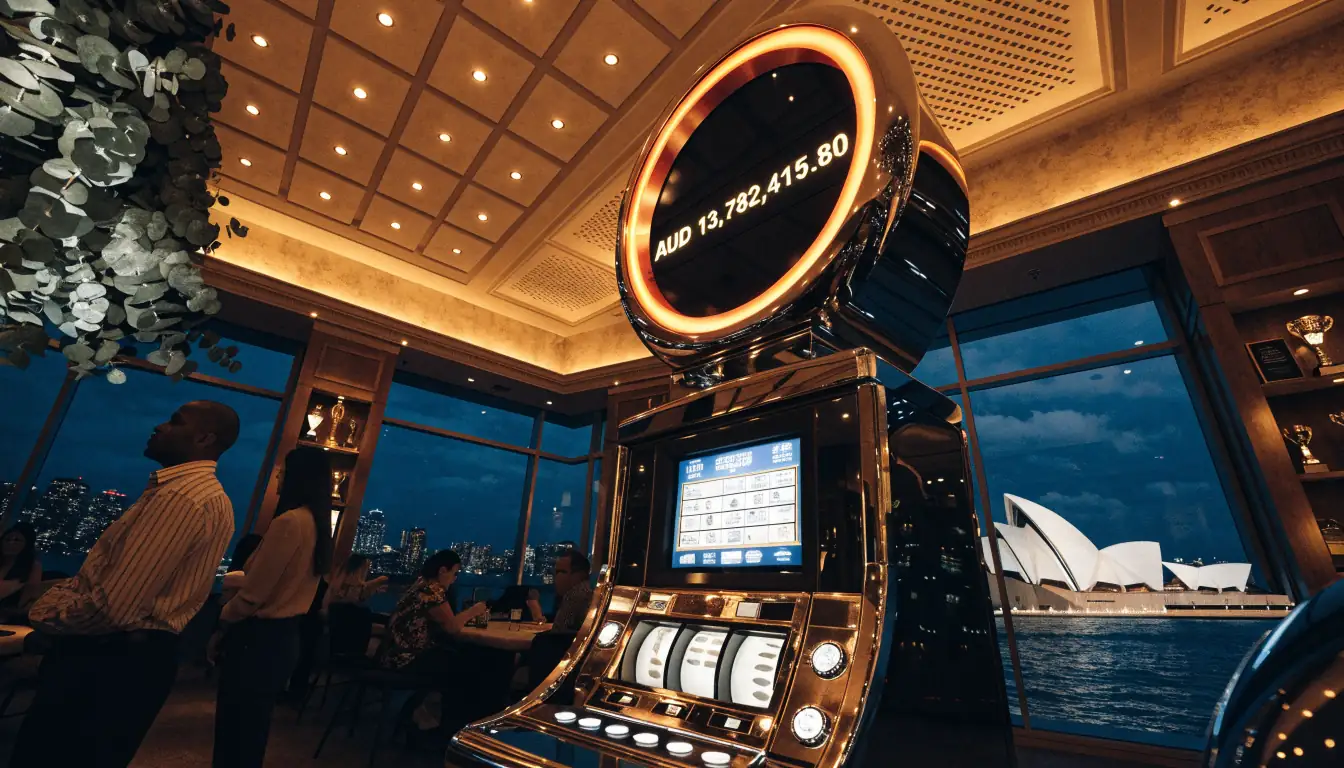
For the player, the practical implication is a hierarchy of trust. The RTP inside the game’s own information screen, at the operator where the game is being played, is the number that governs the wager. Figures quoted elsewhere — reviews, aggregators, the game provider’s own promotional material — describe other configurations or other versions, and in a market of configurable RTP they can all be simultaneously accurate and mutually incompatible. Where a venue’s disclosure is thin, the player is relying on the venue’s regulator to have done the checking, and regulators differ in how much they require operators to surface.
The complete picture for any wager, then, has three components, and all three are needed: the RTP of the specific game version being played (which sets the expected rate of return), the volatility of that game (which sets how violently the session will deviate from that rate), and the size of the individual wager (which, for a bonus buy, is the purchase price rather than the base stake). Games can be compared on the first two; the third is set by the player, and it is the one that decides whether the session survives long enough for the first two to matter.
A Closing Note on Perspective
The bonus-buy mechanic has earned its popularity honestly: it delivers what it advertises, which is immediate access to the most interesting part of a slot. What it does not deliver, and cannot, is an improvement in expected return — and the marketing around the feature has never lacked for ambiguity on that point. The RTP printed on the game was, is, and remains the whole story of the expected value; the purchase price is a tempo decision, not an investment decision.
Bonus‑buy concentrates risk
Buying a bonus does not improve expected return; it simply concentrates variance into a single, larger wager.
Players who treat it as the former are buying entertainment at a known, verifiable long-run cost. Players who treat it as the latter are paying a premium to concentrate risk they could have had diluted for free — and the mathematics of the game, patient and indifferent, will eventually present the invoice either way. For anyone weighing bonus-buy play, the responsible order of operations is fixed: read the RTP of the exact game version, read the volatility, size the purchase to the bankroll, and treat every published figure that promises more than that as what it is.
Support with problem gambling is available in Australia through Gambling Help Online. The legal gambling age in Australia is 18, and nothing about RTP, volatility or feature access changes the underlying position: these are games of chance with a negative expected return, and they are built to stay that way.
Casino Bonus‑Buy Options and Legal Considerations in Australia
How bonus-buy options appear in online casino environments
A bonus buy — also written as "buy bonus" or "buy a bonus" — is a paid shortcut offered inside certain slot titles. Instead of waiting for a scatter combination to trigger the free-spins round, the player pays a fixed multiple of the base bet and the feature starts immediately. The offer sits on the game screen itself, not in a separate casino menu: a button, the price, and a confirmation prompt. Where a game supports multiple feature variants, the player may be choosing between several priced options rather than one.
Not every game carries the feature, and "what casino games can you buy the bonus on" has no single answer — the option is decided title by title, by the game studio, not by the casino hosting it. Some studios build their whole catalogue around purchasable features; others offer it only in selected releases or in specific regulated configurations.
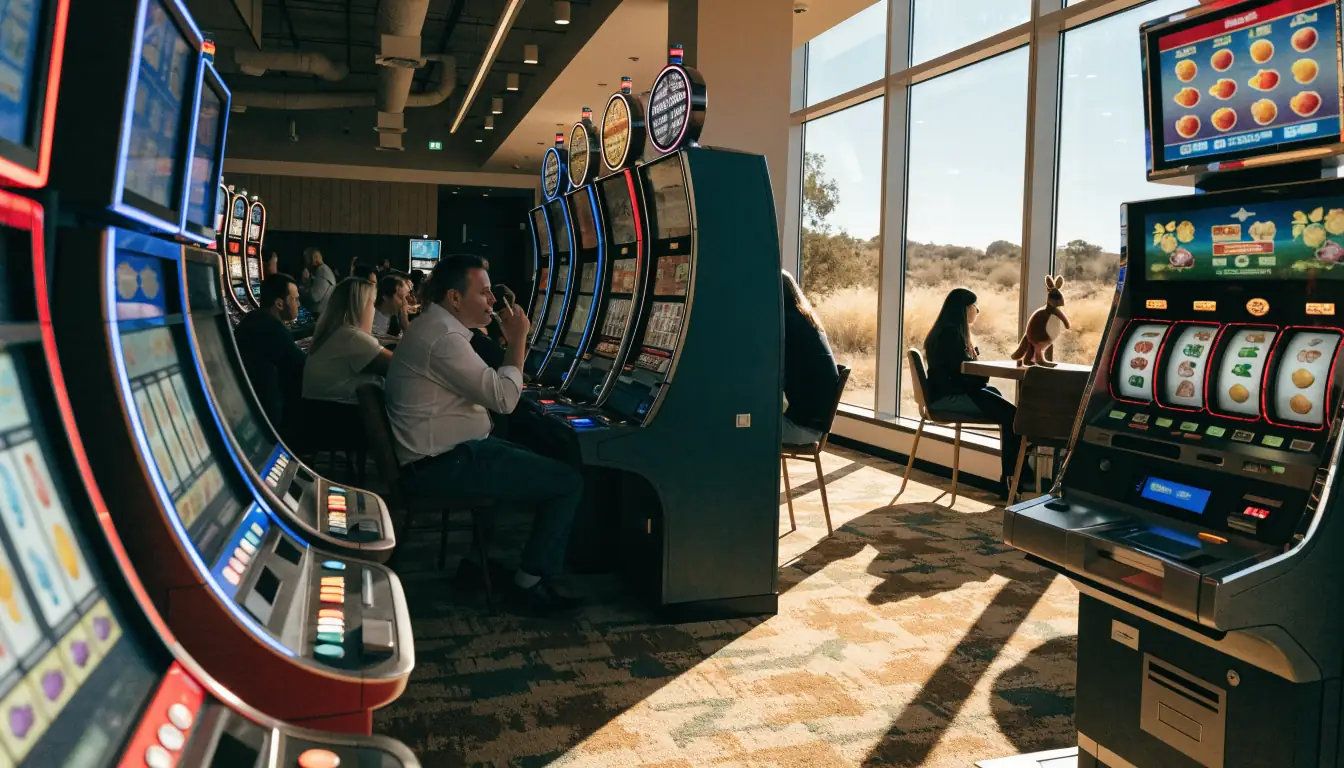
Demo play is the practical starting point. Many titles with a purchasable feature are published in a demo, or free-play, version where the feature can be bought with virtual credits. A slot demo with bonus buy lets a player see the feature’s structure, the price relative to the base bet, and how the round plays out, without money on the line. Demo results are generated the same way as real-money results — each round independent, outcomes produced by the random number generator — but the credits carry no value. What a demo cannot show is the long-run behaviour of the price-to-return relationship, which is a statistical property, not something visible in a session.
The Australian legal framework
This is where the situation stops being a product question and becomes a jurisdiction question.
The Interactive Gambling Act 2001 (IGA) is the primary Commonwealth law governing online gambling in Australia. It was introduced to protect the public, with a focus on harm minimisation. Under the IGA, online casino-style games — including slots, poker, blackjack and roulette — are prohibited from being provided to Australian residents. Online casino and poker products are prohibited federally; so is live in-play online betting, although live betting placed by phone is legal. Online sports betting, by contrast, is legal in Australia under state and territory licences.
One factual note on the law’s naming: sources disagree on the statute. Most references point to the Interactive Gambling Act 2001 as the operative Commonwealth law; some sources describe an Interactive Gambling Act 1997 as prohibiting the provision of online casino games to Australian residents. The 2001 Act is the version consistently identified as the primary governing law; the 1997 reference appears in some materials and is reported here as a discrepancy rather than resolved silently.
Two consequences follow for anyone comparing bonus-buy options from Australia:
- There is no domestic online casino licence. It is not possible to obtain a licence to operate an online casino in Australia, and there are no domestically licensed real-money online casino operators available to Australian players. This means there is no Australian public register of casino licensees to check, and no such check can be honestly recommended.
- The law targets operators, not players. It is not illegal for an individual Australian to play at an offshore-licensed online casino. The prohibition falls on the party providing the service, not the person using it.
The distinction matters for how bonus-buy products reach Australian players. Games with purchasable features are produced by international studios and hosted by offshore operators licensed elsewhere — for example under regulators such as the Malta Gaming Authority or the UK Gambling Commission. The Australian Communications and Media Authority (ACMA) enforces the IGA framework against unlicensed services offered to Australians; enforcement is directed at the supply side.
What this means in practice
For a player assessing whether a specific title allows buying the bonus, the sequence is fixed: check the game’s own information screen for the feature and its price, and use the demo version first if one is published. For the legal position, the summary is short — providing online casino games to Australians is prohibited, playing at offshore-licensed casinos is not an offence for the individual, and no domestic licensing route exists that would change either fact.
Responsible gambling support is available through Gambling Help Online. Players must be 18 or older. A high return to player (RTP) does not guarantee profit in short sessions, and buying a bonus does not change that: the purchase price and the feature’s outcomes are governed by the same probability model as any other wager.
How to Purchase a Bonus Buy on a Slot Machine
The purchase itself takes a few clicks. What happens after the click is worth understanding first.
Step by step
- Open a slot that offers the feature. Not every game has it. Where it exists, the button sits on the main game screen — usually labelled “Buy Bonus” or “Buy Free Spins”, near the spin controls.
- Check the price. Pressing the button opens a confirmation window showing the cost of the purchase. The figure is fixed by the game, not the operator, and it is deducted from the balance in full once confirmed.
- Confirm. The bonus round starts immediately after payment. The buy bypasses the wait for a natural trigger; it does not bypass anything else.
What the purchase does not change
Two mechanics stay in force regardless of how the feature was triggered:
- The RNG. Each spin is independent. Outcomes are random and not influenced by previous spins — a purchased bonus round runs on the same random number generator as any other spin. Buying the feature does not buy a better outcome, only faster access to it.
- Volatility. Volatility describes win patterns: the frequency and size of payouts. A high-volatility bonus round can pay well below its purchase price, or far above it. The price of entry and the value of the exit are separate numbers, and only the first is known in advance.
One practical note: the purchase confirmation window exists so the cost can be checked before the balance moves. Reading it is faster than regretting it.
What does RTP mean in pokies?
RTP (Return to Player) is the percentage of wagered money a slot returns to players over time — a 96% RTP game is built to return about $96 for every $100 wagered across the long run, not to any individual player or session.
What is RTP in slot games?
It’s the long-run return percentage calculated by simulating millions or billions of spins using probability-weighted outcomes. It’s the inverse of the house edge: a 96% RTP slot carries a 4% house edge.
Does RTP guarantee short-term results?
No. Theoretical RTP is a long-run property of the game, while your experienced RTP over a short session can land almost anywhere — a bonus-buy feature that returns double its price gives 200% for that transaction, and one that pays nothing gives 0%. Each spin is independent and unaffected by previous results.
How can a player verify that an online casino holds a valid licence in Australia?
Online casino games are prohibited under the Interactive Gambling Act 2001, and while it’s not illegal for Australians to play at offshore-licensed casinos, no offshore casino holds a valid Australian licence for online pokies — only online sports betting is licensed, at state or territory level.
Written by the editors at Casino Regional Guide.