New PayID Pokies Australia: Market, Regulation and AML Risks
 Available in AU
Understanding Pokies in Australia: Market Size, Regulation, and AML Risks
Before anyone discusses payment methods, deposit speeds or the appeal of playing pokies online with PayID in Australia, the underlying industry deserves a sober look. The numbers are large, the regulatory map is split between two levels of government, and the compliance problems — particularly money laundering — are documented in public inquiries rather than rumour. This section sets out that context: what the market actually looks like, who regulates what, and why anti-money-laundering (AML) obligations sit at the centre of every serious conversation about the future of pokies in this country.
What "pokies" actually refers to
The word "pokies" is the standard Australian term for what regulators call electronic gaming machines, or EGMs. The formal and colloquial names describe the same object: a machine on which a player wagers money on games of chance, most commonly reel-based games. Pokies are not a niche product confined to casinos. They sit in pubs, licensed clubs and casinos across the country, and in several states they are as visible a feature of suburban life as the bottle shop attached to the same venue.
New PayID pokies sites are launching all the time in Australia, so it helps to check licensing and welcome offer details before deciding where to play in 2026.
License: Curacao Gaming Control Board OGL/2023/174/0082 (Dama N.V.) · Bonus: up to A$5,000 + 300 free spins across 4 deposits Licensed under the Curacao Gaming Control Board via Dama N.V., this operator offers a multi-deposit welcome package worth up to A$5,000 plus 300 free spins spread across four deposits.
License: Curacao Gaming Authority (Jumpman Gaming Ltd) · Bonus: up to A$6,600 + up to 250 free spins across 4 deposits Operating under a Curacao Gaming Authority licence through Jumpman Gaming Ltd, it backs new players with a sizeable four-deposit bonus of up to A$6,600 and up to 250 free spins.
Bonus: 240% up to A$4,100 + 300 free spins Stands out for a straightforward 240% match bonus up to A$4,100 alongside 300 free spins for new players.
License: Curacao eGaming OGL/2023/174/0082 (Dama N.V.) · Bonus: up to A$10,000 + 500 free spins across 4 deposits · Min. deposit: A$15 Licensed under Curacao eGaming via Dama N.V., this site offers one of the larger welcome packages listed, up to A$10,000 plus 500 free spins across four deposits, with a low A$15 minimum deposit.
License: Curacao Gaming Control Board OGL/2023/176/0095 (Hollycorn N.V.) · Bonus: up to A$5,000 + 300 free spins across 4 deposits Licensed by the Curacao Gaming Control Board through Hollycorn N.V., it provides a four-deposit welcome bonus of up to A$5,000 plus 300 free spins.
License: Curacao Gaming Control Board OGL/2023/176/0095 (Hollycorn N.V.) · Bonus: up to A$1,500 + 200 free spins across 3 deposits Also licensed via Hollycorn N.V. under the Curacao Gaming Control Board, it offers a smaller but accessible welcome bonus of up to A$1,500 plus 200 free spins across three deposits.
License: Curacao eGaming OGL/2024/923/0383 (Antillephone N.V.) · Bonus: up to A$2,000 + 100 free spins across 2 deposits · Min. deposit: A$30 Holding a Curacao eGaming licence through Antillephone N.V., it offers a two-deposit welcome bonus of up to A$2,000 plus 100 free spins, with a A$30 minimum deposit.
Bonus: up to A$750 + 50 jackpot spins, 35x wagering · Payout speed: crypto ~90 minutes, fiat 1-5 days · Min. deposit: A$30 Notable for fast crypto payouts of around 90 minutes alongside fiat withdrawals taking one to five days, plus a jackpot-spins bonus of up to A$750 with 35x wagering and a A$30 minimum deposit.
License: Curacao · Bonus: up to A$2,000 A Curacao-licensed operator offering a welcome bonus of up to A$2,000 for new players.
License: Curacao Gaming Control Board (TechSolutions Group N.V.) · Bonus: 100% up to A$250 + 100 free spins (1st deposit) Licensed by the Curacao Gaming Control Board via TechSolutions Group N.V., it offers a first-deposit bonus of 100% up to A$250 plus 100 free spins.
That visibility is precisely why the market numbers are so striking. Australia, with roughly 0.3% of the world’s population, hosts about 3% of the world’s pub and club poker machines. One comparison circulating in compliance literature goes further: according to complyadvantage.com, Australia holds about 18% of the world’s poker machines. That figure counts the full machine base rather than only pub and club machines, so it should be read as a single source’s estimate rather than a settled market statistic. Even the more conservative and better-corroborated figure — 3% of pub and club machines against 0.3% of the population — implies a concentration of gambling hardware roughly ten times the country’s share of humanity.
The scale of the market
The headline figures for the most recent fully reported financial year before the current cycle are these:
| Metric | Figure |
|---|---|
| Total bets on EGMs, FY 2020–21 | Almost AUD$150 billion |
| Player loss on EGMs, FY 2020–21 | AUD$12 billion |
| Per-capita loss on EGMs, FY 2020–21 | AUD$608 |
| Pokies in New South Wales | Approximately 95,800 |
The distinction between turnover and loss matters. Turnover counts every dollar wagered, including dollars wagered and re-wagered from prior wins. Player loss is what remains with the venue after payouts: AUD$12 billion in a single financial year. Per capita, that works out to AUD$608 for every person in the country — every adult, every child, every resident who has never touched a machine. It is a burden distributed across the population on paper while concentrated, in reality, among a much smaller group of players.
The pattern continues into more recent reporting. According to complyadvantage.com, pokies generated $191.2 billion in Australian gambling turnover in 2023. As with the 18% figure, this comes from a single source and a shifting subject — total turnover rather than loss — so it is best treated as one outlet’s estimate rather than an official statistic. The direction of the numbers, however, is consistent: the market is enormous by any international comparison.
New South Wales deserves its own paragraph. With approximately 95,800 machines, NSW is the heart of the Australian pokies market, and its clubs have reported the profits to match: NSW clubs earned $1.945 billion in net profit from pokies between December 2017 and May 2018. That is an eighteen-month window, in one state, from one category of venue. The NSW Crime Commission’s subsequent inquiries into cash flowing through machines — discussed below — did not emerge from abstract concern. They emerged from a jurisdiction where the machines are densest and the money is largest.
Government tax revenue from gambling accounted for 7.7% of state and territory taxation in 2015–16, underpinning the tolerance of pokies losses.
Why governments tolerate the losses
The answer is arithmetic, not ideology. In 2015–16, gambling revenue accounted for 7.7% of state and territory taxation revenue. Pokies are a material line item in state budgets, and no state treasurer has yet proposed replacing that revenue stream with anything specific. Whatever harm-minimisation measures are introduced — and several have been — they are introduced against the gravitational pull of a tax base that a third of a trillion dollars in cumulative turnover rests upon.
On the player’s side of the ledger, there is one straightforward fact: gambling winnings are not taxed in Australia. A win on a pokie machine is not income in the hands of an ordinary recreational player, and no tax return asks for it. This is worth stating plainly because it is one of the few certainties in a domain otherwise full of conditional claims — and because, as will become clear, it is exactly the property that makes pokies attractive to someone whose money is not winnings at all.
The regulatory map: two levels, two eras
Australian gambling regulation is split between the Commonwealth and the states and territories, and the split does not fall where most people assume.
Land-based gambling — the pokies in pubs, clubs and casinos — is regulated by the states and territories. NSW, Victoria, Queensland and the others each maintain their own licensing regime, their own regulator (in the ACT, for example, the Gambling and Racing Commission), and their own rules on machine caps, venue hours and harm-minimisation. This is why the machine count in NSW is a state statistic, and why clubs’ pokies profits are reported through state-level processes.
Online gambling is regulated federally, and the governing law is the Interactive Gambling Act, passed on 28 June 2001. The Act’s core prohibition is easy to state: it is illegal to offer online casino-style games — pokies, poker, blackjack, roulette — to Australian residents, and it is not possible to obtain a domestic licence to operate an online casino in Australia. The prohibition targets operators, not players. It is not illegal for an individual Australian to play at an offshore-licensed online casino; the offence lies with the party providing the service.
Two adjacent points complete the picture of the online framework:
- Online sports and race betting is legal, licensed at state and territory level — the Northern Territory Licensing Commission, among others, issues licences to wagering operators serving the national market.
- Live in-play betting online is prohibited, though the same bet placed over the phone is legal — an artefact of the Act’s drafting that persists to this day.
The practical consequence for anyone searching for new online pokies accessible from Australia is this: there are no domestically licensed real-money online casino operators. Every site offering online pokies to Australian players operates from an offshore licence — commonly from regulators such as the Malta Gaming Authority or the UK Gambling Commission in their own markets — and the Interactive Gambling Act 2001 makes offering those casino services to Australians illegal regardless of where the operator sits. ACMA, the Australian Communications and Media Authority, enforces this side of the framework, and it works by targeting operators, blocking interfaces and enforcement action against the supply side.
There is also no public register of licensed online casino operators for this market, because there are no licensed online casino operators for this market. Any instruction to "check the operator’s licence in the official register" against an Australian online casino would be pointing at an empty page. A player can verify a Maltese or UK licence against those regulators’ registers; that verifies something about the operator’s home jurisdiction, not about any standing to serve Australians, because no such standing exists anywhere.
Illegal Online Casino Offerings
Offering online casino services to Australian residents breaches the Interactive Gambling Act and can result in enforcement action by ACMA.
The minimum legal gambling age across Australia is 18, and that floor applies regardless of channel.
What is being done about harm: BetStop and the direction of travel
The most significant recent addition to the national framework is BetStop, the national self-exclusion registry, launched in August 2023. A person who registers is excluded from all licensed wagering services — the online sports and race betting sector that operates legally under state and territory licences. In its first six months, BetStop registered 18,000 users. That figure is worth pausing on: 18,000 people voluntarily asked to be locked out of licensed gambling within half a year of the mechanism existing, and a voluntary registry always undercounts the population that needs it.
BetStop applies to the licensed wagering sector. The problem it cannot reach is the offshore casino market, which is precisely where the interest in new payment methods such as PayID has concentrated — a gap examined further below.
Alongside BetStop, the parliamentary and regulatory direction has been consistently restrictive on promotion: gambling advertising is capped during broadcasts, advertising on sports jerseys is prohibited, and advertising that targets or reaches minors is banned. Mandatory responsible-gambling messaging with harm-reduction information is required in advertising. The political trajectory is visible in the pattern: each successive inquiry recommends tighter constraints, and successive governments implement at least part of them.
The underlying rationale is not disputed even by the industry’s own regulators. Poker machines are identified as the most harmful form of gambling in NSW. Not one of the most harmful — the most harmful. That is the official characterisation in the state with the most machines.
The AML problem: why pokies attract dirty money
Everything above — the market size, the cash intensity, the state-by-state patchwork of oversight — sets up the compliance problem that now dominates serious discussion of the industry.
Public inquiries and sector guidance identify pokies as a major AML risk area. AUSTRAC, the Commonwealth’s financial intelligence regulator, sits at the centre of this: venues operating more than 15 pokies are required to register with AUSTRAC, appoint a compliance officer, conduct risk assessments, implement an AML/CFT program, perform customer due diligence, and report cash transactions above $10,000. These are not aspirational guidelines; they are obligations, and the NSW Crime Commission’s inquiries into cash in the pokies sector explain why they were imposed.
Cash transactions above AUD 10,000 at venues with more than 15 pokies must be reported to AUSTRAC, highlighting a key AML compliance point.
The core vulnerability is structural: a high volume of cash transactions and limited traceability. A pokie machine accepts cash, plays for an unpredictable interval, and dispenses a ticket or a cash-out that looks exactly like a win. From the outside, laundered money and a lucky evening are indistinguishable — unless someone is watching the pattern rather than the outcome.
The typologies: how dirty money moves through machines
Public inquiries have documented the standard methods in detail. They are worth listing precisely, because the same patterns reappear in venue after venue, and because red-flag detection only works if the typologies are understood first.
Cash placement with minimal play. The simplest method: a criminal places a large amount of cash into an EGM and withdraws it after little or no gameplay. The money goes in as dirty cash and comes out as a machine payout — laundered in a single transaction. The house edge takes a small cut, which is simply the cost of the wash. The NSW Crime Commission found instances of this at a scale that made the practice a central finding rather than a footnote.
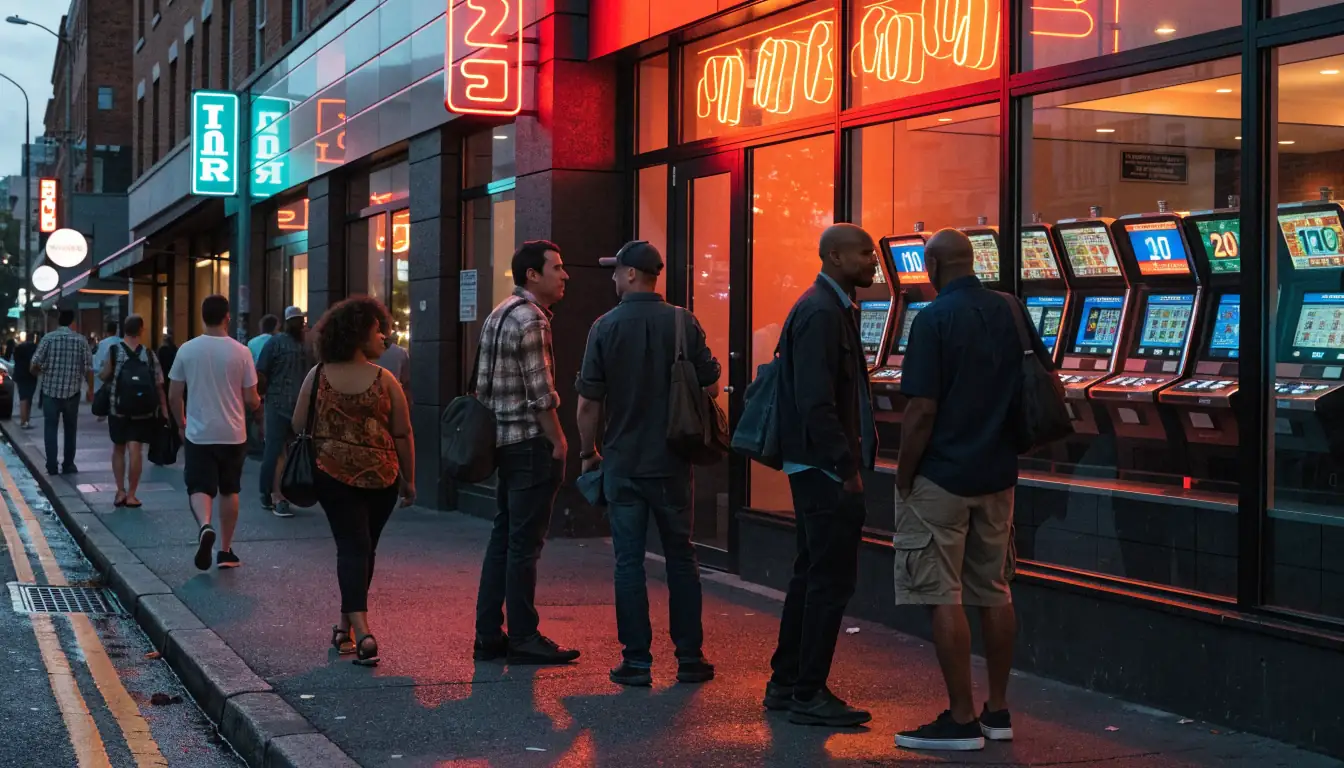
Covers how pokies are regulated across Australian states and territories, AUSTRAC's money-laundering concerns, and what…


Purchasing winning tickets. A player sitting at a machine with a genuine winning ticket is approached and offered more than the ticket’s face value — or simply its face value in clean form. The buyer walks away with a legitimate-looking gaming win; the seller walks away with a premium and no questions. The venue’s records show a normal redemption; nothing about the transaction ever touches a bank in its original form.
Structuring across venues. Rather than feeding a large sum through one machine at one venue — where a cash transaction above $10,000 must be reported — dirty cash is split into smaller amounts and moved through multiple machines across multiple venues. Each individual transaction stays under thresholds or otherwise below notice; the aggregate never appears in any single set of records. Frequent small redemptions across venues is the recognised footprint of exactly this practice.
Collusion and weak oversight. Multiple patrons working together to move cash — one placing, one redeeming, one coordinating — exploit the fact that venue staff see individuals, not networks. Where venue oversight is weak or complicit, the group operates with the machine’s own legitimacy as cover.
A large cash amount is inserted into a machine and withdrawn after little or no gameplay, converting dirty cash into a machine payout.
A player sells a genuine winning ticket to a buyer for more than its face value, providing clean‑looking winnings.
Dirty cash is split into smaller amounts and moved through multiple machines at different venues to stay below reporting thresholds.
The red flags: what detection actually looks like
The flip side of the typologies is the indicator list. AUSTRAC-style guidance, echoed in public inquiry findings, identifies the patterns that should prompt venue staff to look twice:
- Large cash insertions followed by minimal play and immediate cash-out — the raw signature of cash placement with minimal play.
- Frequent small redemptions across venues — the signature of structuring.
- Multiple patrons apparently working together to move cash — collusion.
- Customers refusing identification, or using multiple player cards — an attempt to fragment identity across what is a single financial actor.
- Unusual redemption patterns compared to venue averages — statistics catching what individual transactions hide.
- Access to more cash than expected for the customer profile — the patron whose wallet does not match their job.
- Depositing higher values and larger amounts of cash than the profile supports — the same indicator at the counter rather than the machine.
Each of these is individually explainable. Someone has a good month; someone does not carry a card; someone redeems a series of small wins. Detection is a matter of pattern and proportion: one odd transaction is noise, a consistent profile mismatch is signal. That is the entire logic of customer verification and patron profiling as AML controls — the two measures the sector relies on most heavily. Know who the patron is, know what their normal looks like, and flag the deviation rather than the event.
Why the money launderers use "money mules"
The typologies above explain the mechanics. The labour model explains the scale. Criminals recruiting intermediaries — known in the literature as money mules — allows one operation to run the same wash through many faces. A mule inserts the cash, redeems the payout, and hands it back minus a cut; the organiser’s identity never appears at a machine. Because each mule is a separate, low-value, individually plausible patron, the venue’s profiling sees nothing unusual about any one of them. The pattern only emerges across patrons, which is exactly where venue-level systems are weakest.
This is the uncomfortable finding underneath the public inquiries: the pokies sector’s AML problem is not primarily a technology problem. It is a pattern-across-people problem, and pattern-across-people is what cash-based, venue-by-venue oversight was never built to see.
Red flag
A pattern or indicator that suggests possible money‑laundering activity, such as large cash insertions followed by immediate cash‑out or frequent small redemptions across venues.
Traceability as the policy answer
Every serious policy response to the AML problem converges on one variable: traceability. Cash is anonymous; records are not.
Cashless and account-based pokies — sometimes called transparent pokies to underline the shift — improve traceability by construction. When play runs through an account rather than a note acceptor, the record of what went in, what was played and what came out exists as a matter of course. The typologies above do not become impossible, but each one gets harder in a specific way:
- Cash placement with minimal play requires somewhere to place cash anonymously; an account-based system has no anonymous entry point.
- Structuring across venues relies on fragmentation; account-based systems allow aggregation across venues by identity.
- Multiple player cards and refused identification depend on weak identity anchors at the machine; account-based play anchors identity once, up front.
- Collusion and mule networks still function mechanically, but every leg of the network leaves a linked record rather than a disconnected one.
This is why the push toward transparent pokies is described in compliance terms as much as in harm-minimisation terms. The same record that lets a venue detect an unusual redemption pattern also lets a researcher measure actual player loss, and lets a regulator verify tax. Traceability is the single change that addresses laundering, harm and revenue integrity simultaneously — which is also why it is fought over so hard.
How PayID fits the compliance picture
For a reader arriving here through interest in new PayID pokies in Australia for 2026, the above is not background — it is the direct context.
PayID itself is a domestic payments facility: an identifier linked to an Australian bank account that lets money move between accounts using something memorable rather than a BSB and account number. As a payment rail, it inherits the properties of the banking system it runs over. Transfers are account-to-account, they are tied to identified bank customers, and they exist within the banking system’s established transaction-reporting and AML/CFT framework — the framework AUSTRAC administers across all reporting entities.
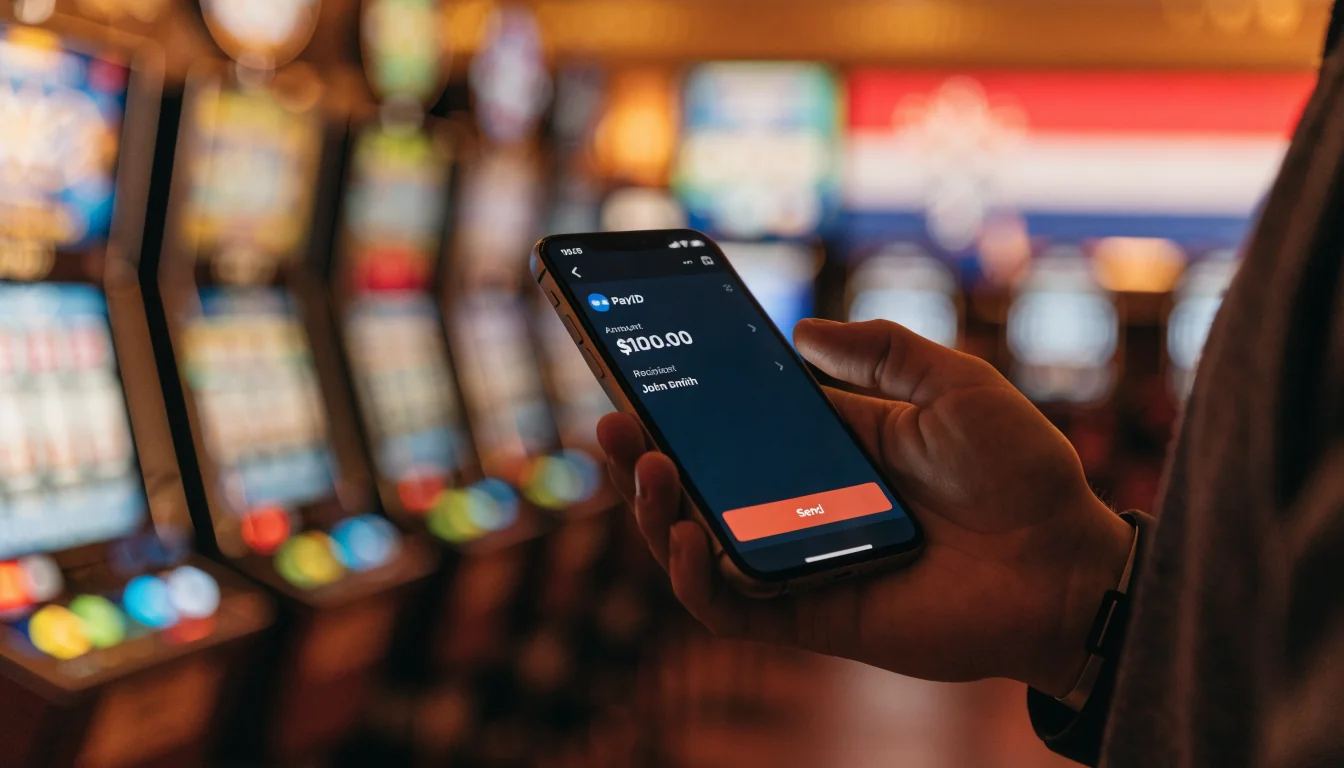
That stands in contrast to the two payment categories Australian gambling regulation has expressly closed off: credit cards cannot be used for deposits or betting, and digital currencies — Bitcoin, Ethereum and the rest — cannot be accepted either. The policy logic is consistent across all three. A credit card means gambling with borrowed money; a digital currency means gambling with instruments designed to sit outside the traced financial system; PayID means gambling through the traced financial system. It is not an accident that the payment methods regulators prohibit are the anonymous and the credit-based ones, while the payment method generating interest is the bank-anchored one.
The compliance reality for anyone evaluating a site offering online pokies with PayID remains what the Interactive Gambling Act makes it: offering online casino services to Australians is illegal, no domestic licence exists to legitimise it, and an offshore operator accepting PayID is still an operator committing an offence under Australian law in doing so — regardless of how clean the payment rail itself is. A payment method with excellent traceability does not launder the legal status of the service it pays for. If anything, the banking-system linkage cuts the other way: the record of the transaction sits inside a system Australian authorities can already see.
Traceability essential
Effective AML control in the pokies sector hinges on moving to account‑based, traceable machines.
The enforcement and oversight architecture
The actors in this landscape are worth naming in one place, because responsibilities are often conflated:
- AUSTRAC — the Commonwealth financial intelligence regulator. Venue registration, AML/CFT program requirements, threshold reporting for cash transactions above $10,000 for operators of more than 15 machines, and the suspicious-matter reporting regime that the typologies and red flags above feed into.
- ACMA — the Australian Communications and Media Authority, enforcing the online gambling rules: prohibited casino services, advertising restrictions, and enforcement against the offshore supply side.
- State and territory regulators — licensing and oversight of land-based gambling, including the pokies in pubs and clubs; in the ACT, the Gambling and Racing Commission; for online wagering licences, among others, the Northern Territory Licensing Commission.
- The NSW Crime Commission — the body whose public inquiries brought the cash-through-pokies problem into the open, with findings that reshaped the national AML conversation about the sector.
- BetStop and Gambling Help Online — the self-exclusion registry and the national support service, respectively, on the harm-minimisation side of the ledger.
- Legislation providers — firms such as FacctGuard, FacctShield and FacctView operate in the compliance-tooling space, offering identity verification and transaction-monitoring capability that venues and operators use to meet the AML/CFT obligations described above.
The architecture is layered by design: the Commonwealth writes the online rules and the financial-crime rules; the states license the venues and the machines; the inquiries expose what both levels missed; and the registries and support services catch what falls through the person-shaped gaps.
Where this leaves the market heading into 2026
Pulling the threads together, the picture of Australian pokies heading into 2026 has four stable features.
First, the scale is not in dispute. Whatever exact turnover figure one prefers — almost AUD$150 billion in bets with AUD$12 billion in player loss in FY 2020–21, or the single-source $191.2 billion turnover estimate for 2023 — Australia’s concentration of machines and money per capita is an outlier among developed economies, and NSW is the outlier within the outlier.
Second, the legal geography is fixed and asymmetric. Land-based pokies: legal, licensed, state-regulated, taxed to the tune of 7.7% of state and territory revenue in 2015–16. Online casino games, including online pokies: prohibited to offer, impossible to license domestically, enforced by ACMA against operators, and unprosecuted as an offence by players. Sports and race betting online: legal and licensed. The asymmetry has held since 28 June 2001, and no current proposal on the table changes it.

Third, the AML problem is documented, named and regulated — imperfectly. The typologies are known, the red flags are published, the obligations are law, and the enforcement record shows both genuine constraint and genuine leakage. Cash placement with minimal play, ticket purchasing, structuring across venues, mule networks: each was found in practice, not hypothesised. The controls — customer verification, patron profiling, threshold reporting, and above all the move toward cashless and account-based play — are the sector’s working answer, and the strength of that answer depends almost entirely on how far traceability is pushed.
Fourth, the payment layer is where compliance pressure and player behaviour now intersect. Credit cards and digital currencies are barred; bank-based transfer through identifiers like PayID operates inside the traced system; and every payment choice an operator makes is simultaneously a statement about which side of the traceability line it stands on. For a player, the practical corollary is that a clean payment rail and a legal service are two separate questions. The first is a property of the banking system; the second is determined by the Interactive Gambling Act, and no payment method changes what it says.
That is the landscape. The market is enormous, the rules are layered, the money-laundering exposure is real and publicly documented, and the direction of policy — on advertising, on harm minimisation, on traceability — has been consistently toward the records rather than the cash. Anyone weighing where to play, or assessing an operator’s claims, is operating inside that frame whether they know it or not; the ones who know it make better-informed decisions, and the ones who don’t are the market the rules were written to protect.
What are pokies in Australia?
Pokies is the everyday Australian name for electronic gaming machines (EGMs) — machines where players wager money on games of chance, most commonly reel-based games. They are found in pubs, licensed clubs and casinos across the country.
What are the red flags for pokies-related money laundering?
Key red flags include large cash insertions followed by minimal play and an immediate cash-out, frequent small redemptions spread across multiple venues, groups of patrons working together to move cash, refusal to show identification or use of multiple player cards, and redemption patterns that deviate sharply from venue averages.
What law governs online gambling in Australia?
Online gambling is regulated federally under the Interactive Gambling Act, passed on 28 June 2001. It makes it illegal to offer online casino-style games — pokies, poker, blackjack, roulette — to Australian residents, and no domestic licence for an online casino can be obtained.
Published by the Casino Regional Guide team.