
Pocket Pokies Casino Australia: Market, Rules and Risks
 Available in AU
Understanding Pokies in Australia: Market Size, Regulation, and Risks
Before any discussion of specific casino products, apps, or player strategies makes sense, the underlying machine market needs to be understood on its own terms. Pokies are not a niche pastime in Australia — they are the single largest gambling channel in the country, and the numbers attached to them are of a scale that shapes legislation, policing, and household finances alike. This section sets out what the machines are, how large the market actually is, which bodies regulate it, and where the documented risks sit — financial crime on one side, gambling harm on the other.
What "pokies" actually refers to
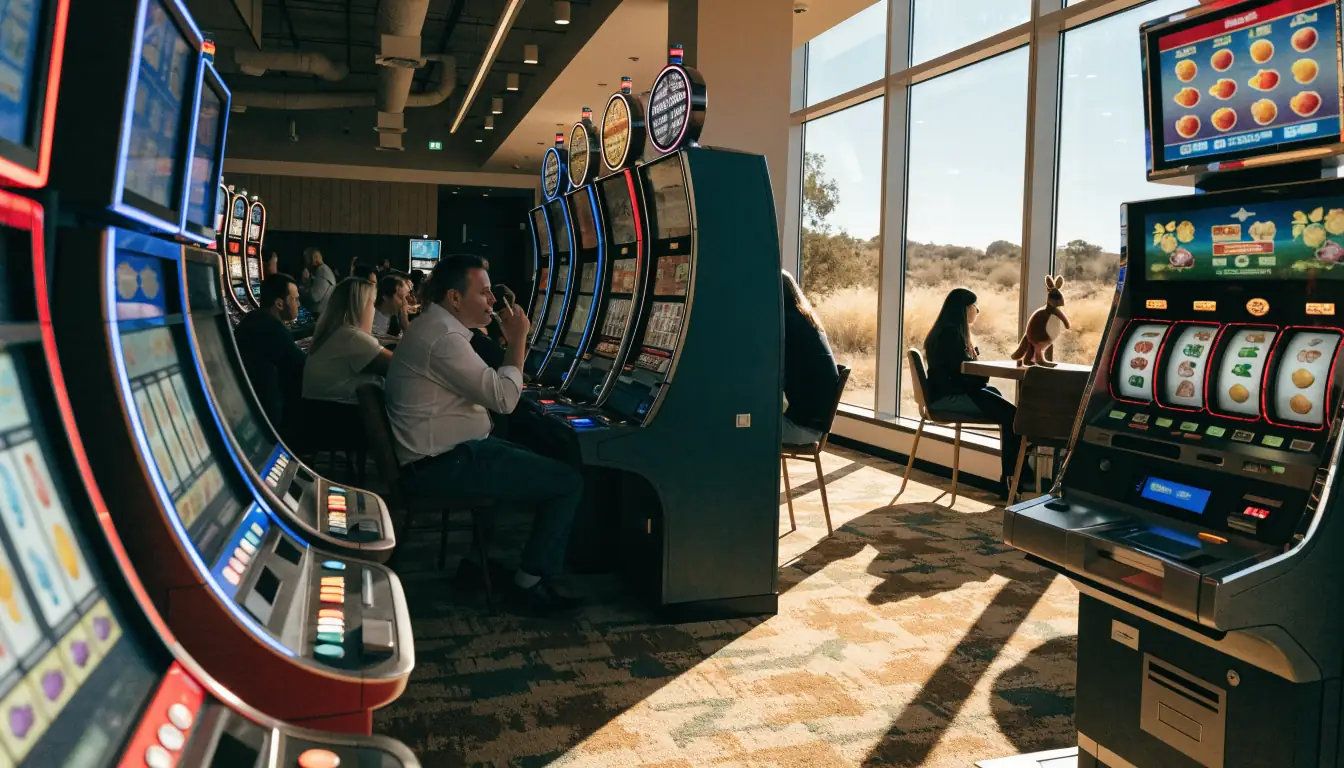
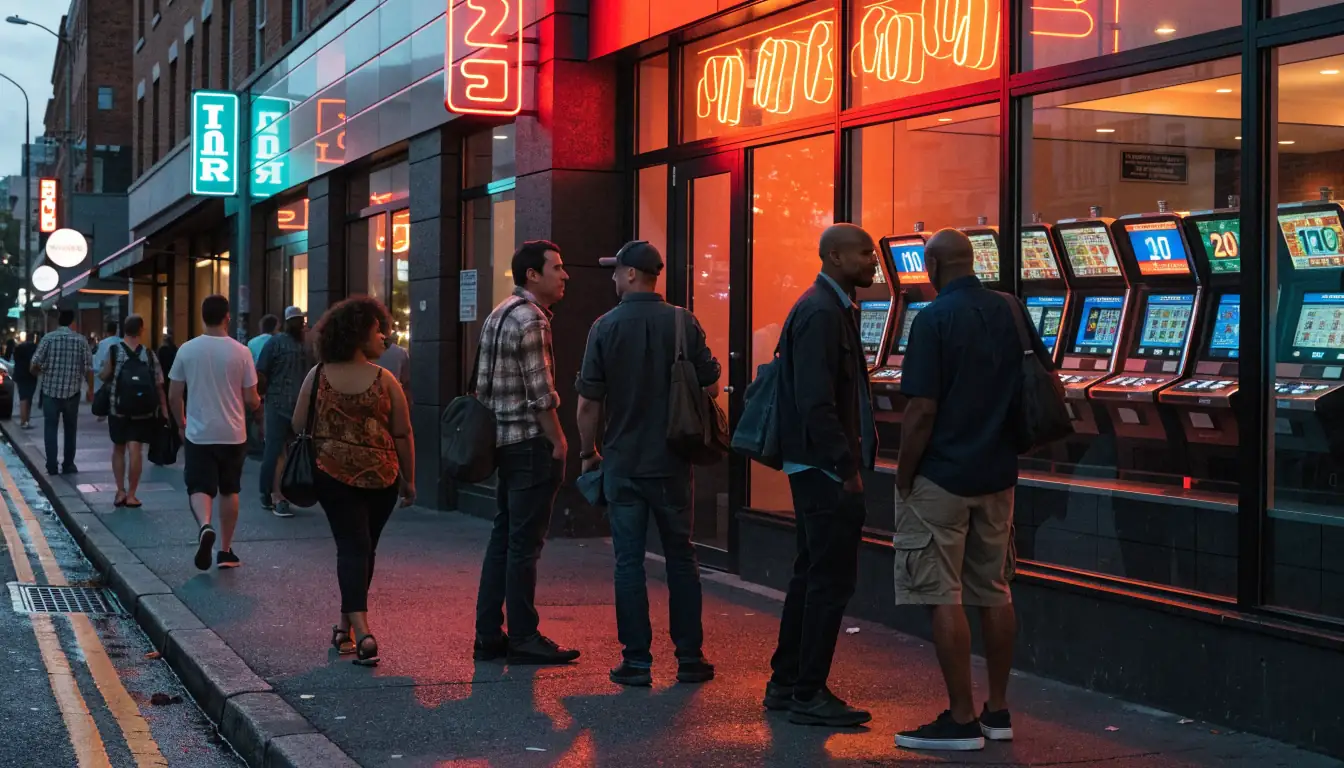
"Pokies" is the colloquial Australian term for electronic gaming machines, or EGMs — the screen-and-reel gambling terminals installed in pubs, clubs, and casinos across the country. Regulatory and academic literature tends to use "electronic gaming machines" or "poker machines"; everyday usage, and virtually all marketing aimed at Australian players, uses "pokies." All three terms describe the same object: a machine on which a player stakes money on a simulated game of chance, with outcomes determined by a random number generator rather than by any element of skill.
Choosing where to play pokies online means weighing licensing, welcome offers, and payout terms before you deposit a cent — here’s a quick rundown to help you compare at a glance.
License: Curacao Gaming Control Board OGL/2023/174/0082 (Dama N.V.) · Bonus: up to A$5,000 + 300 free spins across 4 deposits Licensed under the Curacao Gaming Control Board via Dama N.V., this operator backs its offering with a multi-deposit welcome package worth up to A$5,000 plus 300 free spins spread across four deposits.
License: Curacao Gaming Authority (Jumpman Gaming Ltd) · Bonus: up to A$6,600 + up to 250 free spins across 4 deposits Operating under a Curacao Gaming Authority license held by Jumpman Gaming Ltd, it offers a sizeable welcome package of up to A$6,600 and up to 250 free spins across four deposits.
Bonus: 240% up to A$4,100 + 300 free spins Stands out for its welcome offer structure, a 240% match up to A$4,100 combined with 300 free spins.
License: Curacao eGaming OGL/2023/174/0082 (Dama N.V.) · Bonus: up to A$10,000 + 500 free spins across 4 deposits · Min. deposit: A$15 Licensed by Curacao eGaming through Dama N.V., it offers one of the larger welcome packages here, up to A$10,000 plus 500 free spins across four deposits, with an accessible minimum deposit of A$15.
License: Curacao Gaming Control Board OGL/2023/176/0095 (Hollycorn N.V.) · Bonus: up to A$5,000 + 300 free spins across 4 deposits Holding a Curacao Gaming Control Board license via Hollycorn N.V., it provides a welcome bonus of up to A$5,000 plus 300 free spins across four deposits.
License: Curacao Gaming Control Board OGL/2023/176/0095 (Hollycorn N.V.) · Bonus: up to A$1,500 + 200 free spins across 3 deposits Licensed by the Curacao Gaming Control Board under Hollycorn N.V., this operator offers a welcome bonus up to A$1,500 with 200 free spins across three deposits.
License: Curacao eGaming OGL/2024/923/0383 (Antillephone N.V.) · Bonus: up to A$2,000 + 100 free spins across 2 deposits · Min. deposit: A$30 Licensed under Curacao eGaming via Antillephone N.V., it offers a welcome bonus up to A$2,000 plus 100 free spins across two deposits, with a minimum deposit of A$30.
Bonus: up to A$750 + 50 jackpot spins, 35x wagering · Payout speed: crypto ~90 minutes, fiat 1-5 days · Min. deposit: A$30 Notable for its jackpot-spins bonus up to A$750 with 35x wagering, plus fast crypto payouts around 90 minutes and fiat withdrawals within 1-5 days; minimum deposit is A$30.
License: Curacao · Bonus: up to A$2,000 Operating under a Curacao license, it offers a straightforward welcome bonus of up to A$2,000.
License: Curacao Gaming Control Board (TechSolutions Group N.V.) · Bonus: 100% up to A$250 + 100 free spins (1st deposit) Licensed by the Curacao Gaming Control Board through TechSolutions Group N.V., it offers a first-deposit bonus of 100% up to A$250 plus 100 free spins.
The distinction matters more than it might appear. A "pokie" is not a table game, not a lottery ticket, and not a sports bet. It is a continuously available, high-frequency gambling product: each spin takes seconds, and the machine is designed to accept repeated stakes without pause. That frequency — not the size of any single bet — is what makes EGMs the dominant source of gambling losses in Australia, and it is also what makes them structurally interesting to anyone moving cash that would rather not be traced.
The term also carries a specific geographic weight. Pokies are operated in every Australian state, in the Australian Capital Territory, and in the Northern Territory. There is no jurisdiction on the mainland where the machines are simply absent; what varies between jurisdictions is how many machines are permitted, where they may be installed, and what obligations attach to the venues that run them. Tasmania and Western Australia sit at different points on that spectrum to New South Wales and Victoria, but the product itself is national.
The size of the market in verified figures
The scale of Australian pokies play is easiest to grasp through the official financial-year statistics.
In the 2020–2021 financial year, Australians placed bets worth almost AUD 150 billion on electronic gaming machines. That figure is turnover — the total value of all wagers placed, including money that was staked, won, and staked again. Turnover always looks enormous relative to what players actually lose, because the same bankroll cycles through a machine many times over a single session.

The figure that reflects actual household impact is player loss. In the same financial year, 2020–2021, total player loss from electronic gaming machines was about AUD 12 billion. That is money that left players’ pockets and did not come back — the net transfer from Australian gamblers to machine operators, state revenues, and venue profits over twelve months.
Expressed per head of population, losses from electronic gaming machines in that year came to AUD 608 per capita. That is a per-person average across the entire population — adults and children, players and non-players alike — which means the actual average loss among people who play regularly is considerably higher. A per-capita figure is a measure of national exposure, not of individual behaviour.
A more recent turnover figure exists, but it comes with a caveat that should be stated plainly: according to complyadvantage.com, pokies generated AUD 191.2 billion in gambling turnover in 2023. That is a single source, reporting on a single year, using a definition of turnover that is not spelled out in the same detail as the official financial-year statistics. It is reported here as a claim by that source, not as an established market norm. If it is accurate, it suggests turnover grew substantially between 2021 and 2023 — consistent with the post-pandemic reopening of venues — but the underlying methodology is not independently verifiable from the material available, so the 2020–2021 figures remain the anchor for any calculation.
Market turnover (2020‑2021) AUD 150 billion
Player loss (2020‑2021) AUD 12 billion
Per‑capita loss AUD 608
One further comparison circulates in discussions of the Australian market, and it is genuinely contested. One version holds that Australia accounts for 3% of the world’s pub and club poker machines. Another holds that Australia accounts for about 18% of the world’s poker machines. The sources disagree, and the disagreement is not trivial — a factor of six. Part of the gap is likely definitional: "pub and club" machines exclude casino machines, and "world’s poker machines" may or may not include every jurisdiction’s EGM inventory. Where the truth sits between 3% and 18% depends on which machines are counted and by whom. What is not contested is the direction of the claim: on any of the available counts, Australia holds a share of the world’s gaming machines far out of proportion to its share of the world’s population. Even the conservative reading of the figures describes one of the most machine-saturated gambling markets in existence.
Winnings, taxation, and where the money goes
Two structural facts about Australian gambling law shape every financial calculation a player makes.
First, gamblers’ winnings in Australia are not taxed. A win at a pokie, a successful bet, a lottery prize — none of it is treated as income by the Australian tax system. The logic is that a windfall from gambling is not income from a recurring activity; the tax system instead collects its share from the operators, at the point of the gamble rather than the payout. There are narrow situations involving professional gambling where the position can differ, but for the ordinary player, a win is received in full.
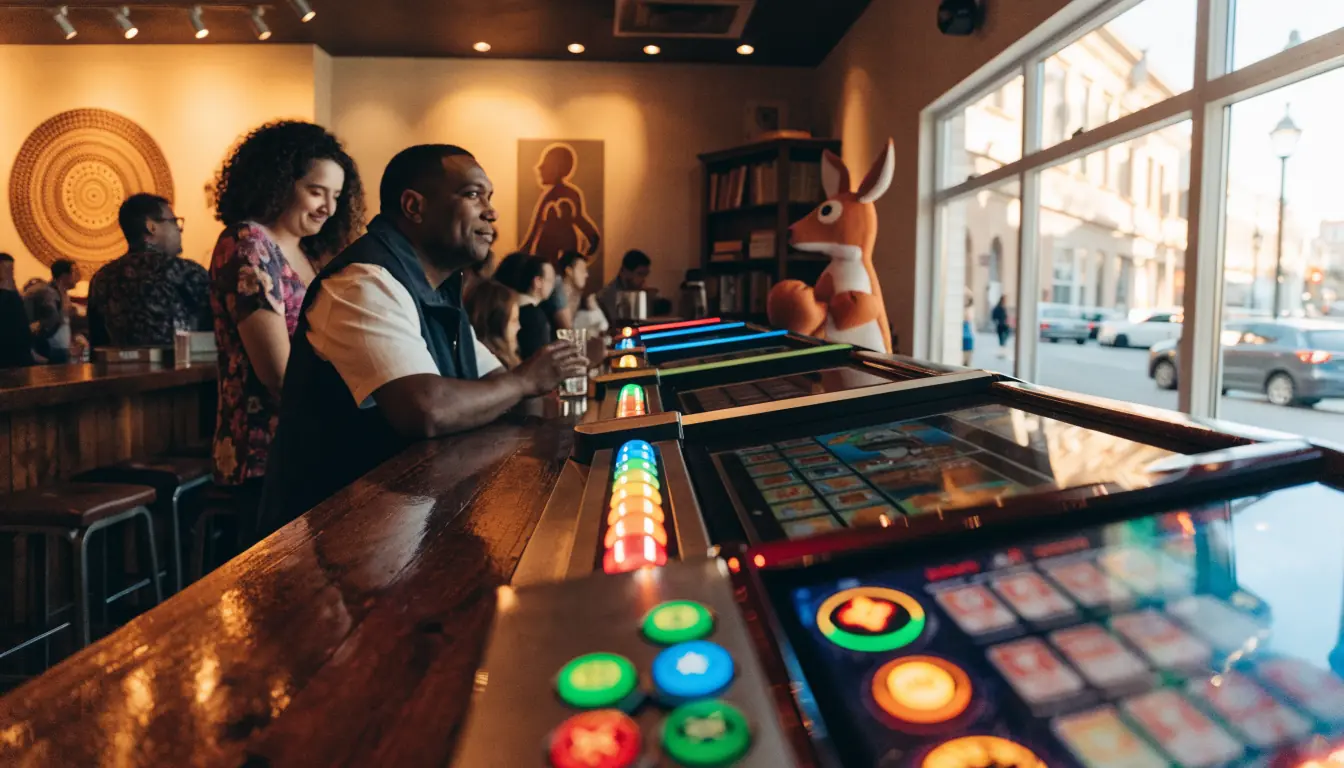
Second, the taxation of gambling operators varies by state and by type of gambling service. There is no single national gambling tax. Each state and territory sets its own rates and structures, and a hotel running pokies in one jurisdiction can face a materially different tax arrangement from an identical venue across the border. This variation is one of the reasons venue-owner associations, state governments, and reform advocates argue at such length about machine policy — the revenue at stake is state revenue, and no state treats it identically.
The combined effect is a system where the state is simultaneously the regulator of gambling harm and a major financial beneficiary of gambling revenue. That tension runs through nearly every policy decision discussed below, from cashless gaming timelines to advertising restrictions.
The legal framework: what is permitted, what is prohibited
Australian gambling law operates on two layers, and confusing them produces most of the misunderstanding about what Australian players can legally do.
The land-based layer covers pokies in pubs, clubs, and casinos. These are legal, licensed at state and territory level, and subject to state-specific rules on machine numbers, venue obligations, and harm-minimisation measures. This is where the AUD 150 billion in annual turnover lives.
The online layer is governed federally. The Interactive Gambling Act 2001 (IGA) is the primary Commonwealth law governing online gambling in Australia, introduced to protect the public with a focus on harm minimisation. Under the IGA, it is an offence for online operators to offer real-money online casino gambling to Australian residents. Online casino-style games — including slots, poker, blackjack, and roulette — are prohibited. It is not possible to obtain a licence to operate an online casino domestically, and there are no domestically licensed real-money online casino operators available to Australian players.
Illegal Online Casinos
Playing at offshore online casinos is not illegal for Australian players, but offering real‑money casino services to Australians breaches the Interactive Gambling Act and can result in enforcement against the operator.
Two consequences follow, and both deserve to be stated without euphemism.
The first is about players. It is not illegal for individual Australians to play at offshore-licensed online casinos. The Interactive Gambling Act targets operators, not players. An Australian who plays an offshore online slot commits no offence under the IGA. This is a genuine asymmetry in the law: offering is illegal, playing is not.
The second is about what that asymmetry produces. Because no domestic online casino licence exists, any online site offering pokies-style play to Australians is operating from an offshore licence — a Malta Gaming Authority licence, a UK Gambling Commission licence, or a licence from some other jurisdiction — and is doing so in breach of Australian law regardless of how it markets itself. There is no Australian public register of online casino licensees to consult, because there are no Australian online casino licensees. Any assurance of "fully licensed" in this space refers to a licence issued somewhere else, under a regulatory regime with no obligation to Australian players beyond what its own rules require.
This is the context in which questions like “is a given site legit” or “is it safe” have to be answered. The honest answer for any online pokies site serving Australians is that it cannot be legitimate under Australian law, because no pathway exists for it to be. Whether it is trustworthy in practice depends entirely on the offshore regulator that holds its licence and on its own conduct — a question of private diligence, not of legal protection. Australian players who run into a dispute with an offshore operator have no Australian regulator to complain to and no domestic licence to appeal to.
For completeness, the permitted online forms are narrow. Online sports betting is legal in Australia under state and territory licences. Lotteries are licensed and legal. Live in-play online betting is illegal federally — though live betting placed by telephone is permitted, a carve-out that reflects the legislation’s drafting era more than any coherent policy logic.
The remaining foundational legal point is age. The minimum legal gambling age in Australia is 18, across all forms. The age-verification obligations that follow from it apply to every operator, licensed or not.
The crime problem: why pokies attract dirty money
The same properties that make EGMs commercially powerful — continuous play, rapid turnover, anonymous cash handling — make them structurally attractive to money laundering. The high volume of cash transactions and the limited traceability of pokies are documented, not theoretical, concerns, and they sit at the centre of Australian financial-crime enforcement.
The mechanics are straightforward, and understanding them explains most of the regulatory response described below.
The simplest method is insertion and cash-out. Criminals insert large sums of cash into electronic gaming machines, perform minimal gambling activity, and then cash out. The machine issues a ticket or a payout record, and the criminal now holds documented "winnings" — a false record that converts unexplained cash into an apparently legitimate gambling result. The cost is whatever small percentage is lost during the minimal play; the product is a paper trail that explains the money.
Money‑laundering risk
Inserting large cash amounts into pokies and cashing out immediately creates documented “winnings” that can be used to legitimize dirty money.
A refinement is ticket purchasing. Offenders buy winning tickets from other players — genuine winners who are willing to sell their payout ticket for cash, sometimes at a premium. The offender then redeems the ticket and receives clean, traceable funds. The genuine winner walks away with cash; the launderer walks away with a documented redemption. Nobody has forged anything; the record is real, and that is precisely the problem.
The third method is structuring. Because anti-money-laundering rules attach reporting obligations to cash transactions above certain thresholds — AUD 10,000 at the venue level, as described below — a single large deposit would trigger scrutiny. Structuring across venues solves this by spreading smaller cash deposits across different venues, keeping each individual transaction under the reporting threshold. No single venue sees a pattern; the pattern exists only across the network, which is exactly why regulators now press for cross-venue monitoring and account-based play.
According to complyadvantage.com, money mules are also recruited to launder money through pokies — individuals, often unwitting or marginally complicit, who process dirty cash through machines on behalf of others, adding a further layer of separation between the criminal and the transaction. As with the 2023 turnover figure, this is a single-source claim about a shifting subject — mule networks are not a stable market statistic — and it is reported here as that source’s finding rather than as a settled characteristic of the market. What is independently documented is the underlying activity: the insertion, minimal-play, cash-out pattern, ticket purchasing, and structuring described above.
The NSW Crime Commission has been the most prominent public voice on the intersection of pokies and proceeds of crime, and its findings fed directly into the reforms discussed in the next subsection. The Australian Institute of Criminology has likewise contributed research on laundering typologies involving EGMs. The consistent conclusion across regulators and researchers is that cash-intensive, anonymous, high-frequency gambling machinery is close to an ideal laundering instrument, and that the anonymity is a design feature of the current system rather than an accident.
AUSTRAC requires venues with up to 15 pokies to register and submit suspicious matter reports, while venues with more than 15 pokies must implement full AML/CFT programs, including a compliance officer and transaction monitoring.
AUSTRAC and the compliance regime
The enforcement response runs through AUSTRAC, the Australian Transaction Reports and Analysis Centre, the national financial-intelligence and AML/CFT regulator. In 2024, AUSTRAC issued a guide to help firms recognise money-laundering red flags specific to the gambling environment. The guide matters because it converted previously informal industry suspicion into an official checklist — and because it put every venue operator on notice that ignorance of these patterns is no longer an available defence.
The red-flag indicators AUSTRAC identified include unusually high cash access, large deposits, cash transfers, casino disbursement checks, and certain occupations. In the pokies context, the behavioural signals are more specific still, and they map directly onto the laundering methods described above:
- Large or repeated cash insertions followed by minimal play and immediate cash-out — the basic insertion-and-redemption pattern, visible in any machine’s play record if anyone looks.
- Frequent small redemptions across different venues within a short period — the signature of structuring, where the pattern only becomes visible across venues rather than within one.
- Customers refusing identification or using multiple player cards — an attempt to preserve anonymity or fragment an identity precisely where the system is designed to capture it.
The obligations AUSTRAC imposes scale with venue size, and the threshold is machine count.
Operators with up to 15 pokies must register with AUSTRAC, keep identification records, and submit suspicious matter reports. This is the lighter-touch tier: registration, record-keeping, and a duty to report anything that fits the red-flag patterns above.
Operators with more than 15 pokies carry the full compliance load. They must appoint a compliance officer, conduct risk assessments, implement AML/CFT programs, perform customer due diligence, and report cash transactions over AUD 10,000. In practice this means larger clubs — and every casino — operate a standing compliance function, with named accountability, documented risk methodology, and a threshold-based reporting pipeline into AUSTRAC.
The consequences of non-compliance are layered. Non-compliant operators may receive remedial directions, infringement notices, and civil fines, and suffer reputational damage — a formulation that undersells the upper end of the range. For NSW casinos specifically, an amendment to the Casino Control Act 1992 allows operators to be fined up to AUD 100 million for compliance failures. That figure was not chosen at random: it was calibrated after inquiry findings that made the previous penalty regime look like a routine business cost. A fine ceiling of AUD 100 million repositions compliance failure from a nuisance into an existential balance-sheet event.
Cashless gaming and the traceability reform
The structural fix for pokies-related laundering — and, in a different policy argument, for gambling harm — is to remove cash from the machine. The direction of reform is consistent across regulators, even where the timelines are contested.
The 2022 NSW Islington Report recommended making all NSW pokies cashless by the end of 2028. That recommendation is attributed here to complyadvantage.com, its single source, and it is a recommendation rather than enacted law — a proposal with a deadline attached, not a deadline the industry is currently bound by. Whether it survives the political process between now and 2028 is an open question; NSW pokies policy has a long history of recommendations outliving their implementation prospects. What is not open to question is the direction: every serious regulatory document on this subject points the same way.
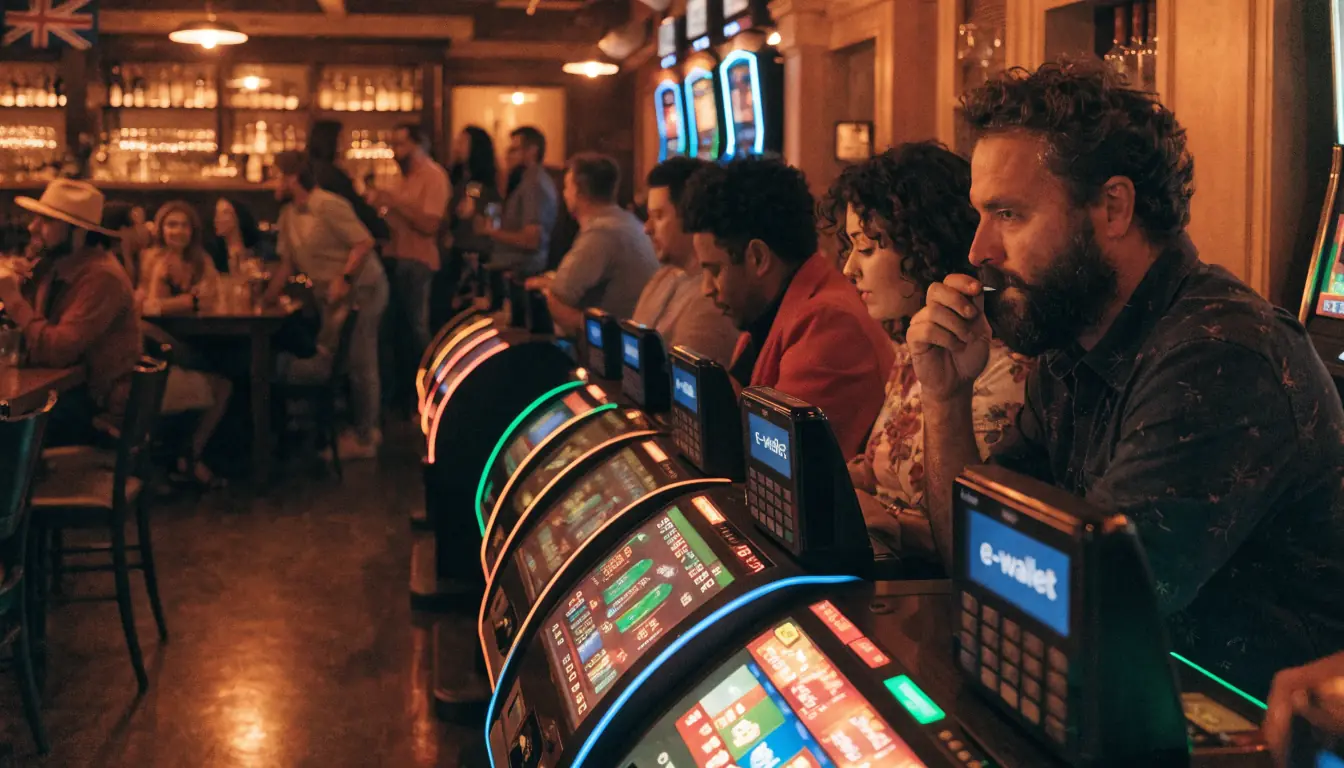
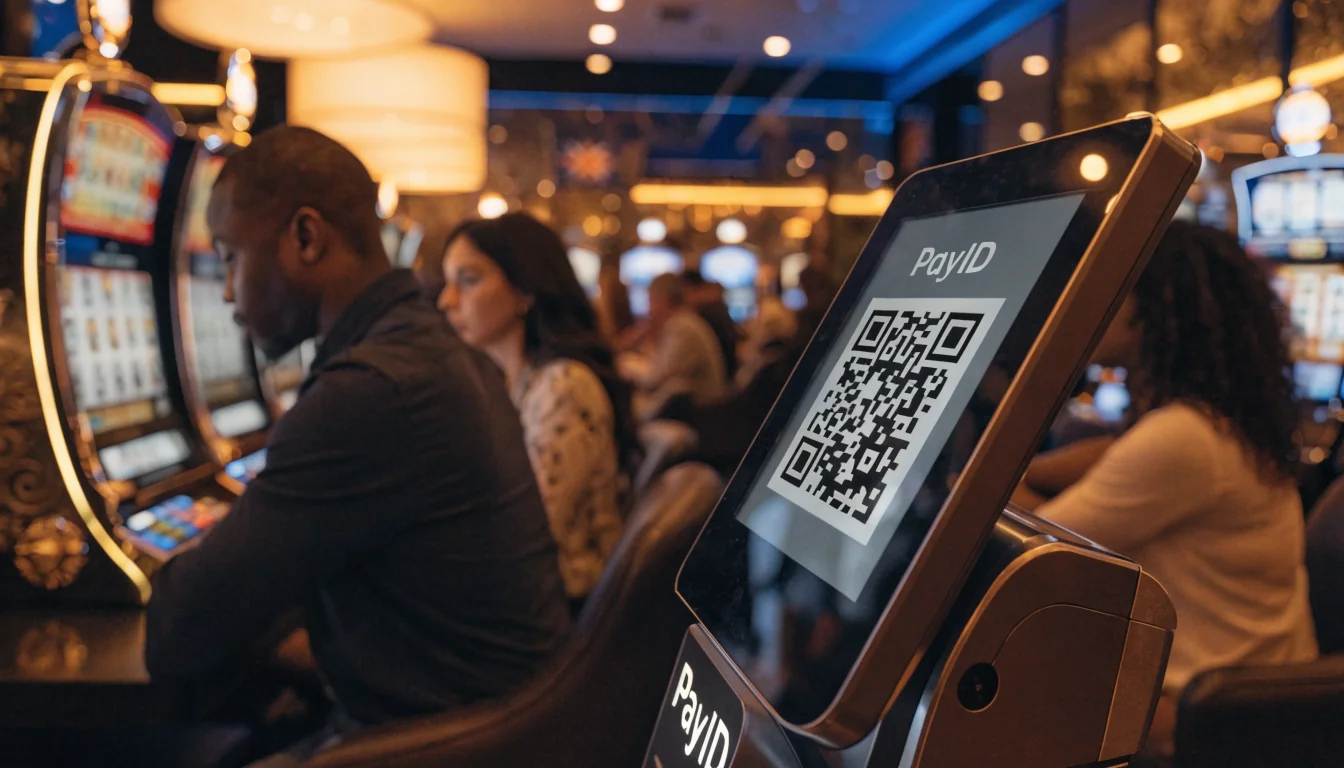
The technical case is set out by facctum.com, which reports that the adoption of cashless, account-based pokies improves traceability and reduces anonymity. The mechanism is simple enough that it barely needs a source: transparent, account-based pokies provide full traceability of deposits, gameplay, and withdrawals. Money enters through a linked account rather than through anonymous notes; every dollar’s path through the machine is recorded against that account; and the structuring playbook — spreading cash across venues to stay under thresholds — collapses, because there is no anonymous cash to structure. Ticket purchasing loses its purpose for the same reason: a redemption credited to a named account explains nothing about the origin of the funds that bought the ticket.
Regulators, for their part, recommend tighter customer due diligence, transaction monitoring, and the adoption of cashless gaming systems — a three-part prescription that pairs the technology change with the compliance practices AUSTRAC already requires of large operators. The policy argument against cashless gaming, led by parts of the clubs industry, is primarily about revenue and player friction; the policy argument for it is that it closes, at a stroke, the anonymity on which every documented laundering method depends. Neither argument disputes the traceability claim itself.
Cashless benefits
Cashless, account‑based pokies provide full traceability of deposits and withdrawals, effectively eliminating the structuring laundering method.
The harm side of the ledger
Financial crime is one risk attached to this market. Gambling harm is the other, and it is the reason the Interactive Gambling Act exists at all — the statute was introduced explicitly with a focus on harm minimisation, and every subsequent restriction, from advertising rules to age verification, traces back to that purpose.
The headline harm figure is the player-loss number already given: roughly AUD 12 billion lost on electronic gaming machines in a single financial year, AUD 608 for every person in the country. Per-capita averages conceal the distribution: machine losses are concentrated among a relatively small group of regular players, and the research consensus across jurisdictions is that the great majority of EGM revenue comes from people playing in ways that cause them measurable harm. A product that extracts AUD 12 billion a year, disproportionately from its most damaged customers, is not a neutral entertainment offering; the harm-minimisation framing of Australian gambling law is an acknowledgement of exactly that.
The age dimension is increasingly part of the harm picture. Almost one in three — 30% — of 12-to-17-year-olds in Australia gamble, and 46% of 18-year-olds gamble. The first figure, on its face, describes activity that is illegal for the entire group it measures: the minimum legal gambling age is 18, so any gambling among 12-to-17-year-olds is gambling outside the legal framework entirely. The second figure says that by the exact age of legal entry, nearly half the cohort is already gambling — meaning initiation does not wait for the birthday that permits it. For a market arguing about advertising restrictions and age-gating, these are the numbers that define the actual perimeter of the problem: the boundary at 18 is being crossed from both sides.
The responsible-gambling infrastructure exists and is named. Gambling Help Online provides support services for anyone affected by gambling harm, and BetStop operates as the national self-exclusion register — a mechanism by which a person can bar themselves from licensed wagering operators in one step rather than venue by venue. These services are the practical counterpart to the harm-minimisation language in the legislation: the law restricts supply, and the services absorb the demand that remains. Both are worth knowing about before, not after, the AUD 608 per-capita average acquires a personal meaning.
Restrictions on how gambling may be promoted
The advertising layer of the regulatory framework is dense and, by design, blunt. The current restrictions on gambling promotion in Australia include:
- No display of gambling advertising during sporting events.
- A limit on gambling advertisements to a maximum of three per hour in permitted windows.
- A prohibition on gambling advertisements appearing on sports jerseys.
- No advertising of online casino services on any social media or online platforms.
- No targeting or display of gambling advertising to minors, on television, in stadiums, or online.
- Mandatory responsible-gambling messaging in all advertising, accompanied by harm-reduction information.
Two of these deserve a note on context. The jersey prohibition is not a proposal — from April 2026, gambling advertising on sports kit is banned, which makes the restriction one of the few in this area with a fixed, known commencement date. The ban on advertising during sporting events closes the pairing that drove much of the industry’s historical reach: sport broadcasts and betting prompts were, for years, sold as a single package. That pairing is being dismantled deliberately.
The restriction with the most direct bearing on anything discussed online is the prohibition on advertising online casino services on social media or online platforms at all — not merely to minors, but entirely. Online casino provision to Australians is unlawful, and promoting it is treated consistently with that. Any online content in this space operates under rules that do not permit the ordinary mechanics of digital marketing: no paid social promotion of casino play, no influencer distribution, no targeting of any kind. Content that explains the market’s structure — as this section does — is a different activity from advertising an operator, and the line between them is one publishers need to hold deliberately.
The remaining operational restrictions apply to the operators themselves: only users 18 and over may access a gambling site; the operator’s gambling licence must be displayed prominently in the site footer; wagering requirements must be shown clearly up front, before any bonus is offered; identity verification with government-issued ID is required before any withdrawal; credit cards and digital currencies may not be accepted for deposits or betting; commissions may not be paid to affiliates for referring gambling customers; clear complaint procedures and ADR membership information must be provided on the site; and no light-hearted or trivialising language may be used about problem gambling. Each of these exists because its absence was, at some point, the industry standard — and each is now a compliance requirement rather than a courtesy. For an Australian context, the licence-display rule has a particular irony already noted above: in the online casino segment there is no Australian licence to display, which is itself the clearest single statement of the market’s legal position.
Why none of this disappears with a change of screen
The word "pokies" now travels across formats. A machine in a suburban club and an offshore site marketing "pokies" play to Australians are, in marketing language, the same product. Legally and structurally they are not, and the difference runs in one direction only.
The club machine operates inside the framework described above: state licensing, AUSTRAC registration, cash thresholds, harm-minimisation obligations, a physical venue with a licence to lose. The AUD 150 billion of turnover, the AUD 12 billion of loss, the tax arrangements, the cashless reform timetable — all of that describes the licensed, land-based market.
An offshore online pokies site sits outside every one of those mechanisms. The Interactive Gambling Act 2001 makes its offering an offence, so no Australian compliance regime attaches to it; the licence it displays — where it displays one at all — was issued by a foreign regulator with no Australian enforcement obligation. The money-laundering analysis inverts accordingly: the documented laundering problem in Australia is a cash problem, and online play is cashless by construction, but cashless is not the same as protected. Traceability to a foreign regulator is not traceability on behalf of the player. Winnings still arrive untaxed — that part of the Australian position follows the player, not the operator — but every other protection in this section, from AUSTRAC’s red-flag monitoring to the AUD 100 million penalty ceiling to the self-exclusion register, stops at the point where the domestic licence stops existing.
That asymmetry is the factual foundation for everything that follows in any serious discussion of this market: the machines themselves, the money they move, the laws that constrain them, and the point at which those laws run out. A calculation that starts anywhere else starts by mispricing the risk.
Created by the ”Casino Regional Guide” editorial team.