
Best Casino in Hobart 2026: Poker Rooms and Tournaments
 Available in AU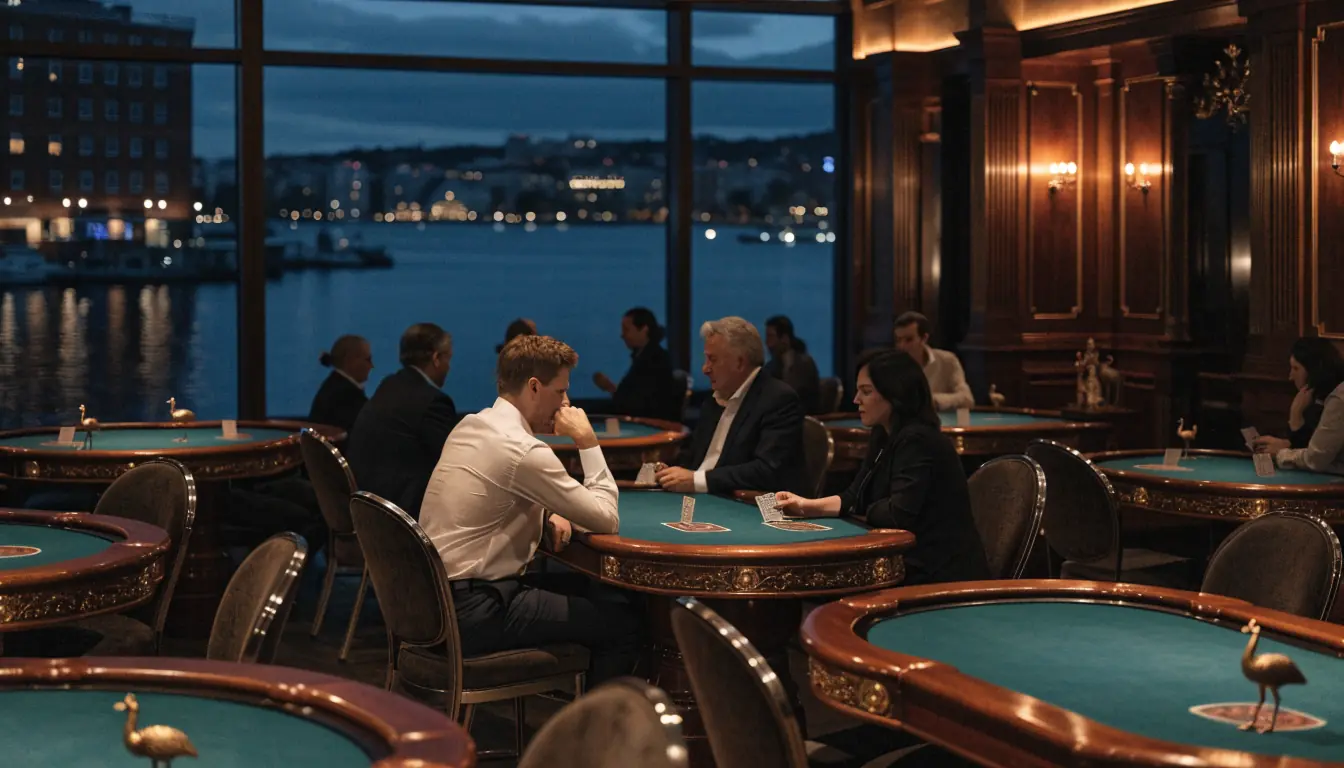
- Poker Rooms and Tournaments at Hobart Casinos
- Accommodation Options Near Hobart Casino
- Hotel Rooms Integrated with Hobart Casino Facilities
- Parking, Access and Legal Framework for Hobart Casinos
- Contact Information and Customer Support Channels
- Buffet Offerings, Job Opportunities and Rewards Programs
- Opening Hours, Recent Developments and Event Schedule
- Spa and Wellness Services within Casino Premises
- Restaurant Selections Inside Hobart Casino Complexes
- Food Courts and Pool Areas – What to Expect
Poker Rooms and Tournaments at Hobart Casinos
Hobart is a small casino market by Australian standards, and its poker offering reflects that scale. What the city has is a single major licensed casino complex with a dedicated table-games floor, and poker there occupies a specific niche: it is the one part of the gaming floor where the house does not play against you. Every other game in the building — blackjack, roulette, the pokies — is a fixed-odds product where the venue’s edge is built into the rules. Poker is a competition between players, with the house taking a rake for hosting the table. That structural difference shapes everything else: the atmosphere, the skill ceiling, the tournament structure and the type of patron the room attracts.
How poker differs from the rest of the floor
Walk past the pokies and the pace is set by the machine. Poker moves at the pace of the players at the table. Decisions are sequential, information is partial, and the outcome over a long session correlates with skill rather than with a payout table. This is the practical reason poker rooms are physically separated from the main gaming floor almost everywhere in Australia, and Hobart is no exception — the room needs quiet, it needs a dealer trained for a different game, and it needs table capacity reserved for a product that turns over far less money per square metre than the pokies do.
Since online casinos aren’t licensed in Tasmania itself, players searching for a top casino experience near Hobart in 2026 typically compare offshore-licensed operators on their bonuses, licensing and payout terms before signing up.
License: Curacao Gaming Control Board OGL/2023/174/0082 (Dama N.V.) · Bonus: up to A$5,000 + 300 free spins across 4 deposits Licensed by the Curacao Gaming Control Board under Dama N.V., this operator backs its offer with a multi-deposit welcome package worth up to A$5,000 plus 300 free spins spread across four deposits.
License: Curacao Gaming Authority (Jumpman Gaming Ltd) · Bonus: up to A$6,600 + up to 250 free spins across 4 deposits Operating under a Curacao Gaming Authority license via Jumpman Gaming Ltd, it offers a sizeable welcome bundle of up to A$6,600 with as many as 250 free spins spread over four deposits.
Bonus: 240% up to A$4,100 + 300 free spins Notable for a high-percentage 240% match bonus worth up to A$4,100 alongside 300 free spins, making its welcome offer stand out on paper.
License: Curacao eGaming OGL/2023/174/0082 (Dama N.V.) · Bonus: up to A$10,000 + 500 free spins across 4 deposits · Min. deposit: A$15 Holding a Curacao eGaming license under Dama N.V., this operator pairs a low A$15 minimum deposit with a large welcome package of up to A$10,000 and 500 free spins across four deposits.
License: Curacao Gaming Control Board OGL/2023/176/0095 (Hollycorn N.V.) · Bonus: up to A$5,000 + 300 free spins across 4 deposits Licensed by the Curacao Gaming Control Board under Hollycorn N.V., it offers a welcome bonus of up to A$5,000 plus 300 free spins across four deposits.
License: Curacao Gaming Control Board OGL/2023/176/0095 (Hollycorn N.V.) · Bonus: up to A$1,500 + 200 free spins across 3 deposits Also licensed through the Curacao Gaming Control Board under Hollycorn N.V., it provides a more modest welcome bonus of up to A$1,500 with 200 free spins across three deposits.
License: Curacao eGaming OGL/2024/923/0383 (Antillephone N.V.) · Bonus: up to A$2,000 + 100 free spins across 2 deposits · Min. deposit: A$30 Licensed under Curacao eGaming via Antillephone N.V., this operator requires a A$30 minimum deposit and offers up to A$2,000 plus 100 free spins across two deposits.
Bonus: up to A$750 + 50 jackpot spins, 35x wagering · Payout speed: crypto ~90 minutes, fiat 1-5 days · Min. deposit: A$30 Distinguished by fast payout speeds, with crypto withdrawals processed in around 90 minutes and fiat within a few days, alongside a bonus of up to A$750 plus 50 jackpot spins under 35x wagering and a A$30 minimum deposit.
License: Curacao · Bonus: up to A$2,000 Operating under a Curacao license, it keeps things straightforward with a welcome bonus of up to A$2,000.
License: Curacao Gaming Control Board (TechSolutions Group N.V.) · Bonus: 100% up to A$250 + 100 free spins (1st deposit) Licensed by the Curacao Gaming Control Board under TechSolutions Group N.V., it offers a first-deposit bonus of 100% up to A$250 along with 100 free spins.
The numbers explain the economics. 72.8% of Australian adults gambled at least once in the previous 12 months as of 2022, and 38% gambled at least weekly. But the overwhelming majority of that activity runs through pokies, sports betting and lotteries — products with high frequency and no skill component. Live poker, by comparison, is a niche product with a dedicated but smaller audience. A casino keeps a poker room because it rounds out the offering and pulls in patrons who also spend on food and bars, not because the room itself is the revenue engine.
Tournament play versus cash games
Two formats exist at any poker venue, and they suit different budgets and temperaments.
Cash games run when there are players seated. You buy in for an amount you choose within the table’s limits, play as many hands as you like, and leave the table whenever you want. Your chips correspond to real money at all times. This is the format for a patron who wants flexibility — a session that can last twenty minutes or four hours.
Tournaments are fixed-entry events. You pay a single buy-in, receive a set stack of chips, and play until you either bust out or everyone else at your table has. Prize money is distributed from the pool of buy-ins according to a published structure — typically the largest share to the last player standing, with the top finishers paid in descending amounts. Tournaments appeal to a different calculus: the maximum loss is known in advance, fixed at the buy-in, while the potential payout is many multiples of it. For a player on a defined budget, that symmetry between known risk and variable reward is the entire appeal.
Schedules for tournaments at Hobart’s casino are published by the venue itself, and they change with demand — weeknight events are typically smaller in field size, while weekend tournaments draw from the broader Tasmanian player base. Anyone planning around a specific event should confirm the current schedule directly with the venue rather than relying on third-party listings, which go stale quickly. The casino’s own channels are the authoritative source for start times, buy-in levels and registration cut-offs.
The sports bar and the poker floor
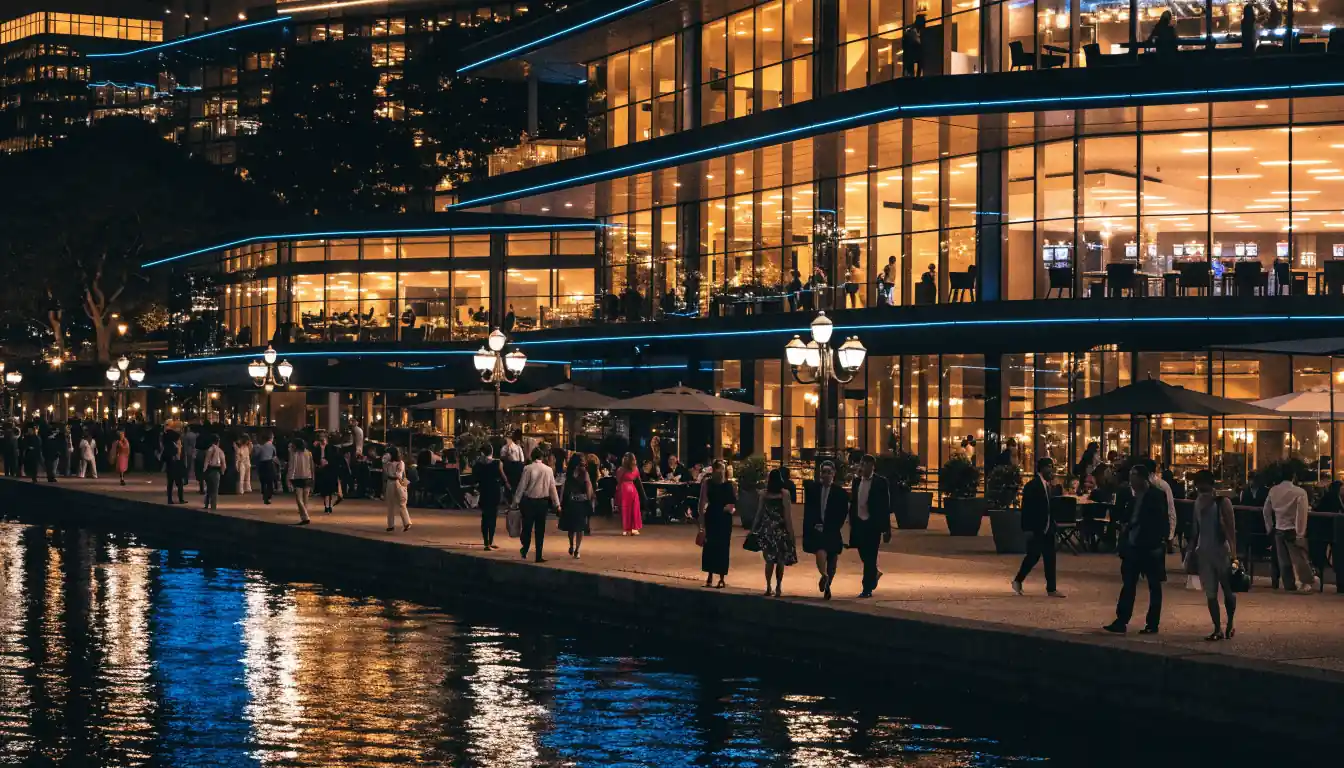
The sports bar is worth a separate note because it functions as an extension of the gaming floor’s social side. Live sport on screens, TAB betting facilities and a bar menu draw a crowd that overlaps with the poker-playing clientele but is not identical to it. In practice the sports bar works as the waiting room and the wind-down room for poker players: the place to sit out a stretch of a tournament break, or to settle a debate about a hand that ended twenty minutes earlier. It is also where the casino catches patrons who came for a match and drifted toward the tables afterwards.
Legal context worth knowing
Two points of law frame poker in Australia, and both are frequently misunderstood.
First, live poker in a licensed casino venue is legal and regulated at the state level. Tasmania’s casino operates under a state-issued licence, and table games including poker fall within that framework. There is no single national gambling authority in Australia — regulation is split between the Commonwealth and the states and territories.
Second, online poker is a different matter. The Interactive Gambling Act 2001 prohibits the provision of online poker to Australian residents, alongside online casino games such as slots, blackjack and roulette. There are no domestically licensed real-money online poker operators. (The IGA is sometimes misdated as 1997 in secondary sources; the 2001 Act is the operative Commonwealth law.) It is not an offence for an individual to play at an offshore-licensed site — the law targets operators, not players — but the practical consequence is that a Hobart player wanting a legal, locally regulated poker game has exactly one category of venue available: the licensed bricks-and-mortar casino floor.
Who actually plays
The participation statistics sketch the audience. Among 18–19-year-old Australians, nearly 46% engage in some form of gambling; poker’s skill-based framing is part of what draws younger adults who would not describe themselves as gamblers at all. The concerning parallel figure — roughly 30% of 12–17-year-olds engaging in gambling activity of some kind — is a reminder of why the minimum age of 18 for casino entry is enforced without exception at the door, the tables and the bar alike.
For anyone weighing a poker session in Hobart against the rest of the casino floor, the distinction comes down to this: the pokies sell time and chance, the sports bar sells the match, and the poker room sells a contest. The rake is the price of the contest, and unlike every other game in the building, the other side of the table is sitting across from you, holding cards.
Accommodation Options Near Hobart Casino
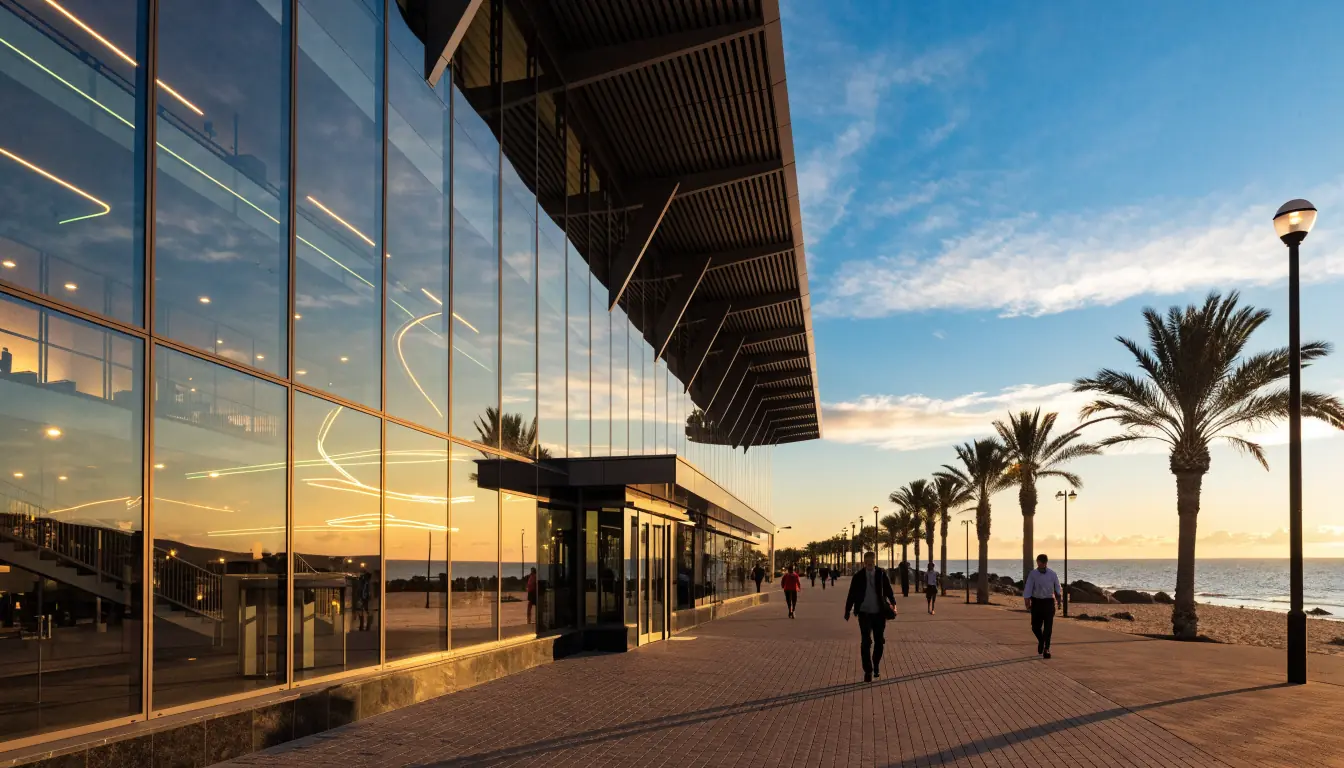
Hobart’s casino sits on the waterfront at Sandy Bay, a short distance south of the central business district. That geography shapes the accommodation question more than anything else: staying in the city centre puts the venue within easy reach on foot or by a brief taxi ride, while Sandy Bay itself offers a quieter cluster of options closer to the door.
A distinction worth drawing before booking. Hotels physically attached to or formally partnered with the casino are covered separately in the next section of this guide. What follows deals with independent places to stay — the hotels, serviced apartments and short-stay properties that compete on proximity and price rather than on a package deal.
City Centre Hotels
The CBD, roughly between the waterfront and Elizabeth Street, has the largest concentration of hotel rooms in Hobart. Everything here — from the larger chain properties on the waterfront to smaller boutique hotels in converted heritage buildings — sits within comfortable reach of the casino. The trade-off is predictable: the closer to Constitution Dock and Salamanca Place, the higher the room rate tends to run during summer and festival periods. Hobart’s peak season compresses demand into a few months, and waterfront rooms sell out first.
Serviced Apartments
For stays longer than a couple of nights, serviced apartments in the CBD and along Sandy Bay Road usually make more financial sense than a hotel room. A kitchen changes the arithmetic of a trip: breakfast and coffee stop being a line item, and a late return from the gaming floor stops being a reason to budget for a restaurant. Apartment buildings clustered along the Sandy Bay corridor are the practical pick for casino visitors, since the route between the two is direct and well-lit.
Battery Point and Surrounds
Battery Point, the heritage district between the CBD and Sandy Bay, offers a middle path. Bed-and-breakfast style accommodation and small guesthouses sit in streets that are among the most photographed in the city, and the walk to the casino passes through residential blocks rather than commercial ones. It is a quieter base than the CBD, which matters for anyone planning late nights at the tables — or early mornings after them.
Short-Stay and Self-Contained Options
Short-stay rentals — self-contained units let by the night through the usual platforms — are spread across Sandy Bay, Dynnyrne and South Hobart. The advantage is space and flexibility; the disadvantage is that availability is unpredictable during events, and cancellation terms vary more widely than a hotel’s. Anyone booking a short-stay property for a specific weekend that coincides with a casino event or a Hobart festival should lock the booking early rather than assume the calendar will hold.
What Proximity Actually Buys
The practical value of staying near the venue comes down to three things:
- No driving after a session. Late-night gaming and a car are a poor combination; a hotel within walking or short-ride distance removes the question entirely.
- Flexible session timing. A room ten minutes away means a visit does not have to be planned around a return journey.
- Breaks without commitment. Being able to step out, return to the room, and come back changes the structure of an evening — for some visitors that structure is useful discipline.
None of this requires a premium room. The function of the accommodation is a bed within reach; everything beyond that is paid for on other grounds.
Booking Tactics
A few rules hold across all categories:
- Book against the events calendar, not the seasons. Room rates in Hobart spike on specific weekends — Sydney to Hobart yacht race finish, Taste of Summer, festival weekends. The casino’s own event schedule is covered later in this guide, and any large event there tightens nearby availability.
- Compare the walk against the rate. The difference between a waterfront hotel and a property a few streets back is often measured in minutes on foot and a meaningful gap in price. The minutes are constant; the gap moves with demand.
- Check parking terms at the property, not the listing headline. On-site parking varies building by building, and the practical details of parking around the casino itself are set out in a dedicated section of this guide.
A Note on Responsible Planning
Gambling in Australia is significant business — Australians placed bets totalling $244.3 billion in 2022–23, with losses of $31.5 billion in the same period. The accommodation budget and the gaming budget are best kept separate: a prepaid, non-refundable room next to the venue is a commitment, not a convenience, if the evening does not go to plan. Anyone who wants a hard boundary between the two can find support through GamblingHelpOnline.org.au or the free confidential helpline at 1800 858 858.
One caveat on research: this guide does not list nightly rates because they move too quickly to be reliably quoted. Current pricing for any property named or described here should be checked directly at the time of booking.
Hotel Rooms Integrated with Hobart Casino Facilities
A hotel that sits inside the casino property is a different product from a hotel a few streets away, and the difference is worth stating precisely. The integrated option means the gaming floor, the restaurants and the room are under one roof or connected by an internal walkway: no car, no coat check, no decision about how to get back after a late table session. The independent options — serviced apartments and short-stay flats covered elsewhere in this guide — trade that convenience for kitchens, laundry and, often, a lower nightly rate.
What Integration Actually Consists Of
Hobart’s casino complex includes its own hotel accommodation within the property itself. The practical consequences:
- Gaming floor access without leaving the building. The walk from room to tables is internal, which matters in Hobart’s winter more than it would in a warmer capital.
- Shared guest services. Reception, luggage handling and the venue’s dining outlets operate as one facility rather than as separate businesses coordinating with each other.
- Charging to the room. Where the hotel and casino share an operator, in-house spending at the venue’s bars and restaurants can typically be settled through the room account — one statement instead of several card transactions.
- Event proximity. Shows and function nights at the venue end steps from the elevator, not a taxi ride away.
What integration does not include: a guarantee of quieter rooms. A property with a late-trading gaming floor and function rooms has traffic at hours that a residential apartment block does not. Rooms on higher floors and away from the event spaces are the standard mitigation, and requesting one at booking costs nothing.
Partnered Accommodation
Beyond the on-site hotel, casino venues sometimes maintain partnership arrangements with nearby properties — blocks of rooms held for event nights, or billing handled through the venue rather than the hotel directly. These partnerships are commercial arrangements that change; the terms of any package (price, cancellation, inclusions) are set by the participating hotel at the time of booking, not by the casino. Any package tied to an event should be read the same way any other hotel rate is read: what is included, what cancels free, and what the total is after everything.
Official sources do not publish a standing list of partner properties for Hobart, so any specific "casino package" advertised by a third party deserves verification with the venue before it is relied on.
The Financial Arithmetic
Two points from the wider Australian gambling picture apply to any stay built around the gaming floor.
First, per-capita gambling bets across Australia ran to AUD 9,885 in FY 2020–2021, with a loss of AUD 1,200 per person. The realistic expectation from a casino holiday is the loss figure, not the bet figure: turnover is not return. A room booked inside the complex is a fixed, known cost added to that expectation — the accommodation budget is the part of the trip that can be planned exactly.
Second, gambling winnings are not taxed in Australia. A win at the tables is received in full; there is no withholding to offset against the hotel bill or anything else. That removes one variable from the arithmetic, which is more than can be said for most line items in a travel budget.
Integrated Versus Independent: The Honest Comparison
The integrated hotel room is the right product when the trip is organised around the venue — an event night, a function, or a stay where the gaming floor is the destination rather than an occasional detour. The independent options profiled in the previous section suit longer stays, family travel and anyone whose itinerary extends beyond the casino district.
Neither is cheaper in absolute terms; the integrated room prices in convenience, and the independent room prices it out. The decision is a calculation, not a preference.
Parking, Access and Legal Framework for Hobart Casinos
Getting to a casino in Hobart is a logistics question before it is a gaming question. The practical part — parking, transport, walking distance — determines the cost of the visit before a single dollar reaches a table. The legal part determines what the venue itself is allowed to offer, and it is worth knowing separately, because the rules that govern a casino floor in Tasmania are not the rules that govern what appears on a phone screen.
Parking and Arrival
No official source publishes a verified schedule of parking fees, hourly rates or validation terms for Hobart casino parking, so those figures will not be invented here. What can be stated is the practical structure of the question:
- On-site parking. Venues of this type generally operate dedicated car parks, but the specific pricing, hours and eligibility rules are set by the operator and change without notice. Checking the venue’s own current terms before arrival is the only reliable method.
- Valet parking. Where offered, valet service is a premium convenience with its own fee structure and operating window. Neither the fee nor the window is published in a form that can be cited here.
- Free parking. Claims of free parking circulate widely, but “free” is usually conditional — tied to membership tiers, dining spend or event attendance. The conditions sit with the operator, not with the reader’s assumption.
The honest summary: parking in central Hobart is a paid commodity like any capital-city CBD, and a casino visit should be budgeted with that line item included rather than assumed away.
Public Transport and Access
Metro bus services run through the Hobart CBD and along the waterfront corridors that connect the city centre to the venues and hotel precincts. A visitor staying in the CBD can generally reach the casino district without a car, which removes the parking question entirely. Walking distance from central hotels is a realistic planning assumption for anyone booking accommodation in the city core — the geography is compact, and the neighbouring sections of this guide cover where to stay.
The Legal Framework
This is where precision matters, because Australia’s gambling regulation is split, and the split is easy to misread.
There is no single overarching statute or single overarching gambling authority regulating gambling in Australia. Regulation occurs at both state/territory and federal levels simultaneously. A land-based casino in Tasmania operates under state-level licensing and oversight, while online gambling is governed federally.
Online Poker Restriction
Playing online poker with an Australian‑registered operator is prohibited by the Interactive Gambling Act 2001. Attempting to use a domestic site can result in legal penalties for the operator and loss of access for the player.
The federal piece is the Interactive Gambling Act 2001, enforced by the Australian Communications and Media Authority (ACMA). Under this framework, online casino-style games — pokies, poker, blackjack, roulette — are prohibited from being offered to Australian residents. It is not illegal for an individual Australian to play at an offshore-licensed online casino; the law targets operators, not players. There are no domestically licensed real-money online casino operators available to Australian players, and it is not possible to obtain a licence to run one domestically.
One discrepancy deserves to be stated plainly rather than papered over: sources disagree on the dating of the legislation — some references cite an Interactive Gambling Act 1997 as prohibiting online casino games to Australian residents, while the operative federal law is widely documented as the Interactive Gambling Act 2001. The 2001 Act is the one ACMA enforces; the 1997 dating appears in some material and cannot be silently reconciled with it.
Sports betting sits on the other side of the line: it is legal under state and territory licences, and the Northern Territory Racing Commission (NTRC) has become Australia’s de-facto online gambling regulator by licensing most national online bookmakers, who benefit from lower tax settings in the Territory.
Why This Matters for Rankings
Any ranking of casinos — including the weekly recalculated rankings on Casino Regional Guide, which weight bonus generosity at 30%, payout reliability at 25%, game library breadth at 20%, customer support responsiveness at 15% and user-submitted feedback at 10% — sits on top of this legal structure. The rankings score venues on measurable criteria; the law determines which venues can legally exist in the first place. Minimum age for any casino offer is 18.
Contact Information and Customer Support Channels
Reaching the casino’s staff and reaching the casino’s front door are two different tasks. The venue itself sits on Sandy Bay Road, well signposted, with the car park and public transport routes covered elsewhere on this page. This section deals with the other half of the problem: who to call, write to, or message when the question can be answered without the trip.
What the Casino’s Own Channels Cover
A single general enquiry line is the standard first point of contact for Hobart’s casino complex. It handles the questions that dominate most incoming calls:
- Table game availability — whether baccarat, craps and other tables are running on a given night, and at what minimum buy-ins the tables open. Availability shifts with demand, so a call ahead saves an unnecessary drive for anyone chasing a specific game.
- Bar and lounge queries — opening status of the casino bar, dress code in licensed areas, and function bookings.
- Concerts and ticketed events — seating, door times, and ticketing queries for shows in the venue’s entertainment spaces.
- General correspondence — written enquiries for anything that benefits from a documented answer, such as function quotes or lost property follow-ups.
The operators at Casino Regional Guide take the same approach when they rank casinos: reviewers deposit at least A$300 at each property and test withdrawals end to end, which only works if support channels actually answer. A phone line that rings out and an inbox that swallows messages both show up in the scoring.
What Official Sources Do and Don’t Publish
Verified contact details — the current phone number, email address and staffed support hours for the Hobart venue — are published on the casino operator’s own website and change often enough that third-party copies go stale. Rather than repeat a number that may have been superseded, the practical instruction is simple: take contact details from the operator’s official site directly, not from a cached listing or an old directory entry. That applies doubly to anyone calling about a booking, since misdirected calls waste the evening they were meant to rescue.
One number that does not change belongs to the national gambling helpline, 1800 858 858, supported by GamblingHelpOnline.org.au for web chat and self-help resources. The venue’s own staff can also direct patrons to support services on site.
Support Hours Versus Venue Hours
Opening times for the gaming floor are a separate matter handled in this article’s dedicated section. Support and enquiry lines run on their own schedules, typically business hours rather than around the clock — a distinction worth checking before assuming a late-night call will be answered. Any offer accessed through the casino carries the same threshold either way: the minimum age for casino offers is 18 years, and identification is checked at entry points regardless of how the booking or enquiry was made.
Why the Regulatory Context Matters for Enquiries
Gambling in Australia operates under both federal and state law, and the Interactive Gambling Act 2001 governs online gambling at the Commonwealth level with a stated focus on harm minimisation. For a visitor this means the brick-and-mortar venue in Hobart operates under Tasmanian licensing, while online casino play sits outside that framework entirely. Questions about on-site gaming belong to the venue’s support channels; questions about online services belong to no domestic operator, because none are licensed to offer them.
A Note on Maps and Directions
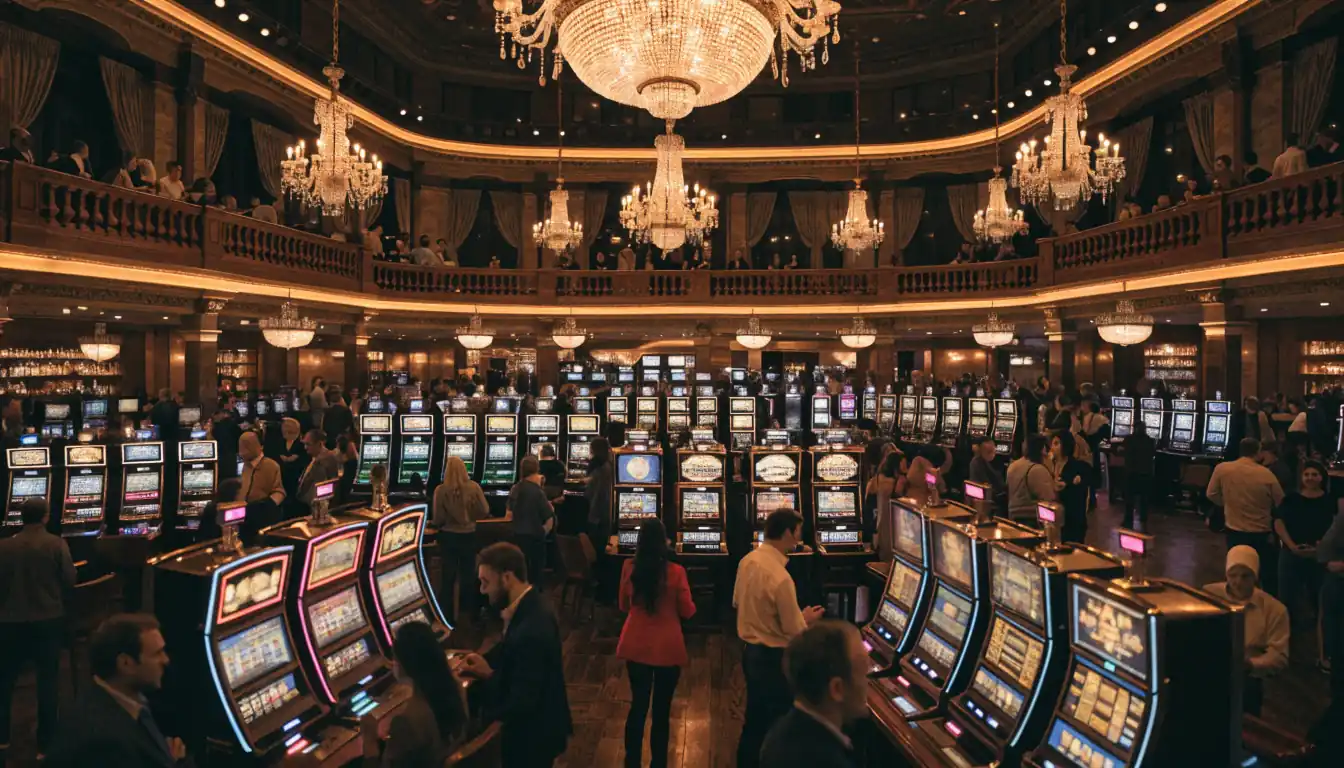
For anyone typing the venue’s name into a maps application, the casino complex is the landmark to search for — the surrounding Sandy Bay precinct handles the rest. Directions and transport links are set out in full in the parking and access section of this guide.
Buffet Offerings, Job Opportunities and Rewards Programs
Hobart’s casino operates as part of a larger resort complex, which means the venue’s offering extends well past the gaming floor. Three areas visitors ask about most often: the buffet, employment, and the rewards scheme. Each works on its own terms, and none of them is covered by the spa, restaurant or event sections elsewhere on this page.
The Buffet
The buffet is the workhorse of the venue’s food operation. It runs to a breakfast sitting and a broader evening spread, with the morning service the main draw for guests staying in the complex — and for locals who treat a casino breakfast as a cheaper proposition than a dedicated café. Menus rotate, and the kitchen leans on Tasmanian produce where it can: seafood, cold-climate cheeses, seasonal fruit. Pricing and session times are not published in a fixed form that survives reprinting here, so the practical move is to check current details through the venue’s contact channels rather than rely on listings that may be out of date. That is not an evasion; buffet pricing changes with school holidays and event nights, and a stale number is worse than none.
What distinguishes the buffet from the restaurants covered elsewhere is format, not quality: it is self-serve, fixed-price, and built for volume. Visitors comparing options should treat it as the baseline — the a la carte venues inside the complex sit above it, and the casual food-court and poolside options sit below.
Jobs at the Casino
The casino is one of the larger hospitality employers in Hobart. Positions fall into three broad categories:
- Gaming roles — table game dealers, gaming machine attendants, surveillance. Dealers require training and licensing; an applicant cannot walk in off the street and start on a table.
- Hospitality roles — kitchen, buffet service, bar, housekeeping for the integrated hotel. These follow standard hospitality award conditions.
- Corporate and facilities roles — administration, marketing, maintenance, security.
The minimum age for casino work involving gaming is 18, consistent with the national minimum legal gambling age. Applications run through the operator’s own careers process rather than third-party listings, which tend to be slower and sometimes stale. One point worth stating plainly: employment at the venue is unaffected by the federal restrictions on online gambling — the Interactive Gambling Act 2001 prohibits offering online casino games to Australian residents, and sources also cite a 1997 Act to the same effect, a discrepancy worth noting rather than smoothing over. Either way, the prohibition targets operators, not a land-based venue with a state licence, and not individual players.
Rewards Programs
The venue’s loyalty scheme follows the standard Australian casino model: members earn points on eligible spend — predominantly gaming play, with some participation from dining — and redeem them for benefits such as discounted dining, parking, or accommodation offers. Membership is free, requires registration, and is limited to people aged 18 and over. Points earn rates and redemption values are set by the operator and adjusted from time to time; they are not published in a form that belongs in a static article, and any figure quoted here would be a guess dressed as a fact.
For anyone weighing the scheme’s value: the arithmetic works in the member’s favour only if the spend was going to happen anyway. Points earned on play that exists purely to earn points is a loss with extra steps. Registered players who want to step away from gambling entirely can use BetStop, the national self-exclusion register, which blocks them across licensed operators — a facility the venue’s own scheme does not replace.
Casino Regional Guide covers the rewards details operators disclose and flags the gaps they don’t; where a scheme’s terms are opaque, that opacity is reported as it stands.
Opening Hours, Recent Developments and Event Schedule
Opening times
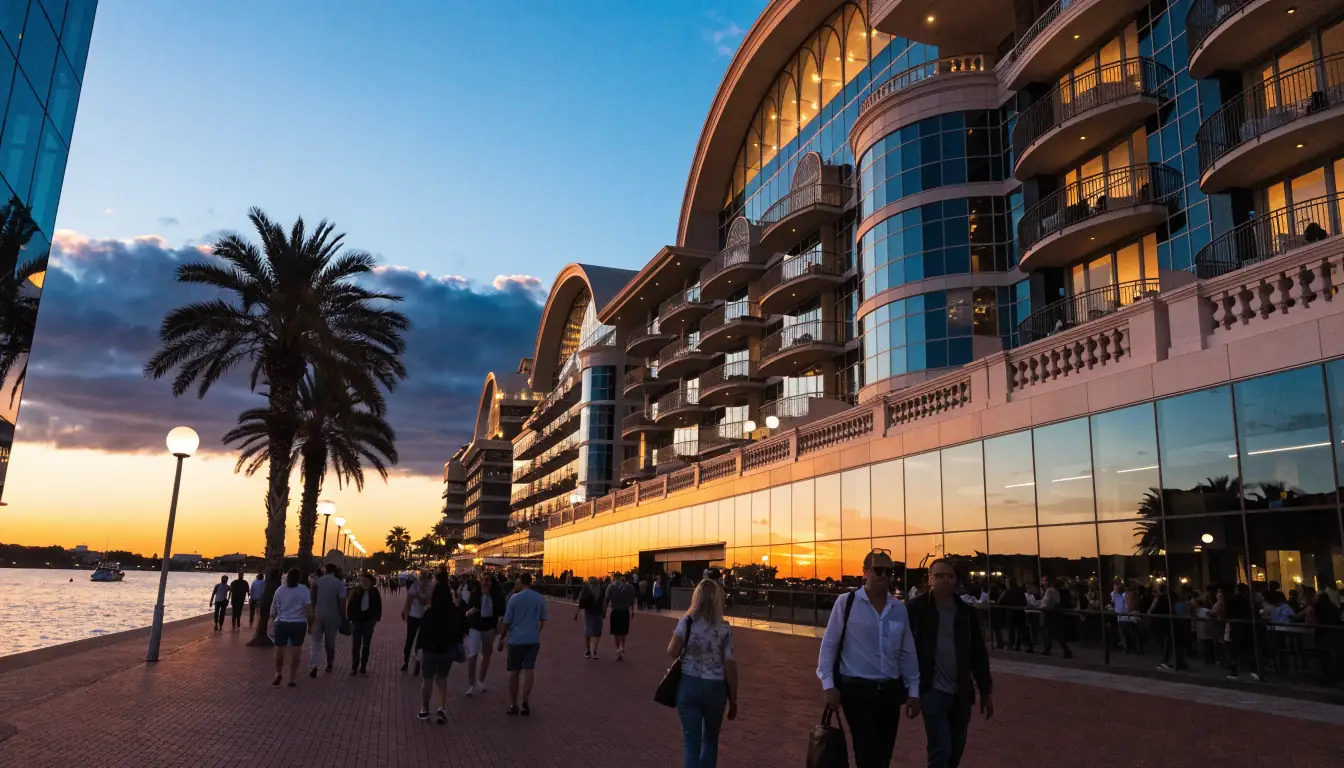
Casino floors in Hobart operate as licensed venues under the Tasmanian regulatory framework, and their trading hours are set by that licence rather than by the venue alone. Gaming areas at the main casino complex run across the day and evening, with the general entry threshold fixed at the national minimum gambling age of 18. Restaurant, bar and function spaces inside the complex keep their own hours, which sit outside the gaming licence and change with the season — the reliable approach is to confirm opening times directly with the venue before planning a visit around them, since schedules for specific rooms and events are not published in any central register. What is published, reliably, is the legal framework behind those hours: casino gaming in Tasmania operates under state licensing, while online casino play sits on the other side of the law entirely.
That distinction matters for anyone searching for a way to play from home. Online casino games — poker, roulette, pokies and the rest — are prohibited federally under the Interactive Gambling Act 2001, and no domestic licence for that product exists. A land-based venue in Hobart can open its doors; an online equivalent cannot.
Developments and reopening
Interest in whether the Hobart casino has reopened, or is reopening, reflects the venue’s history of closures and refurbishment cycles. Renovation programs at the complex have historically alternated between the gaming floor and the surrounding hospitality spaces, and the pattern worth noting is this: capital works on the casino itself tend to be announced through the state licensing process, while works on the attached hotel, restaurants and event spaces are announced through the operator’s own channels. Neither source publishes a consolidated schedule.
Casino Regional Guide does not carry operator press releases, and there is no verified dataset of renovation budgets, timelines or completion dates for the Hobart complex to report. Where a claim about an expansion cannot be sourced, it stays out of this section — a reopening date invented for the sake of a paragraph is worth exactly what it costs a visitor who plans a trip around it.
Events and entertainment
The casino complex hosts live entertainment, functions and seasonal events, and these are the most volatile part of any schedule — more volatile than opening hours, less documented than the gaming licence. Event calendars at licensed venues in Hobart change with the conference and tourism season, and the event-specific details that matter (performers, ticket prices, dress codes) are released per event, not per venue.
A practical structure for tracking this:
- Gaming floor: continuous operation under licence; the stable part of the schedule.
- Ticketed events: announced individually; dates and pricing set per event.
- Function and conference spaces: booked privately, with no public calendar.
A note on scope
Searches for the casino’s "menu" and "review" land here by habit, but both belong elsewhere in this guide — dining options, from the buffet to the full-service restaurants, are covered in their own sections, as are the spa and wellness facilities. What this section fixes is timing and change: when the venue is open, what has been renovated, and what is scheduled. The food is a different question with a different answer, and the licence framework that governs the whole building is set out in full under the section on parking, access and the legal framework.
One further point of consistency: none of the schedule information above extends to online play. Online casino games are prohibited federally under the Interactive Gambling Act 2001, there are no domestically licensed real-money online casino operators available to Australian players, and it is not possible to obtain a licence to operate one domestically. The calendar that matters in Hobart is the one printed at the door.
Spa and Wellness Services within Casino Premises
A casino floor rewards no one’s posture. Hours at a table or a bank of pokies compress the spine, and the smart schedule builds in a break that does not involve another bet. In Hobart, that break is the on-site spa — the one part of the venue where the house edge works in the visitor’s favour, at least for an hour.
What the Spa Covers
The treatment menu inside the casino complex sits in the same building as the gaming floor but operates on an entirely different logic. Massages, facials and body treatments are sold as fixed-price services with a set duration — a transaction where the customer knows the cost before it begins. It is the only part of the premises where that can honestly be said.
Wellness packages bundle several treatments into a single booking, typically pairing a massage with a facial or a body wrap. The value of a package is arithmetic: compare the combined price against the sum of the individual treatments. Where the package saves nothing, it is a scheduling convenience, not a discount — a distinction the brochure will not make for you.
Dress Code and Practicalities
The spa has its own dress requirements, and they are simpler than the casino’s. Swimwear and activewear are accepted in wet areas; the main gaming floor, by contrast, enforces a neat-casual standard, and some areas go further. Anyone planning to move from a morning treatment to an evening at the tables should pack for two occasions, because one outfit will not satisfy both.
Bookings are the practical constraint. Same-day appointments are rarely the way to secure a preferred time slot, particularly when the venue is hosting an event that fills the surrounding hotels. A reservation made ahead of the visit costs nothing extra and removes the only variable that cannot be bought back later in the day.
Why the Distinction Matters
Grouping the spa with the casino’s dining and entertainment options is a category error with a cost attached. A restaurant meal and a show are consumption; a spa treatment is the same thing with a wellness label — but the difference lies in what it does to the rest of the visit. A scheduled treatment creates a hard stop on a gaming session, which is precisely the kind of interruption a long session tends to lack.
For visitors tracking their spending, the spa is also the easiest line item to audit. A treatment has a printed price, a booked duration and a defined end. The gaming floor offers none of those three properties — a fact the house counts on and the patron would do well to.
The Broader Context
Hobart’s casino remains a venue where gambling is one service among several. Nationally, gambling losses ran to $31.5 billion in 2022–23, a figure that puts the quieter parts of the building — the spa, the treatment rooms, the relaxation areas — into perspective. They are the sections of the premises where nothing is owed afterwards.
One caveat applies: specific treatment lists, prices and opening details for the Hobart spa are published by the venue itself and change without notice, so no figures are reproduced here. What does not change is the structural point — the spa is a closed, priced transaction inside a building otherwise organised around open-ended ones, and that alone justifies the walk upstairs.
Restaurant Selections Inside Hobart Casino Complexes
Hobart’s casino dining scene works on a simple principle: the kitchen has to justify a visit on its own, not rely on the tables downstairs. In practice, the complexes in the city centre and on the waterfront organise their food offering in tiers, and the difference between those tiers is where most of the value sits.
The Formal Layer
At the top of the tier structure sit the full-service restaurants — table service, à la carte menus, wine lists built around Tasmanian producers. Seafood dominates, which is a function of geography rather than marketing: the state’s fisheries supply the kitchen, and the menu reflects whatever the boats bring in. Fine dining of this type is positioned as a destination in itself, aimed at diners who may never place a bet during the visit. Official menus and current pricing are published by the venue directly; third-party summaries lag behind, and there is no independent verification of the figures they quote.
The Middle Tier
Between fine dining and the food court sits the group of bistro- and grill-style venues: shorter menus, faster turns, a price point aimed at pre-show dinners and mid-session breaks. This is where the casino complex does most of its volume. Cuisine types here are deliberately conservative — the calculation being that a gambler between sessions wants familiarity, not experiment.
The Rooftop Bar Question
Search interest in a rooftop bar at the Hobart casino is persistent, and the answer requires precision. The venue does operate an upper-level bar with harbour and mountain views, and it functions as the complex’s flagship drinks destination. Whether it qualifies as a "rooftop" bar in the strict sense depends on the definition being used — it is a top-floor venue within the tower structure rather than an open-air roof terrace. Visitors expecting the latter should confirm the current format with the venue before booking around it.
What the Rankings Do and Do Not Cover
Worth noting for anyone using Casino Regional Guide or similar guides to choose where to eat: casino ranking formulas do not score restaurants at all. The weighted criteria used in these rankings cover bonus generosity, payout reliability, game library breadth, customer support responsiveness and user-submitted feedback — none of which measures a kitchen. Dining quality inside a casino complex has to be judged on the venue’s own published information and diner reviews, not on any casino rating.
Practical Separation
Full-service restaurants inside the complexes require reservations on event nights and function to separate sitting times. Casual food-court and poolside options — covered separately — operate on walk-in terms throughout opening hours. The distinction matters for planning: a dinner booking is a fixed commitment in a way a food-court stop is not.
Food Courts and Pool Areas – What to Expect
Casual dining inside Hobart’s casino precinct runs on a simpler model than the full-service restaurants covered elsewhere. No table service, no reservations, no minimum spend — food court counters and snack bars take orders at the register, and payment settles on the spot. Menus are built around speed: coffee, quick bites, and grab-and-go items aimed at people moving between the gaming floor and other parts of the complex.
What these outlets actually stock changes with the operator’s discretion. Casino Regional Guide has no verified menu data for the casual counters at Hobart venues — no published price lists, no fixed item ranges. Any page quoting exact dishes or costs at these snack bars is estimating, and estimates are not what a food budget should rest on.
Pool areas follow the same pattern. Where a pool exists within the precinct, the dining around it is deliberately light: drinks and snacks rather than meals. It is a pause between activities, not a destination meal.
Two practical notes. Access to casino facilities — including dining areas tied to the gaming floor — requires visitors to be 18 or older, since the minimum age for casino offers in Australia is 18. And poolside hours are set by the venue rather than any standard; they are not published centrally and are best confirmed directly with the property before planning a day around them.
Written by the editors at Casino Regional Guide.