Best Casino in Tasmania 2026: Rules, Hotels and Gaming Floors
 Available in AU
- Regulatory environment and industry overview
- Casino hotels in Tasmania
- Gaming floors and poker facilities
- Parking and accessibility
- Nearby accommodation options
- Contact channels and customer service
- Dining, buffet and employment opportunities
- Opening hours, events and entertainment
- Casino restaurants and culinary offerings
- Spa and wellness services
- Food courts and pool areas
Regulatory environment and industry overview
Gambling in Australia is regulated at two levels: Commonwealth and state or territory. There is no single overarching statute and no single national gambling authority. Each state and territory licenses and supervises its own land-based casinos, while the federal layer governs online gambling specifically.
The key Commonwealth instrument is the Interactive Gambling Act 2001 (IGA), enforced by the Australian Communications and Media Authority (ACMA). Note that some sources cite an Interactive Gambling Act 1997 as the law prohibiting online casino games for Australian residents — the two versions conflict, and the 2001 Act is the one ACMA is charged with enforcing.
What the IGA does in practice:
- Prohibited: online casino-style games — pokies, poker, blackjack, roulette — offered to Australian residents. No licence to operate an online casino domestically exists or can be obtained.
- Prohibited federally: online poker and live (in-play) online betting. Live betting by phone remains legal.
- Legal: online sports betting and lotteries under state or territory licences. The Northern Territory Racing Commission licenses most national online bookmakers, which makes it the de-facto online gambling regulator despite its territorial remit.
- Players, not operators, are outside the net: it is not illegal for an individual Australian to play at an offshore-licensed online casino. The law targets the provider, not the customer.
There is no public register of licensees covering the online casino space — because there are no domestic licensees to list. Any advice to "check the operator’s licence" for an online casino has nothing behind it on this market. Land-based casinos in Tasmania operate under a state-issued licence, and that is a different framework entirely from anything applying online.
The scale of the market explains why the framework is layered. Australians placed bets totalling $244.3 billion in 2022–23 and lost $31.5 billion over the same period. Per-capita figures for FY 2020–21 show bets of AUD 9,885 and losses of AUD 1,200 per adult. In 2022, 72.8% of Australian adults had gambled in the previous 12 months, and 38% gambled at least weekly. Winnings are not taxed in Australia, and gambling revenue accounted for 7.7% of state and territory taxation revenue in 2015–16 — the last figure being a reminder that the regulators are also beneficiaries.
Harm-minimisation is the stated purpose of the IGA, and the numbers behind it are not trivial: between 80,000 and 160,000 Australian adults experience significant gambling problems (0.5–1.0% of adults), around 30% of 12–17-year-olds gamble, and nearly 46% of 18–19-year-olds do. The minimum legal gambling age is 18. Support is available through GamblingHelpOnline.org.au and the helpline 1800 858 858.
For the purposes of this page — land-based casino offerings in Tasmania in 2026 — the practical takeaway is straightforward: casino gaming in Tasmania happens at licensed physical venues under Tasmanian regulation, while the online casino space remains closed domestically regardless of what offshore sites advertise. The sections that follow deal with the venues themselves: their hotels, gaming floors, dining, and accessibility.
Casino hotels in Tasmania
Before you sign up at any casino site accessible to Tasmanian players, it’s worth checking how each one is licensed, what its welcome offer actually involves, and what conditions apply, so you can compare options with clear eyes rather than marketing hype.
License: Curacao Gaming Control Board OGL/2023/174/0082 (Dama N.V.) · Bonus: up to A$5,000 + 300 free spins across 4 deposits Licensed under Curacao’s Gaming Control Board through Dama N.V., this operator backs its offering with a multi-deposit welcome package worth up to A$5,000 plus 300 free spins spread across four deposits.
License: Curacao Gaming Authority (Jumpman Gaming Ltd) · Bonus: up to A$6,600 + up to 250 free spins across 4 deposits Operating under a Curacao Gaming Authority license via Jumpman Gaming Ltd, it offers a sizeable welcome bonus of up to A$6,600 with as many as 250 free spins, split over four deposits.
Bonus: 240% up to A$4,100 + 300 free spins This one stands out for a straightforward, high-percentage welcome deal: 240% up to A$4,100 plus 300 free spins.
License: Curacao eGaming OGL/2023/174/0082 (Dama N.V.) · Bonus: up to A$10,000 + 500 free spins across 4 deposits · Min. deposit: A$15 Licensed under Curacao eGaming via Dama N.V., it pairs a generous welcome package of up to A$10,000 and 500 free spins across four deposits with a low A$15 minimum deposit requirement.
License: Curacao Gaming Control Board OGL/2023/176/0095 (Hollycorn N.V.) · Bonus: up to A$5,000 + 300 free spins across 4 deposits Holding a Curacao Gaming Control Board license through Hollycorn N.V., it offers a welcome bundle of up to A$5,000 plus 300 free spins over four deposits.
License: Curacao Gaming Control Board OGL/2023/176/0095 (Hollycorn N.V.) · Bonus: up to A$1,500 + 200 free spins across 3 deposits Also licensed via Hollycorn N.V. under the Curacao Gaming Control Board, this site offers a more modest but still solid welcome package of up to A$1,500 with 200 free spins across three deposits.
License: Curacao eGaming OGL/2024/923/0383 (Antillephone N.V.) · Bonus: up to A$2,000 + 100 free spins across 2 deposits · Min. deposit: A$30 Licensed under Curacao eGaming through Antillephone N.V., it provides a welcome bonus of up to A$2,000 plus 100 free spins over two deposits, with a A$30 minimum deposit.
Bonus: up to A$750 + 50 jackpot spins, 35x wagering · Payout speed: crypto ~90 minutes, fiat 1-5 days · Min. deposit: A$30 This operator offers a jackpot-spin welcome bonus of up to A$750 plus 50 jackpot spins with 35x wagering, along with fast crypto payouts of around 90 minutes and a A$30 minimum deposit.
License: Curacao · Bonus: up to A$2,000 Operating under a Curacao license, it keeps things simple with a welcome bonus of up to A$2,000.
License: Curacao Gaming Control Board (TechSolutions Group N.V.) · Bonus: 100% up to A$250 + 100 free spins (1st deposit) Licensed by the Curacao Gaming Control Board through TechSolutions Group N.V., it offers a first-deposit bonus of 100% up to A$250 plus 100 free spins.
A casino hotel is a specific product: a room booked on the same property as the gaming floor, sold as accommodation first and gaming access second. In Tasmania this category exists in a small market, and the difference between staying on-site and staying elsewhere comes down to a short list of measurable considerations — price, walking distance, and what the property itself discloses about its rooms.
What defines the on-site hotel product
The defining feature is not luxury but geography. A guest booked into a hotel attached to a casino walks from the room to the gaming floor without leaving the building or its grounds. That is the entire value proposition. Everything else — room size, views, service standards — is a hotel question, and Tasmanian casino hotels compete in the same regional accommodation market as standalone hotels nearby.
What these properties disclose varies. Room rates are published at the time of booking and change with season and demand, so any figure quoted here would be stale on arrival. What does not change is the structural position: on-site rooms carry a premium in peak periods because the location is the product, and they discount in low periods for the same reason. Anyone comparing deals should price the on-site room against nearby accommodation for the same dates before assuming the attached hotel is the better buy. It frequently is not.
How the hotel differs from the rest of the complex
A casino complex bundles several businesses under one roof, and they are priced and reviewed separately:
- The gaming floor operates on its own schedule and has its own entry conditions. Access requires being at least 18 years old, and that threshold is enforced at the floor, not at the hotel door.
- The hotel is a standard accommodation business. Guests include people with no interest in gambling, and families travelling through the region book these rooms for the same reasons they book any regional hotel.
- Restaurants, bars and function spaces within the complex serve both groups and operate on separate hours from the floor and the hotel.
This separation matters for expectations. A hotel booking does not include gaming credit, does not include dining, and does not confer any preferential access to the floor beyond physical proximity. Any package that bundles room and gaming benefits states its terms at the point of sale; those terms are the only ones that apply, and general assumptions about "casino comps" from other markets do not transfer.
Deals and how to read them
Casino hotel deals in Tasmania fall into a few recognisable shapes: direct-booking rates through the property’s own channels, package rates combining the room with dining or entertainment within the complex, and third-party travel-platform rates. Direct rates sometimes carry conditions attached — cancellation terms, inclusions, membership requirements — that third-party rates do not, and the reverse also applies.
Two rules keep the comparison honest:
- Compare the total for the stay, not the nightly headline. Cancellation terms, breakfast inclusions and refund conditions change the real price more than the difference between headline rates.
- Read what the package actually contains. A deal marketed around the casino experience is a hotel deal unless it explicitly states gaming-related inclusions. If the terms do not name an inclusion, it is not included.
Properties do not publish comprehensive rate histories, and no independent source tracks Tasmanian casino hotel pricing over time. The only reliable data is the live rate for the dates in question, checked against nearby alternatives.
Rooms: what is known and what is not
Room configurations, refurbishment status and view categories are published by each property on its own booking channels, and they change without notice. Neither property publishes occupancy or satisfaction figures that would allow an independent quality ranking, and none of the standard review aggregators offers a verified sample specific to casino-attached rooms rather than the hotel overall. Guest reviews exist but measure the hotel, not the relationship between the hotel and the floor.
What can be stated is structural. On-site hotels in Tasmania are full-service properties — reception, housekeeping, in-room amenities — positioned at the upper end of their regional markets, not budget properties. Anyone seeking budget rates will generally find them in the surrounding suburbs, not in the attached tower.
Online Casino Prohibited
Offering online casino games to Australian residents is illegal under the Interactive Gambling Act 2001. Playing on offshore sites is not a crime, but operators must not provide such services locally.
A practical note on taxes and winnings
One point specific to Australian guests: gambling winnings are not taxed in Australia, so a casino hotel stay does not create any tax reporting obligation for money won on the floor during the stay. This does not change the price of the room; it removes a question international visitors sometimes bring with them.
Bookend: hours and access
The hotel and the gaming floor run on separate clocks. Reception operates around hospitality-industry norms, while the floor keeps its own published hours — a subject covered separately below. Guests planning late sessions should confirm the floor’s closing time for the night in question directly with the property, since the answer determines whether the on-site room’s core advantage — walking back to bed — is available at the hour it matters.
Gaming floors and poker facilities
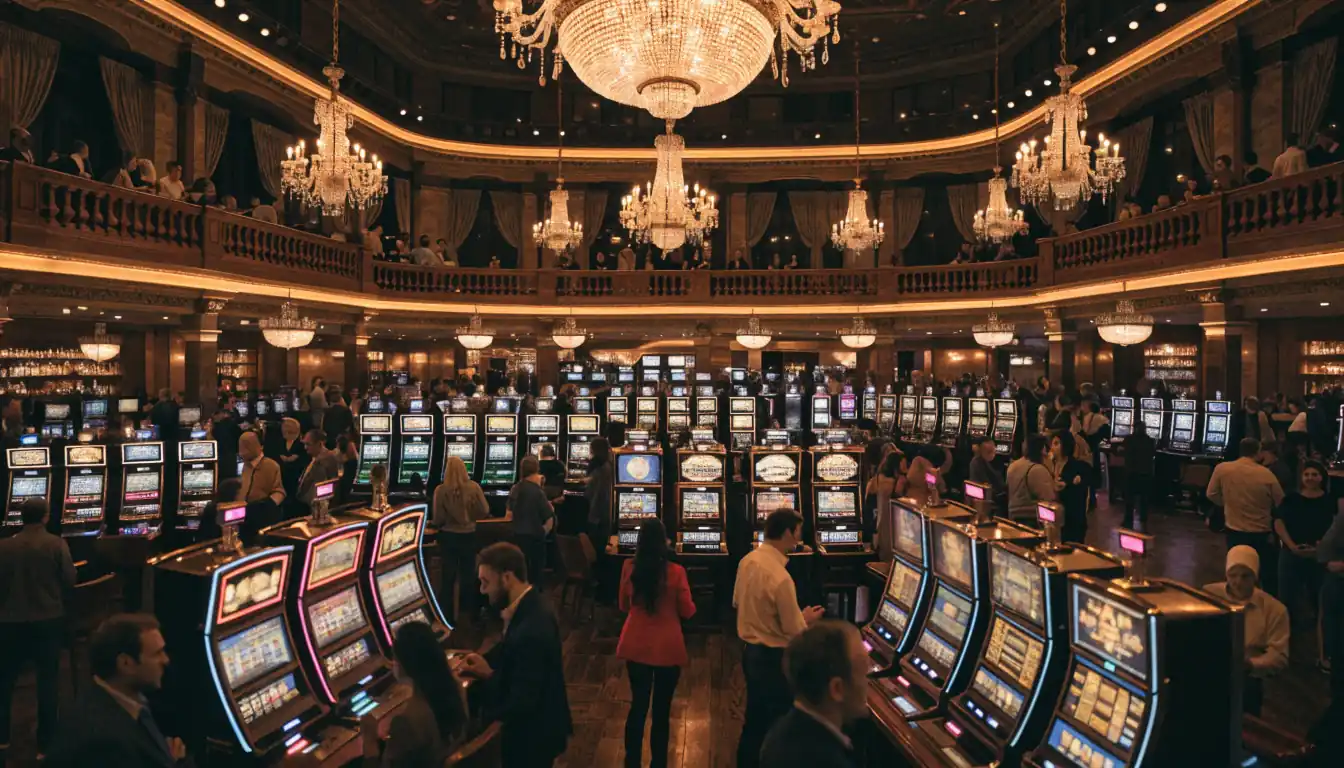
The gaming floor is the part of a Tasmanian casino that operates on its own clock, separate from the hotel above it and the restaurants around it. Table games, pokies and poker rooms run on schedules set by the venue, not by check-in times or kitchen hours. Anyone planning a visit around a specific game needs to look at what the floor actually offers rather than assuming a uniform experience.
What sits on the floor
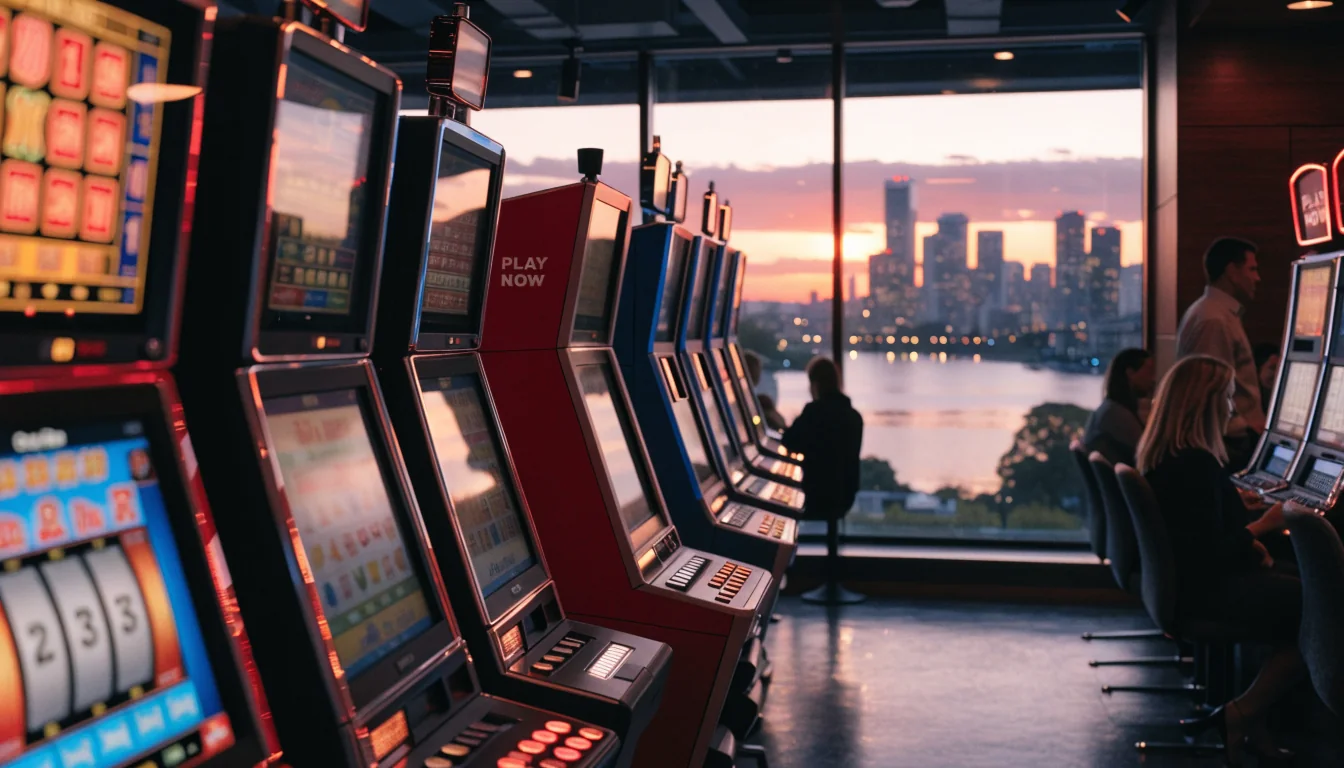
Tasmania’s casino floors combine electronic gaming machines with live tables. Pokies are the dominant format, as they are across Australia — 72.8% of Australian adults gambled in the previous 12 months as of 2022, and 38% gambled at least once per week, which is the demand pattern that shapes how floor space is allocated. Electronic machines carry fixed RTP (return-to-player) settings, though specific figures for individual Tasmanian venues are not published in the sources available here; venues configure their own mixes and do not disclose them in a form that allows comparison.
Table games — blackjack, roulette and similar staples — sit alongside the machines. Under the Interactive Gambling Act 2001, the online versions of these games cannot be offered to Australian residents by licensed domestic operators, which is part of why the physical floor remains the only place in the state where these games operate within a regulated local framework. That distinction matters for anyone weighing a casino visit against an app: the law targets operators, not players, but there is no domestically licensed online casino option to compare against.
Poker tables operate on demand and schedules vary by venue; always check the current tournament calendar before planning a visit.
Poker rooms and tournaments
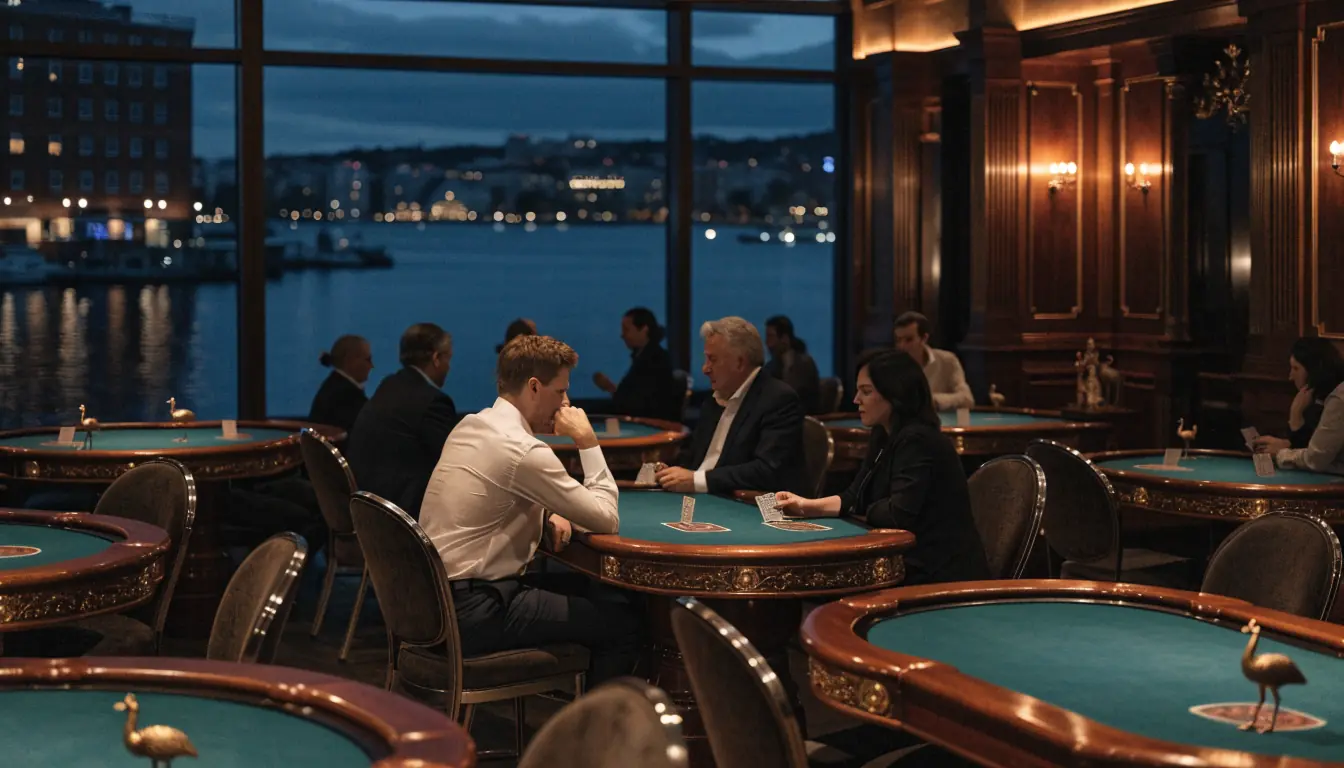
Poker in Tasmanian casinos operates as a cash game and tournament offering, run from dedicated tables or scheduled sessions rather than a permanently staffed standalone room. Tournament schedules vary by venue and by season; confirmed dates and buy-in structures are published by the venues themselves, and this page does not carry them. Anyone searching specifically for a Tasmania casino poker tournament should check the venue’s current calendar before travelling — tournament series in regional casinos tend to run on cycles rather than continuous daily play.
What can be stated with confidence is the shape of the offering:
- Cash games at stakes set by the venue, with tables opening based on demand.
- Scheduled tournaments with entry terms published in advance by the operator.
- Table availability that depends on session times — poker tables in smaller casinos are not guaranteed to run around the clock.
No verified schedule, buy-in level or prize pool figure for Tasmanian poker rooms appears in the sources behind this page, so none is quoted here. Where a number would normally sit, the honest entry is that the operator does not publish it in a comparable format.
Sports bars on the gaming floor
The sports bar is the third function of a Tasmanian gaming floor, sitting between the poker tables and the pokies. It carries live sport on screens with bar service attached, and in practice it works as the social anchor of the floor — the place where people watch a race they have a bet on without committing to a table. Unlike the dining options covered separately, the sports bar’s product is tied to broadcast schedules: what it offers on a given evening depends entirely on what sport is on.
Sports betting itself is legal in Australia under state and territory licences, which is why the bar and the betting function coexist in a way that online casino play — prohibited federally — does not. Live in-play betting online is illegal, though live betting by phone remains legal, a distinction that shapes how people actually use these venues during a match.
Hours and planning a visit
Whether a Tasmania casino is open now or open today depends on the venue and the day of the week — gaming floors, poker sessions and sports bar hours are set individually and change for events. Operating times are covered in detail later in this article; the short version for floor planning is that the three functions do not share one schedule. A floor can be open while the poker tables are not running, and the sports bar’s useful hours are dictated by the fixture list.
How this page assesses floors
Casino listings here are scored on bonus transparency, cashout speed, customer care and licensing integrity, using a weighted formula: bonus generosity at 30%, payout reliability at 25%, game library breadth at 20%, customer support responsiveness at 15%, and user-submitted feedback at 10%. For physical venues in Tasmania, that framework applies to the operator behind the floor rather than the room count. Reviewers deposit at least A$300 at each casino and test withdrawals before a listing is rated, so the assessment rests on tested behaviour, not marketing copy.
That testing method also draws the line between what belongs in this section and what does not: the gaming floor, its poker offerings and its sports bar are one operational unit; the hotel rooms attached to the complex and the dining venues are separate services with separate economics, covered in their own sections.
Parking and accessibility
A casino visit in Tasmania is, for most visitors, a driving trip. The state’s two casino complexes sit in Hobart and Launceston — cities where a car remains the practical way to arrive, especially for anyone touring the island rather than staying in the CBD. This section covers what that arrival looks like: where the car goes, what public transport alternatives exist, and what the venues offer visitors with mobility needs. Accommodation quality and restaurant line-ups are covered elsewhere; here the subject is the door, the kerb and the space between them.
Parking terms can change without notice; verify any fees or free‑parking conditions directly with the casino before arrival.
On-site parking
Both casino properties in Tasmania operate their own car parks, attached to or directly adjacent to the main complex. For a venue whose catchment area extends well beyond the city centre — Hobart draws visitors from the Derwent Valley and the Tasman Peninsula, Launceston from the Tamar Valley and the north-east coast — on-site parking is not an amenity but a precondition for the business model. A venue that could not absorb cars would simply not function in a state of this geography.
Free parking
Search interest in free parking at Tasmanian casinos is persistent, which reflects a real difference between these venues and their mainland counterparts. Casino complexes in Tasmania have historically positioned themselves as destination venues for drivers rather than drop-in urban gaming floors, and complimentary or low-friction parking is part of that positioning. Visitors planning a specific trip around it should confirm current arrangements directly with the venue before relying on them — parking terms are the kind of operational detail venues adjust without announcement, and neither property publishes a standing public schedule of parking conditions that would make a fixed claim here verifiable.
Valet parking
Valet service is a feature of larger casino-resort operations, and the question of whether Tasmanian venues offer it belongs in the same category as parking fees: checkable on the day, not documented in any public source that would justify a definitive statement. What can be said is that valet parking is a mainland-casino expectation imported by visitors, and Tasmanian properties — smaller in scale than the Gold Coast or Melbourne complexes — do not market themselves around it. Anyone for whom valet access determines the visit should verify it with the venue directly rather than assume parity with mainland standards.
Public transport and arrival without a car
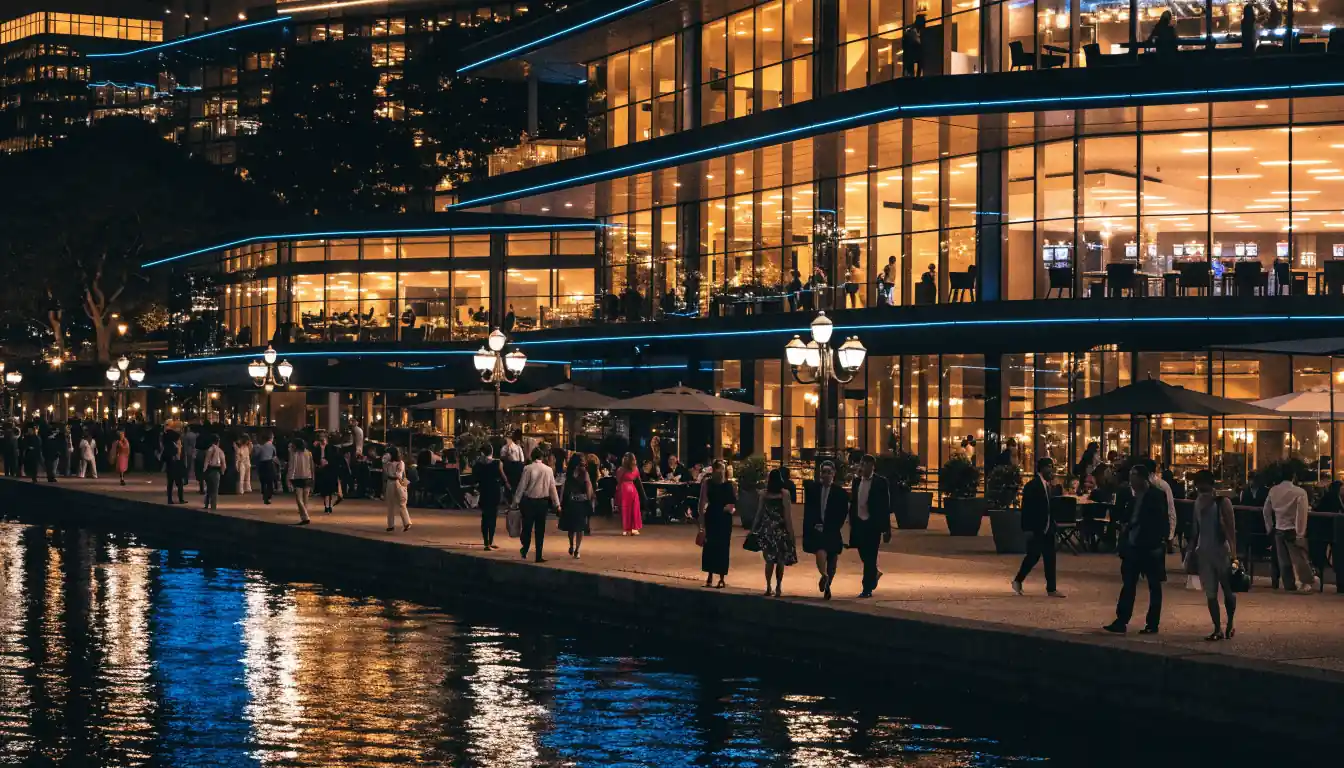
Both casinos are located in or near their respective city centres, which puts them within reach of metropolitan bus networks. Hobart’s casino sits on the eastern side of the CBD waterfront; Launceston’s occupies a parkland setting a short distance from the city core. In both cases, taxi and rideshare services cover the trip at fares that are trivial next to a single table-session result. For visitors staying in nearby hotels — the subject of a later section — arriving on foot or by shuttle is realistic, and the on-site parking question becomes moot.
Accessibility for visitors with mobility needs
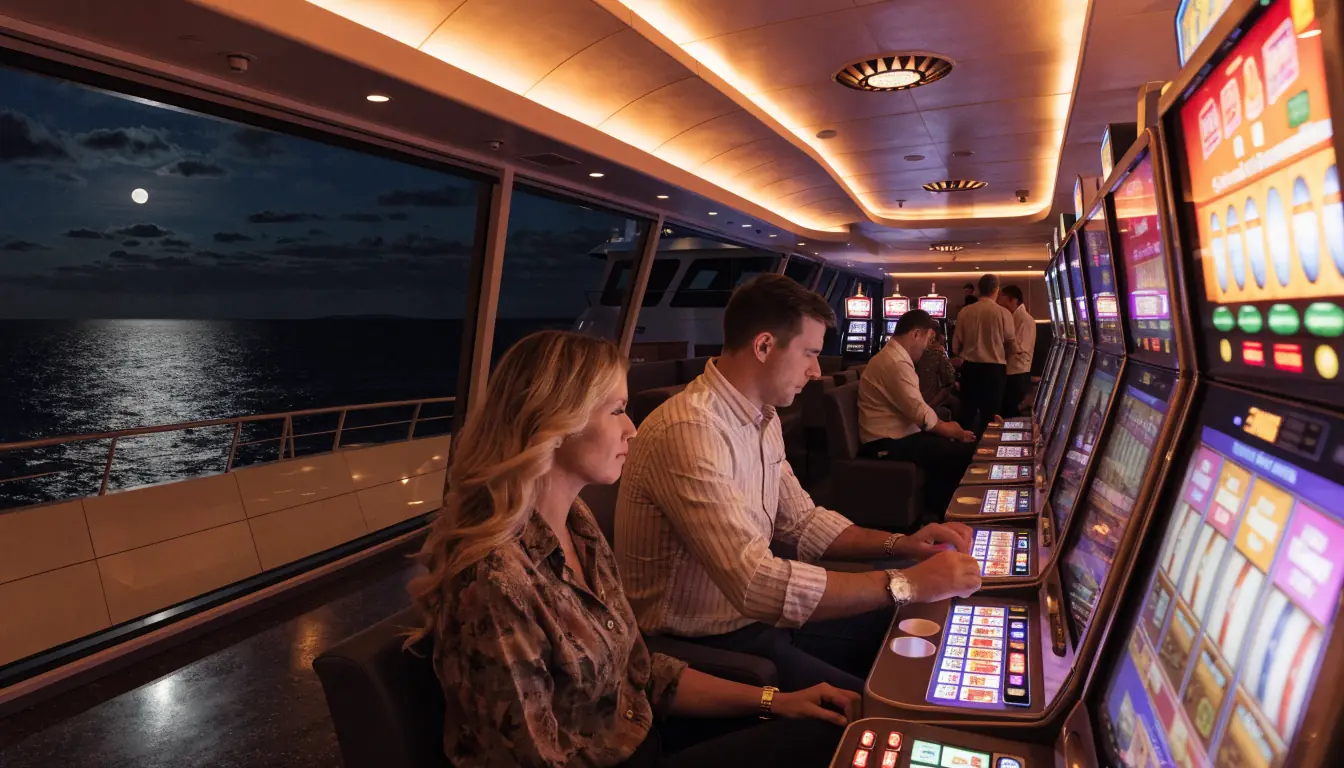
Casino complexes are large-footprint public buildings, and Tasmanian venues operate under the same disability access obligations as any comparable hospitality venue in Australia — level or ramped entry, accessible toilets, and circulation space designed around wheelchair users. The gaming floor itself, the restaurants and the entertainment areas are generally on a single level in venues of this type, which removes the stair-and-lift problems that older standalone buildings present.
That said, accessibility provision varies in the details that matter most: the number of accessible parking bays, their distance from the entrance, and whether drop-off points are covered. None of this is published to a standard that allows verified claims about specific bay counts or distances. Visitors with specific requirements — an accessible bay close to the door, wheelchair access to a particular restaurant — should confirm with the venue ahead of the visit. A phone call resolves in a minute what a general description of "accessible facilities" carefully avoids specifying.
What parking questions reveal about the venue
The pattern of parking-related searches around Tasmanian casinos — fees, valet, free options — tracks the profile of the visitor these venues actually serve: the touring driver, often staying in the on-site or nearby hotels, for whom the casino is one stop on a broader Tasmania itinerary rather than a standalone gaming destination. That is a different customer from the suburban pokies venue patron, and the two casino properties are built and priced around the difference.
One contextual figure is worth holding onto when weighing any casino trip’s incidental costs: Australian gambling losses reached $31.5 billion in 2022–23, and gambling revenue made up 7.7% of state and territory taxation revenue in 2015–16. Against numbers of that scale, a parking fee is a rounding error — but it is also the only cost on the list that a two-minute phone call can eliminate entirely.
Nearby accommodation options
Not every visitor wants to stay inside the casino complex itself. On-site rooms — covered in the dedicated section on casino hotels — suit guests who prioritise being steps from the gaming floor. Travellers with different priorities, such as families, longer stays or tighter budgets, will find the surrounding neighbourhoods offer a wider range of lodgings, often at better rates, within a short distance of the casino entrances. This section deals exclusively with those off-site options.
What the vicinity offers
The precincts around Tasmania’s two casino locations — one in Hobart, the other in Launceston — sit within established tourism corridors. That geography works in the visitor’s favour. Harbour-side apartments, heritage guesthouses, motels, boutique bed-and-breakfasts and serviced apartments all operate in the neighbouring streets. Booking platforms and local tourism bodies publish current availability and rates, and those sources — not any third-party summary — are the place to check prices, since operators adjust them seasonally and do not publish fixed tariffs that could be quoted here.
The practical distinction is one of trade-offs rather than quality. Off-site accommodation typically offers more space per dollar, kitchen facilities for longer stays, and family configurations that casino hotel rooms often do not provide. In exchange, the guest gives up the convenience of walking from the room to the pokies floor in a couple of minutes, and needs to factor in transport — the subject of the preceding section on parking and accessibility.
Choosing between on-site and nearby
The decision comes down to how the visit is structured. For a single evening of gaming, a room in the complex removes the question of driving home altogether. That consideration carries real weight: Tasmania, like the rest of the country, applies strict drink-driving laws, and a guest who plans to drink at the tables or bars should treat accommodation within walking distance — on-site or nearby — as a cost of the evening, not an optional extra.
For a multi-day trip that includes more than the casino — and most Tasmanian itineraries do — nearby lodging makes more sense. The state’s attractions are not concentrated around the gaming floors, and a guesthouse or apartment positioned between the casino and other destinations saves travel time across the whole visit.
Deals and packages
Searches for accommodation deals connected to Tasmanian casinos return mixed results: some lodgings in the vicinity market themselves with gaming-adjacent language, while the casino operators themselves promote their own on-site rooms. Neither category publishes standing package terms that can be verified and quoted. Any deal advertised as a "casino package" should be checked against the standard room rate for the same dates before booking — a bundled price is not automatically a discounted one, and the components of a bundle (breakfast, late checkout, food and beverage credit) are worth valuing individually. Where a promotion is not transparent about what it includes, the base rate is the honest comparison.
A legal footnote worth knowing
The on-site gaming these lodgings sit near is land-based and operates under Tasmanian licensing. The situation online is different, and travellers comparing options should not conflate the two. Online casino-style games — pokies, poker, blackjack, roulette — are prohibited under the Interactive Gambling Act 2001, and no domestic licence exists for that type of service. Playing at an offshore-licensed online casino is not an offence for the individual; the prohibition targets operators. Sports betting operates separately under state and territory licences. In short: the nearest legal casino floor is the physical one the guest has travelled to, and no nearby hotel’s Wi-Fi changes that.
Booking practicalities
Off-site lodgings near both casino precincts are busiest during peak holiday periods, when tourism demand across Tasmania compresses availability citywide — not only around the casinos. Booking early for those windows is less advice than arithmetic. Cancellation terms vary by property and are the one condition worth reading before confirming, since a non-refundable rate is cheap only until plans change.
Contact channels and customer service
Why the phone call still does the work
A Tasmanian casino floor is a physical business with physical constraints: table games run on staffing, bars and restaurants open on rosters, and entertainment schedules change without much notice. A website lists what management planned last month; a phone call confirms what is running tonight. For anything time-sensitive — whether the baccarat table is open on a Tuesday, whether the bar is serving past a certain hour, whether a scheduled act has been moved — the venue’s contact number is the only channel that answers the question as asked, by a person with the roster in front of them.
Official phone numbers are not listed in the source material; obtain the latest contact details from the venue’s own website.
No verified published phone numbers or email addresses for specific Tasmanian venues appear in the source material used for this article. Rather than reproduce contact details that cannot be verified, the correct procedure is direct: check the venue’s own official site or the Tasmania tourism information service, both of which maintain current listings. A contact number copied from a third-party page is a number nobody has checked.
What to ask before arriving
Calls to the front desk or gaming desk resolve the questions that cause the most wasted trips:
- Table game availability. Whether baccarat, craps or other specialty tables are operating on a given night depends on dealer coverage and demand, not on a fixed published schedule. Confirming by phone beats arriving to find the pit trimmed back to blackjack and roulette.
- Bars and lounges. Bars inside a casino complex operate on their own hours, which differ from the gaming floor. Verification takes one call.
- Directions and orientation. For visitors asking for a casino map or the location relative to the city centre, venue staff provide directions and can describe the layout on arrival — including where the car park entrance sits relative to the main doors, which matters more than most visitors expect after dark.
Online queries and the legal boundary
A recurring pattern deserves a plain statement. Searches for a "Tasmania casino contact" sometimes lead not to the land-based venue but to online gambling sites using similar naming. The distinction matters legally. Online casino gambling — pokies, poker, table games and in-play betting offered over the internet — is prohibited federally under the Interactive Gambling Act 2001, and no licence exists to operate an online casino domestically. There are no domestically licensed real-money online casino operators available to Australian players. The Australian Communications and Media Authority (ACMA) enforces this framework.
The consequence for customer service is practical: a site offering online casino play to Australian residents is operating outside Australian licensing, and its "support line" exists outside any Australian complaint or dispute-resolution structure. A land-based Tasmanian venue, by contrast, operates under state licensing with accountable management on the premises. If the contact channel cannot be traced to a licensed venue, the channel is the answer.
Complaints and help lines
Complaints about a licensed venue’s service go to the venue’s management in the first instance. Gambling-related concerns have a dedicated national support line, 1800 858 858, and an online service at GamblingHelpOnline.org.au, both free and confidential. For questions about Casino Regional Guide’s own listings or methodology, enquiries go to [email protected]; each casino listed here is scored on bonus transparency, cashout speed, customer care and licensing integrity, with rankings recalculated weekly.
A short protocol
One call before departure, one question per topic: table availability, bar hours, parking entry, dress code. Four questions, under five minutes, and the evening is planned on confirmed facts rather than a cached webpage.
Dining, buffet and employment opportunities
A casino resort in Tasmania sells more than a gaming floor. The buffet line and the breakfast service are what turn a visit into a stay, and the staffing behind them is what keeps the complex running. Both sides — the plate and the payslip — deserve a closer look before anyone books a room or sends off a CV.
Buffet and breakfast service
Buffet breakfast is the standard morning offering at casino resorts in Tasmania, and it follows the logic of any buffet: a fixed price, an open selection, and a kitchen working at volume. For hotel guests it is the most predictable meal of the day — no menu deliberation, no waiting on a single order. For the venue it is the cheapest way to feed a full house before the gaming floor opens.
The quality question is not whether the buffet exists but what it costs relative to eating out. Hobart and Launceston both have café scenes that compete directly with hotel breakfast, and a resort buffet has to justify itself on convenience rather than price alone. Verified, comparable pricing for casino buffets in Tasmania is not published by the operators — figures quoted on third-party travel sites are unverified and change without notice. The practical approach: confirm the current buffet price and session times directly with the venue before booking, and check whether breakfast is bundled into the room rate, which is often where the actual saving sits.
Jobs within casino complexes
Employment is the other half of this picture, and it is substantial. A casino resort is not a single business but a stack of them: food and beverage, housekeeping, maintenance, security, administration, customer service and gaming operations, all under one roof. That breadth is the attraction for job seekers — a hospitality career that can move between departments without moving employers.
Positions divide broadly into roles requiring a licence and roles that don’t. Front-of-house, kitchen and housekeeping jobs follow standard hospitality hiring. Gaming-floor roles are different: the minimum age for casino offers is 18 years, and floor staff sit inside a regulated environment where licensing integrity is one of the criteria any listed venue is scored on, alongside cashout speed, customer care and bonus transparency. Applicants for gaming positions should expect background checks as a matter of course.
Where vacancies actually are: operators post them on their own careers pages, and the absence of a centralised listing for Tasmania casino jobs means checking each venue directly rather than relying on aggregators, which are frequently out of date.
A note on rewards programs
Casino rewards memberships interact with dining more than most visitors expect. Points earned on the gaming floor often convert to discounts or complimentary items at the resort’s restaurants and buffet — a structure that exists precisely to keep spending on-site. The mechanics of each program are set by the operator and change; the terms worth checking are the earn rate on food purchases versus gaming spend, and whether buffet discounts apply before or after points are deducted. Operators do not publish a standard earn rate, so the comparison has to be made venue by venue at the membership desk.
One point of housekeeping relevant to this page’s rankings: they are recalculated every week using a weighted formula — bonus generosity, payout reliability, game library breadth, customer support and user feedback — and no operator pays for placement. Dining quality is not a scored category, but it shows up indirectly in the customer-feedback component.
Opening hours, events and entertainment
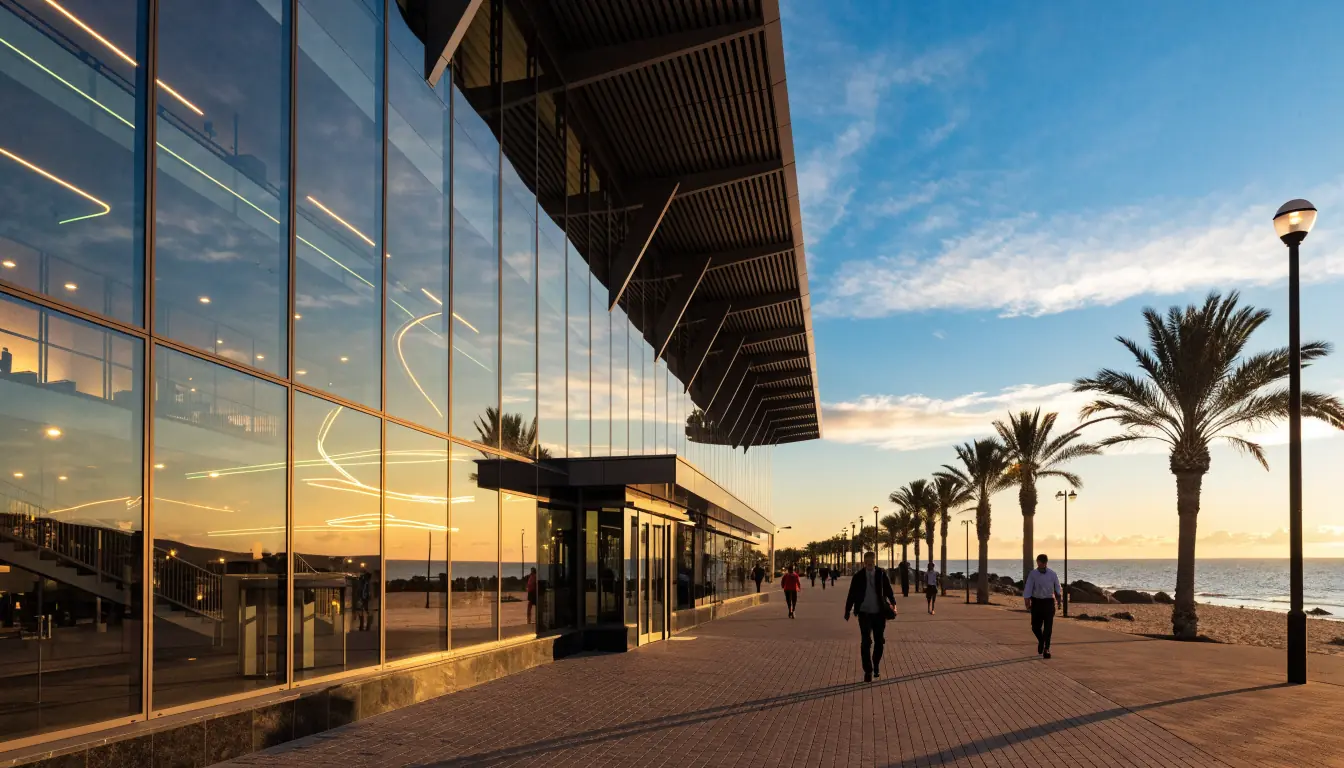
A land-based casino in Tasmania is, first of all, a licensed venue with a schedule. It opens when the operator’s licence allows it to open and closes on the same basis, and the hours that apply on any given night are the ones published by the venue itself — on its noticeboards, its website, or through the contact channels covered elsewhere in this article. No independent source compiles a verified schedule of Tasmanian casino operating times, so any figure quoted here would be a guess dressed up as a fact. What can be stated with certainty is the framework those hours sit inside: land-based casino gambling in Tasmania is regulated at state level, and there is no single national statute or authority that sets opening times for casino floors in Australia. Regulation is split between the states and territories and the Commonwealth, and venue hours fall on the state side of that line.
Events and entertainment schedules
Casinos here do not run on gaming alone. The entertainment side — live music, function rooms, ticketed shows, comedy nights, sports screenings — is a standard part of the business model, and for many visitors it is the reason they walk through the door. Event calendars, however, change constantly, and no verified dataset of upcoming Tasmanian casino events exists for this page to reproduce. The correct answer to "what’s on" is the venue’s own current calendar, checked directly. Anything else would be outdated the moment it was written.
Event listings are updated frequently; confirm the latest entertainment schedule with the casino directly.
One point worth fixing clearly, because search results on this topic routinely get it wrong: online casino entertainment is a different legal animal. Under the Interactive Gambling Act 2001, online casino-style games — pokies, poker, blackjack, roulette — are prohibited for provision to Australian residents. Some sources date this prohibition to an Interactive Gambling Act 1997; the sources disagree, and the discrepancy is stated here rather than silently resolved in favour of either date. What is not disputed is the effect: it is illegal to offer online casino gambling in Australia, no domestic online casino licence exists to obtain, and there are no domestically licensed real-money online casino operators available to Australian players. The law targets operators, not individuals — playing at an offshore-licensed online casino is not illegal for the player — but the prohibition on offering the service is firm. Online sports betting, by contrast, is legal under state and territory licences, and in-play live betting by phone is legal even though live online betting is not.
What this means for a night out
The practical picture is straightforward. The physical venue is where the licensed entertainment in Tasmania actually lives: the floor, the shows, the bar, the schedule posted at the door. Hours and event listings are venue-level information, updated by the operator and verified only at the source. The minimum age for access to casino offers is 18, and that applies to entertainment spaces tied to the gaming floor as much as to the tables themselves.
For anyone comparing venues, the test is simple: a venue that publishes its hours and event calendar clearly, and keeps them current, is doing the one thing this section can measure. Everything else — the show quality, the crowd, the atmosphere — has no verified number behind it, and this page will not invent one.
Casino restaurants and culinary offerings
A casino in Tasmania is not a single dining room with pokies attached. Both of the state’s casino complexes — one on the Hobart waterfront, one in Launceston — are built around the idea that the restaurant offering is a destination in its own right, drawing diners who never set foot on the gaming floor. That distinction shapes what the kitchens actually do.
The a la carte restaurant as the anchor
The flagship restaurant inside a Tasmanian casino is a proper a la carte operation: table service, a wine list built heavily around Tasmanian producers, and a menu that leans on the state’s produce reputation — seafood, beef, cool-climate dairy. This is not incidental. Tasmania’s food identity is one of its main tourism draws, and the casino kitchens compete for the same diners as the better-known standalone restaurants in Hobart and Launceston. The kitchen inside the property is expected to hold its own.
What separates the restaurant tier from everything else
The dining offering inside these complexes runs in clearly separated tiers, and the differences are practical:
- The signature restaurant — full a la carte menu, evening service, the venue you would book for an anniversary or a business dinner. This is where the chef’s effort and the wine budget concentrate.
- The casual bistro or brasserie — a shorter, cheaper menu, faster turnaround, open longer hours. It absorbs the traffic that wants a solid meal without ceremony.
- The bar menu — grazing food served where the drinks are, not a dining destination.
Buffets and food courts, where they exist, are separate propositions with their own logic, and are covered elsewhere on this page. The restaurant tier is defined by ordering from a menu, cooked to order, at a table you have been seated at.
Practical points before you book
Dress standards at the signature restaurants sit a step above what the gaming floor requires — "neat casual" is the baseline, and it is enforced at the door. Bookings are advisable on weekends and during event nights at the venue, when the restaurant fills with ticket-holders eating before the show rather than gamblers. Diners under 18 are not excluded from the restaurants themselves — the minimum age of 18 applies to the gaming floor — but the layout of a casino complex means the route from the car park to the restaurant can pass through areas with age restrictions, which is worth knowing if you are dining with children. Checking the venue’s own site for the current menu and booking line before you travel is the reliable move; kitchen concepts in these properties get refurbished, renamed and occasionally closed for renovation, and a review written last year may describe a restaurant that no longer trades under that name.
Why the food matters to the venue
For a casino operator in a small market like Tasmania, the restaurant is not a loss-leader attached to the gaming floor — it is a core reason locals return. A property that only served gamblers would exhaust its customer base quickly. The culinary offering is what makes the venue a place for birthdays, conferences and tourists, and the operators treat it accordingly, in a way that visitors notice on the plate.
Spa and wellness services
A spa inside a casino complex serves a different purpose from the gaming floor: one is designed to keep visitors on the premises, the other to give them a reason to step away from the tables for a few hours. In Tasmania’s casino precincts, wellness areas function as part of the broader hospitality offering rather than as a destination in their own right.
What is actually published — and what is not
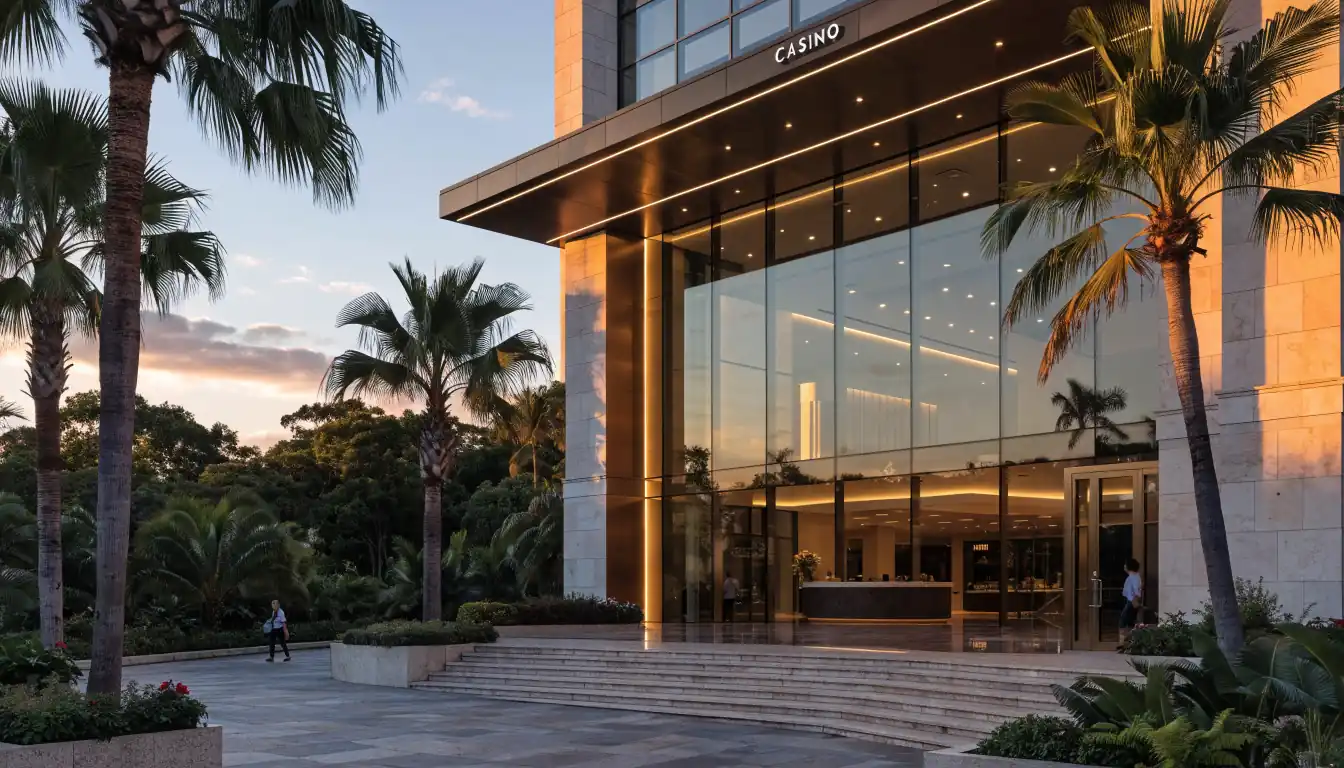
Tasmanian casino operators do not publish detailed treatment menus, pricing schedules or facility inventories in the way large integrated resorts on the mainland do. No verified list of spa treatments, sauna facilities or wellness programs for Tasmania’s casino complexes is available in public sources. Any page promising a specific treatment list with prices for these venues would be filling the gap with invention.
What can be stated with confidence is structural: wellness facilities, where they exist, sit within the hotel and leisure side of the complex, operate separately from the gaming floor, and are covered by the venue’s general admission rules rather than by gaming regulations. Access is restricted to adults, consistent with the national minimum gambling age of 18 — although the spa itself is an amenity, not a regulated gambling area.
Why the distinction matters
Casino complexes mix regulated and unregulated spaces under one roof, and the boundaries are worth understanding. Gaming floors operate under state licensing and harm-minimisation obligations. Bars, restaurants and wellness areas are hospitality venues that happen to share a building. A visitor looking for a day spa experience is not entering a gambling environment, and the two zones are managed as separate operations.
This separation is not cosmetic. The regulatory framework that governs Australia’s gambling market — enforced federally through the Australian Communications and Media Authority for online services, and at state level for land-based venues — applies to wagering and gaming activity, not to massage tables and relaxation lounges. Wellness services sit outside that framework entirely.
Dress codes and behaviour expectations
Venues that combine gaming floors with spa, dining and bar facilities typically apply different standards to different zones. Formal gaming rooms historically carry stricter dress requirements than casual bar or wellness areas. Current venue-specific dress codes are published by each operator, and visitors relying on outdated summaries frequently find the rules have changed. Checking directly with the venue before arrival remains the only reliable method.
A practical note
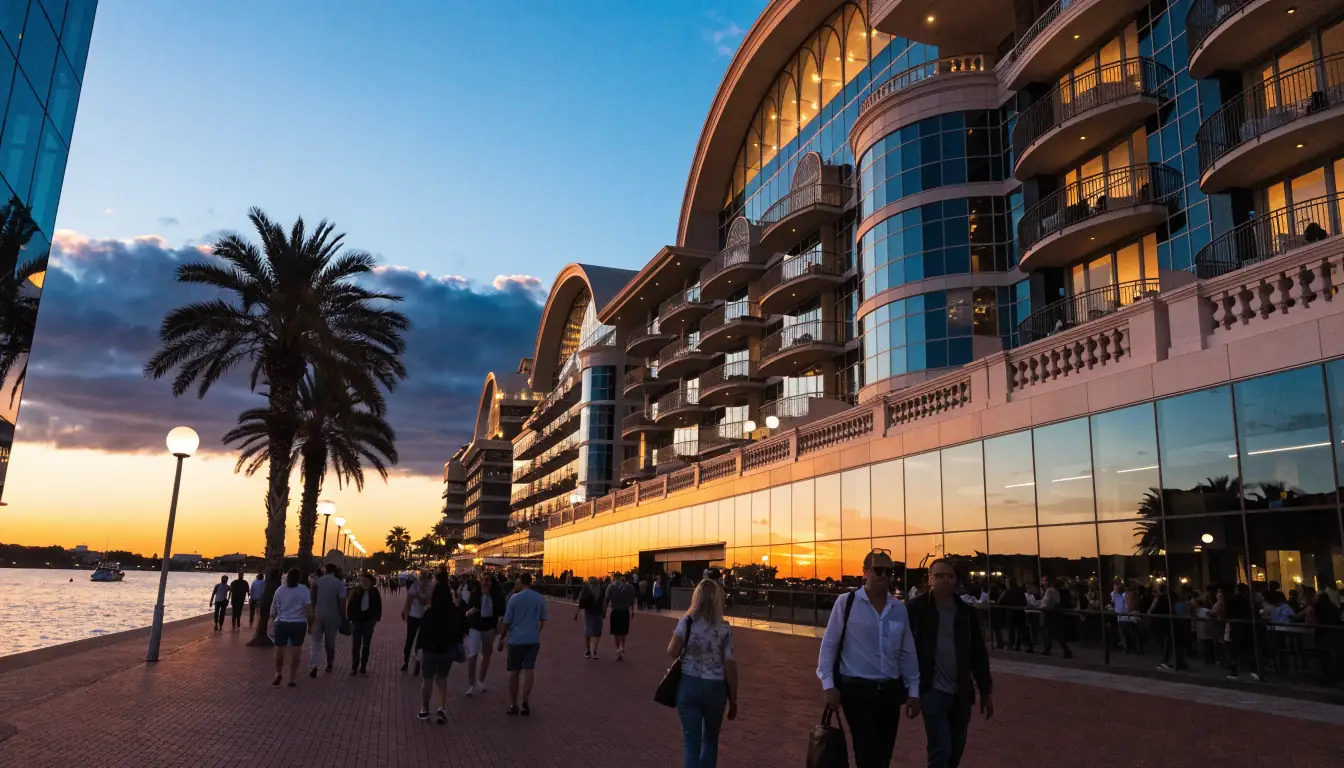
Wellness facilities attached to casinos trade on convenience: accommodation, dining, bars and treatment rooms within walking distance of one another. For visitors whose trip is built around relaxation rather than gaming, the value calculation is straightforward — the spa offering is a supporting amenity, not the core product, and it should be evaluated on that basis rather than compared against dedicated destination spas.
Food courts and pool areas
Not every visit to a Tasmanian casino complex calls for a seated dinner or a spa appointment. Between sessions on the gaming floor, the quicker options matter: something casual, close and fast to eat, and — if the day is warm — a place to swim rather than sit.
Casual food in these complexes sits deliberately apart from the formal restaurants. A food court setup trades table service for speed and price, which suits the rhythm of a gaming floor better than a two-hour meal does. Grab-and-go items, coffee and light meals keep visitors inside the complex instead of sending them into town for a lunch break they may not come back from. The distinction matters when planning a visit: the restaurant sections handle celebrations and slow evenings; the casual counters handle everything in between.
Outdoor pools are the quieter half of this equation. Tasmania’s climate does not make a pool a year-round proposition, so where a pool exists at a casino property it functions as a seasonal amenity — a summer feature rather than a core draw. Still, for a summer visit that combines gaming with an overnight or day stay, a pool area changes the shape of the trip: it turns a casino visit into something closer to a resort outing, with the tables as one activity among several rather than the whole agenda.
Which complexes offer which of these facilities is not uniformly documented. Operators do not publish a standardised amenities list, so pool availability in particular needs confirming directly with the property before it is factored into travel plans. What is consistent is the logic: casual dining is treated as supporting infrastructure for the gaming floor, while pools belong to the accommodation side of the business rather than the gambling one.
Prepared by the Casino Regional Guide editorial staff.