Online Pokies E-Wallet Australia: Market, Rules and Risks
 Available in AU
Understanding Pokies in Australia: Market Size, Regulation, and Risks
What "pokies" actually means
"Pokies" is the everyday Australian term for electronic gaming machines — the slot-style machines that sit in the gaming rooms of pubs, clubs and casinos across the country. In regulatory and compliance documents the same machines are called electronic gaming machines, or EGMs, and that is the term used in statutes, AUSTRAC guidance and law-enforcement reporting. The two names describe one object: a machine into which a player inserts money, places bets on an electronic game of chance, and either loses the stake or receives a payout.
The scale of the habit is easy to underestimate. Pokies are not a niche product confined to casinos. They are operated in every Australian state, in the Australian Capital Territory and in the Northern Territory, and the overwhelming majority of machines sit not in casinos but in pubs and licensed clubs — venues that people visit for reasons unrelated to gambling. That placement is the single most important structural fact about the Australian pokies market: the product travels to the customer, not the other way around.
If you’re planning to fund your pokies play through an e-wallet in 2026, it helps to see how casinos stack up on licensing, welcome offers and payout terms before you sign up.
License: Curacao Gaming Control Board OGL/2023/174/0082 (Dama N.V.) · Bonus: up to A$5,000 + 300 free spins across 4 deposits Licensed under Curacao’s Gaming Control Board via Dama N.V., this operator backs its credentials with a multi-deposit welcome package worth up to A$5,000 plus 300 free spins spread across four deposits.
License: Curacao Gaming Authority (Jumpman Gaming Ltd) · Bonus: up to A$6,600 + up to 250 free spins across 4 deposits Operating under a Curacao Gaming Authority license through Jumpman Gaming Ltd, it offers a sizeable welcome bonus of up to A$6,600 with as many as 250 free spins across four deposits.
Bonus: 240% up to A$4,100 + 300 free spins Stands out for a straightforward percentage-based welcome deal, offering 240% up to A$4,100 alongside 300 free spins.
License: Curacao eGaming OGL/2023/174/0082 (Dama N.V.) · Bonus: up to A$10,000 + 500 free spins across 4 deposits · Min. deposit: A$15 Holding a Curacao eGaming license via Dama N.V., this operator pairs a large welcome package of up to A$10,000 and 500 free spins across four deposits with an accessible A$15 minimum deposit.
License: Curacao Gaming Control Board OGL/2023/176/0095 (Hollycorn N.V.) · Bonus: up to A$5,000 + 300 free spins across 4 deposits Licensed by the Curacao Gaming Control Board through Hollycorn N.V., it provides a welcome offer of up to A$5,000 plus 300 free spins spread over four deposits.
License: Curacao Gaming Control Board OGL/2023/176/0095 (Hollycorn N.V.) · Bonus: up to A$1,500 + 200 free spins across 3 deposits Also licensed under the Curacao Gaming Control Board via Hollycorn N.V., this operator offers a more modest but still solid welcome bonus of up to A$1,500 with 200 free spins across three deposits.
License: Curacao eGaming OGL/2024/923/0383 (Antillephone N.V.) · Bonus: up to A$2,000 + 100 free spins across 2 deposits · Min. deposit: A$30 Licensed under Curacao eGaming through Antillephone N.V., it offers up to A$2,000 plus 100 free spins across two deposits, with a A$30 minimum deposit requirement.
Bonus: up to A$750 + 50 jackpot spins, 35x wagering · Payout speed: crypto ~90 minutes, fiat 1-5 days · Min. deposit: A$30 Notable for fast payout speeds, with crypto withdrawals processed in around 90 minutes and fiat within a few days, alongside a jackpot-spins bonus of up to A$750 under 35x wagering and a A$30 minimum deposit.
License: Curacao · Bonus: up to A$2,000 Operating under a Curacao license, this casino keeps things simple with a welcome bonus of up to A$2,000.
License: Curacao Gaming Control Board (TechSolutions Group N.V.) · Bonus: 100% up to A$250 + 100 free spins (1st deposit) Licensed by the Curacao Gaming Control Board via TechSolutions Group N.V., it offers a first-deposit bonus of 100% up to A$250 plus 100 free spins.
This section sets out what is verifiable about that market — its size, the laws that govern it, and the financial and criminal risks attached to it — before any discussion of payment methods or bonuses. The numbers below all come from published regulatory and industry sources, and where sources disagree, the disagreement is stated rather than smoothed over.
The size of the market
The headline figures for the 2020–2021 financial year give the clearest verified picture of the Australian pokies market:
| Measure | FY 2020–2021 |
|---|---|
| Total bets placed on EGMs | almost AUD 150 billion |
| Total player loss | about AUD 12 billion |
| Per-capita player loss | AUD 608 |
Read those three numbers together, because they tell a specific story. Australians placed almost AUD 150 billion in bets on electronic gaming machines in a single financial year, and the amount actually lost — the money that left players’ pockets and never came back — was about AUD 12 billion. The AUD 608 per-capita loss figure is not an average across gamblers; it is total player loss divided across the entire population, gambler and non-gambler alike. A market that extracts AUD 608 per head of population, including people who have never touched a machine, is a market whose structure matters financially to the whole country, not just to its players.
The turnover figure — AUD 150 billion — deserves its own note, because turnover and loss are routinely confused in casual discussion. Turnover counts every bet placed, including money that is won and then re-bet in the same session. Player loss is what remains after winnings are paid out. Both numbers are correct; they measure different things, and comparing a turnover figure from one year against a loss figure from another produces nonsense.

For a more recent figure, one source — complyadvantage.com — reports that pokies generated AUD 191.2 billion in gambling turnover in 2023. That figure is presented here as reported by that single source, not as an established market statistic, because it changes the subject slightly (turnover rather than loss) and has not been corroborated across the official record. What is beyond dispute is the direction: measured in turnover, pokies remain the largest single gambling product in Australia by a wide margin.
Australia’s share of the world’s machines
How many of the world’s pokies sit in Australia? The honest answer is that published sources disagree, and by a factor of six.
One body of reporting puts Australia’s share of the world’s pub and club poker machines at 3%. Another puts Australia’s share of the world’s poker machines at roughly 18%. The discrepancy is not a rounding difference — it is a disagreement about either the denominator (all poker machines worldwide versus machines in pubs and clubs only) or the underlying count. Both figures circulate in respectable sources, and this article does not silently pick a winner. What both versions agree on, and what matters for the reader, is that Australia’s share of the world’s machines is dramatically out of proportion to its share of the world’s population. Whether the multiple is six times or thirty-six times, a country of about 26 million people hosting that share of the global machine stock is an anomaly, and the regulatory and criminal-risk problems described later in this section grow directly out of that density.
Australia’s share of the world’s pokies is dramatically out of proportion to its population, highlighting a systemic risk.
Where the money goes: winnings and tax
Two taxation facts shape every financial decision an Australian gambler makes.
First, gamblers’ winnings in Australia are not taxed. A player who wins on a pokie machine keeps the full amount. There is no windfall-tax regime for gambling proceeds for recreational players; the Australian Taxation Office treats winnings from gambling by individuals as not assessable income. This stands in contrast to jurisdictions where gambling winnings are taxable events, and it removes one layer of complexity from the financial picture — the only tax question a player faces is, in effect, none.
Second, the taxation of gambling operators varies by state and by type of gambling service. There is no single national rate applied to gambling revenue. Each state and territory sets its own arrangements, and the rates differ both between jurisdictions and between gambling products — a pub pokie, a club pokie and a casino table game can all be taxed differently within the same state. This matters beyond accounting trivia: gambling tax is a material source of state revenue, and state governments are simultaneously the regulator of the machines and a financial beneficiary of their losses. That dual role is a recurring theme in Australian gambling policy debates and goes a long way toward explaining why reform proposals — including the cashless-gaming measures discussed below — move slowly.
The legal framework: what is prohibited, and for whom
The legal architecture is Commonwealth-led at the top and state-led at the bottom, and any discussion of paying for pokies with an e-wallet has to sit inside it.
The Interactive Gambling Act 2001 (IGA) is the primary Commonwealth law governing online gambling in Australia. It was introduced with a public-protection and harm-minimisation purpose, and it does one decisive thing: it makes it an offence for online operators to offer real-money gambling to Australian residents. Online casino-style games — including online slots, online poker, blackjack and roulette — are prohibited under the IGA. It is illegal to offer online casino gambling in Australia, and it is not possible to obtain a licence to operate an online casino domestically.
Two consequences follow, and both are frequently misrepresented in marketing material aimed at Australian players.
First, there are no domestically licensed real-money online casino operators available to Australian players. None. A website suggesting that a reader "check the operator’s Australian licence" is offering advice that cannot be followed, because no such licence exists for online casino services. The licences that do exist in Australia — for online sports betting and lotteries — cover other products, not casino games.
Second, the prohibition targets operators, not players. It is not illegal for an individual Australian to play at an offshore-licensed online casino. The offence sits with the person or company offering the service, not with the person using it. This asymmetry is the legal foundation of the entire offshore online casino industry serving Australians: the player commits no offence under Australian law, while the operator would if it could be reached by it. Offshore operators sit, by design, outside that reach.
Illegal online operators
Offering real‑money online pokies to Australian residents is an offence for the operator under the Interactive Gambling Act 2001.
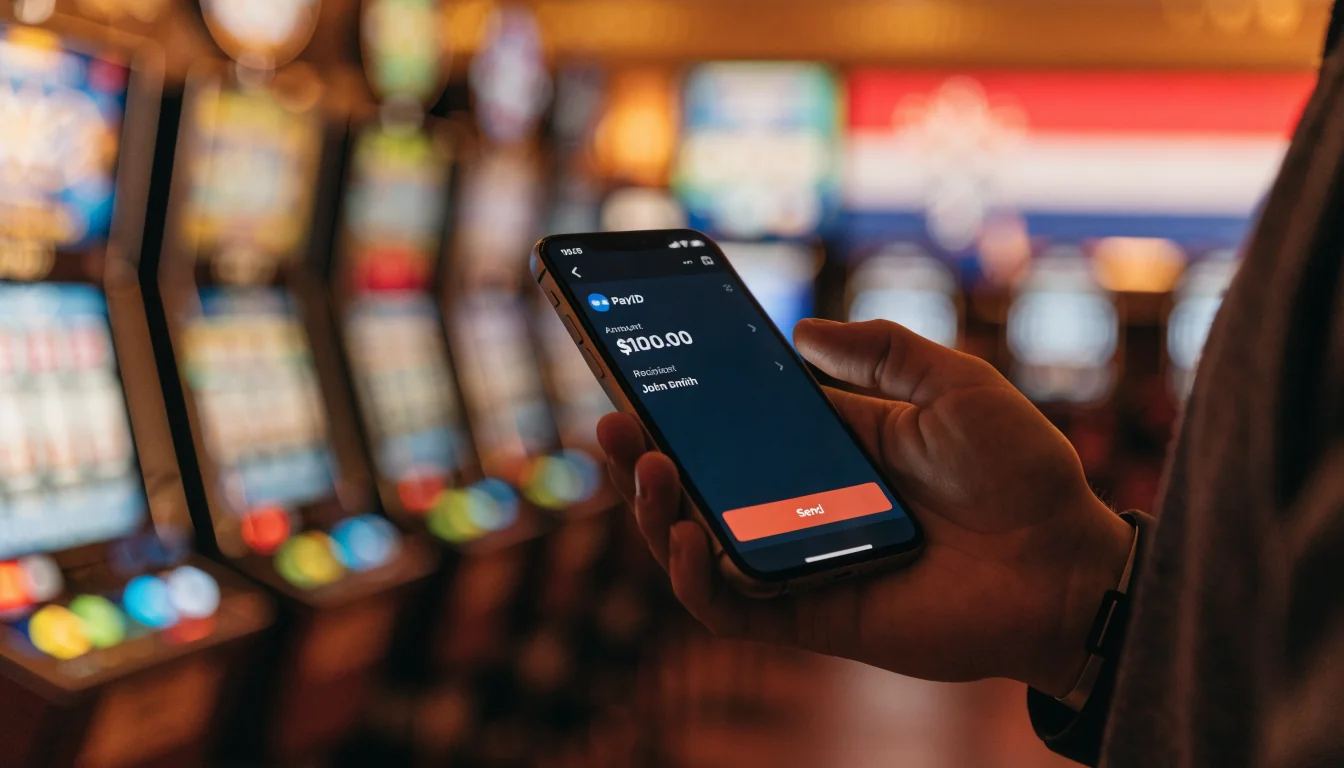
This is the point at which search terms like "e wallet pokies real money" or "e-wallet pokies aus" enter the picture. Australians searching for those phrases are, in legal terms, looking for offshore online pokies — slot games that accept electronic wallet payments — because no domestic online option exists. The e-wallet is not a neutral convenience feature here; it is the payment layer for a market that Australian law has deliberately locked out of domestic licensing. The legal position of the payment itself, and of the bonuses offered around it, is covered in the following section. What this section establishes is the frame: an Australian player paying for online pokies with an e-wallet is transacting with an operator that is committing an offence under the IGA by serving them, even though the player is not.
The same law draws other lines worth knowing. Online sports betting is legal in Australia, operated under state and territory licences. Live in-play betting online is illegal, though live betting placed by telephone is legal. The minimum legal gambling age in Australia is 18. And the reach of gambling into younger age groups is documented rather than hypothetical: almost one in three Australians aged 12 to 17 gamble, and 46% of 18-year-olds do. Those two figures describe the population that any age-gating and payment-verification regime is meant to protect.
Why cash is the problem: the laundering risk
The regulation of pokies is not only about consumer protection. It is also, increasingly, about financial crime, and the reason is structural: the high volume of cash transactions and the limited traceability of pokies make them attractive for money laundering.

A pokie machine is, from a criminal’s perspective, a currency-exchange service with a gambling function attached. Cash goes in; a payout ticket or a bank account credit comes out; the intervening play leaves no meaningful record of what the money was before it was bet. The scale of the market — AUD 150 billion in annual turnover — provides enough legitimate flow for dirty money to disappear into.
The documented laundering techniques are not exotic.
Insert-and-cash-out. Criminals insert large sums of cash into EGMs, perform minimal gambling activity, and cash out, creating a false record of winnings. The machine’s paper trail now says the money was gambling proceeds rather than the proceeds of, say, drug sales. The gambling loss accepted in the process is the cost of the laundering — a fee, in effect, paid for the clean paper.
Buying winning tickets. Offenders purchase winning tickets from other players, converting dirty cash into clean, traceable funds. The genuine winner is typically paid face value or slightly above it in cash and hands over the ticket; the offender redeems it through legitimate channels. The venue’s records show a normal payout to a normal customer.
Structuring across venues. Smaller cash deposits are spread across different venues to stay under anti-money-laundering reporting thresholds. Rather than pushing AUD 20,000 of cash through one machine in one club — which would trigger attention — the same sum is fed through machines at several venues in smaller amounts, each individually unremarkable.
The main laundering methods – insert‑and‑cash‑out, buying winning tickets, structuring across venues, and using money mules – all exploit the high cash volume and low traceability of physical pokies.
Money mules. According to complyadvantage.com, money mules are recruited specifically to launder money through pokies. The mule — often an unwitting or casually-compensated third party — runs the cash through machines and venues on someone else’s behalf, adding a layer of distance between the criminal and the transaction. This is reported by a single source and is presented here as that source’s finding rather than as a settled typology of the Australian market, but it is consistent with the structural analysis: where machines convert cash to traceable funds, someone will be hired to operate the conversion.
AUSTRAC and the compliance regime
AUSTRAC — the Australian Transaction Reports and Analysis Centre — is the financial intelligence regulator that sits on top of this problem, and in 2024 it issued a guide to help firms recognise money-laundering red flags in gambling contexts.
The compliance obligations fall into two tiers, divided by machine count.
Operators with up to 15 pokies must:
- register with AUSTRAC;
- keep identification records;
- submit suspicious matter reports.
Operators with more than 15 pokies must meet a heavier standard. They must:
- appoint a compliance officer;
- conduct risk assessments;
- implement AML/CFT programs;
- perform customer due diligence;
- report cash transactions over AUD 10,000.
The AUD 10,000 cash-transaction threshold is the number that gives the structuring technique described above its purpose. Splitting deposits across venues exists precisely to keep individual cash movements below the level at which reporting becomes mandatory. The two-tier structure also has an obvious commercial consequence: the obligations scale with exposure, and a large club with hundreds of machines carries the full AML/CFT program burden, while a small venue’s duty is registration, records and reporting.
Enforcement is not theoretical. Non-compliant operators face remedial directions, infringement notices, civil fines and reputational damage. And the ceiling on financial penalties has been raised substantially for casino operators specifically: an amendment to the Casino Control Act 1992 allows NSW casino operators to be fined up to AUD 100 million for compliance failures. A nine-figure maximum penalty is no longer an accounting footnote; it is a number that changes board-level risk calculations.
The red flags AUSTRAC told firms to watch for
The 2024 AUSTRAC guide sets out the indicators that should prompt a venue’s staff or compliance function to look closer. They divide broadly into transaction-pattern flags and customer-behaviour flags.
On the transaction side:
- Unusually high cash access — a customer whose cash handling is out of proportion to normal play.
- Large deposits — money entering the machine in amounts inconsistent with recreational gambling.
- Cash transfers — movements of physical currency that don’t fit the venue’s ordinary flow.
- Casino disbursement checks — instruments drawn on casino payouts warranting scrutiny of origin.
- Certain occupations — customer occupations that either carry elevated laundering risk or don’t match the observed transaction volumes.
On the play-pattern side, the flags are behavioural:
- Large or repeated cash insertions followed by minimal play and immediate cash-out. This is the insert-and-cash-out technique described earlier, and its signature is the gap between what goes in and how little gambling actually occurs. A recreational player bets; a launderer barely bothers.
- Frequent small redemptions across different venues within a short period. This is the signature of structuring — the same operator or mule collecting modest payouts from multiple locations in a compressed timeframe.
- Customers refusing identification, or using multiple player cards. Evasion of ID requirements and card-hopping both serve the same purpose: preventing a single, continuous identity from being linked to the full pattern of transactions.
Not one of these indicators proves anything on its own. A customer declining to show ID may simply value privacy; a small redemption at a second venue may be an ordinary coincidence. The flags are triggers for scrutiny, not verdicts. But in combination — a repeated pattern of high cash in, minimal play, quick cash-out, spread across venues, by a customer resistant to identification — they describe a laundering operation with reasonable clarity, and that is precisely the combination AUSTRAC’s guidance trains staff to assemble.
The cashless reform argument
The policy response to all of the above has a clear direction, and it points away from cash.
The NSW Crime Commission’s 2022 report — referred to in one source, complyadvantage.com, as the Islington Report — recommended making all NSW pokies cashless by the end of 2028. That recommendation is reported by a single source and is presented here as that source’s account of the report, not as enacted law; a recommendation to reform is not a reform. But it aligns with a broader regulatory position that does not depend on any single report.
Cashless reform not law
The recommendation to make NSW pokies cashless by 2028 is a proposal, not enacted legislation, so operators must still comply with current cash‑based regulations.
According to facctum.com, the adoption of cashless, account-based pokies improves traceability and reduces anonymity. Transparent, account-based pokies provide full traceability of deposits, gameplay and withdrawals — every dollar in, every spin, and every dollar out tied to a verified account. The laundering techniques described earlier all depend on the cash layer: insert-and-cash-out requires cash going in; ticket-buying exploits the transferability of anonymous vouchers; structuring exploits the fact that cash leaves no identity trail. Remove the cash layer, and each technique loses its mechanism. Account-based gaming does not make laundering impossible — a launderer can still deposit into an account — but it makes every step visible to the operator, to AUSTRAC, and to law enforcement, which is the entire point.
Regulators’ stated recommendations run along the same lines: tighter customer due diligence, transaction monitoring, and the adoption of cashless gaming systems. This is the regulatory current that any discussion of electronic payments and pokies sits in — and it produces a certain irony worth naming. The same policy pressure pushing physical venues toward cashless, traceable, account-based play is what offshore online pokies already are by construction: every e-wallet deposit and every withdrawal in an online environment is, by definition, an electronic, recorded, account-linked transaction. Online play is fully traceable in exactly the way cash-in-a-pub-machine play is not. That traceability does not make offshore online casinos legal — the IGA prohibition applies regardless of the payment method — but it does mean the crime-prevention argument that drives cashless reform in venues does not map onto online play in any straightforward way.
The financial position of the player
Strip away the payment-method discussion, and the underlying arithmetic of pokies is the same wherever the machine sits.
Core conclusion
Cashless, account‑based pokies are the only effective way to curb laundering in the Australian market.
The market-level numbers make it plain. In FY 2020–2021, bets of almost AUD 150 billion produced player losses of about AUD 12 billion — meaning roughly 92 cents in every dollar bet was returned as winnings, and the remainder was retained by the operators and, through them, in part by state treasuries as gambling tax. That ratio holds across the whole market; it is not a description of any individual session, which can end anywhere from a total loss to a large win. But it is the only ratio that describes the aggregate outcome of everyone who plays. The AUD 608 per-capita loss is what that aggregate looks like when spread across the entire population.
No payment method changes that ratio. An e-wallet deposit into an online pokie, a card tap at a venue’s cashless machine, and a handful of notes fed into a pub machine all feed the same underlying product economics. What the payment method changes is the surrounding legal and practical framework — who the operator is, what law governs them, what protections apply, and what traceability exists — and those questions are the subject of the next section.
Risks, summarised
The verified risk picture for pokies in Australia has three distinct layers, and they are frequently conflated.
The financial risk is measurable and documented: AUD 12 billion in annual player losses, AUD 608 per capita across the whole population, and a market structure that places machines in everyday venues in every state and territory. Winnings are untaxed, but losses are simply gone.
The regulatory risk falls on operators, not players, in the online space: offering real-money online casino games to Australians is an offence under the IGA, no domestic online casino licence exists, and playing at an offshore-licensed site is not illegal for the individual. In the land-based space, the compliance burden is escalating — two-tier AUSTRAC obligations, mandatory reporting, civil fines, and a AUD 100 million maximum penalty for NSW casino compliance failures.
The criminal risk attaches to the cash layer: laundering through insert-and-cash-out, ticket purchasing, structuring across venues, and recruited mules, all enabled by the high cash volume and low traceability of machines, and all targeted by AUSTRAC’s 2024 red-flag guidance and by the push toward cashless, account-based gaming.
These three layers set the factual foundation for everything that follows. When the next section turns to e-wallets specifically — what they are used for in online pokies play, and what the law says about no-deposit bonuses offered around them — it does so against this background: a vast, heavily cash-dependent, tightly regulated land-based market, and an online sector that Australian law prohibits operators from serving but does not criminalise players for using.
e‑Wallet Pokies and No‑Deposit Bonuses: Legal Landscape in Australia
An e‑wallet changes nothing about the legal position of online pokies in Australia. The Interactive Gambling Act 2001 makes it an offence for online operators to offer real‑money gambling — including casino‑style games such as pokies — to Australian residents, regardless of how a deposit is funded. No domestic licence exists for online casino services, so there is no licensed local operator whose e‑wallet payment terms can be compared. Players themselves are not criminalised; the offence sits with the operator. That distinction shapes everything else on this page.

No‑deposit bonuses sit in the same position. A promotion advertised to Australian residents offering free play on pokies comes from an operator already outside the domestic licensing framework, because no domestically licensed real‑money online casino exists. The bonus terms — wagering requirements, withdrawal conditions, expiry — are set by that operator alone and are not subject to Australian consumer‑protection oversight of the kind that applies to licensed wagering.
One domestic rule bears directly on payment methods: credit cards and digital currencies are not accepted for deposits or betting. Within the licensed sector, taxation of gambling operators varies by state and by type of gambling service, which has no bearing on a player’s own position — winnings in Australia are not taxed.
Created by the ”Casino Regional Guide” editorial team.